
Rare great white sighting points to gaps in Mediterranean shark science
Divers filmed an adult great white between Tunisia and Sicily, drawing attention to a critically endangered population scientists rarely see.
By Tom Brennan · Health & Medicine Correspondent
3 min read
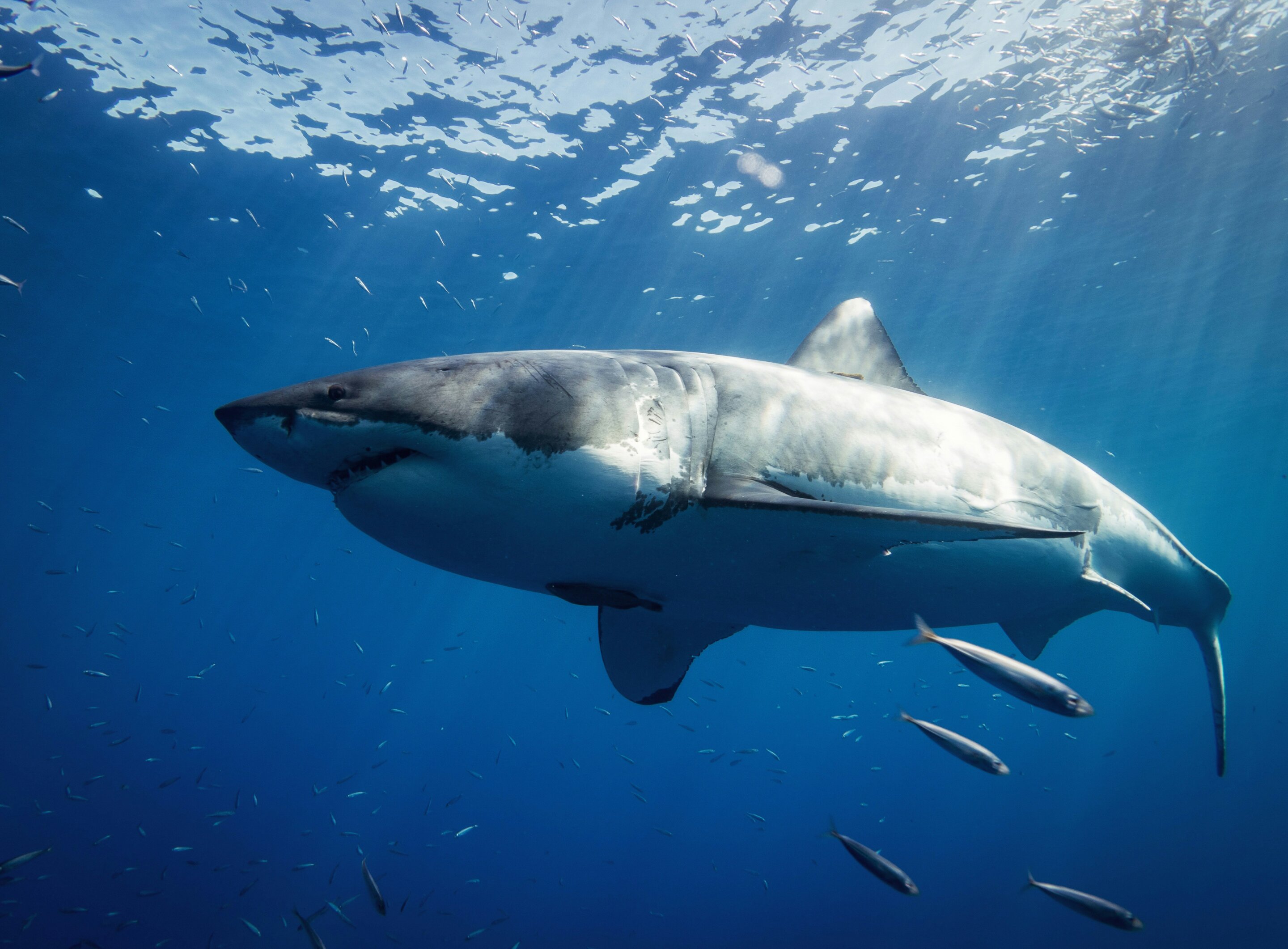
Scuba divers clearing abandoned fishing nets from a shipwreck between Tunisia and Sicily filmed an adult great white shark, a rare modern record in the Mediterranean. Nicholas Ray of Nottingham Trent University says the sighting matters because it highlights how little scientists know about a critically endangered shark population that has long lived in the region.
According to Ray, great white sharks have been recorded in the Mediterranean for more than 150 years, with historical reports from Spain, France, Italy, Malta and Greece. They were never common, he says, and fishing pressure, the loss of prey and accidental capture have helped drive encounters down to rare events.
Ray describes Mediterranean great whites as a “ghost population”: still present, but seldom documented. Recent evidence often comes from fishermen, photos or short videos, and he says some reports are hard to confirm.
A distinct Mediterranean lineage
A 2020 genetic study led by the University of Bologna found that Mediterranean great whites are a distinct population, according to Ray. Researchers who analyzed DNA from historical shark remains concluded the group has been isolated for about 3.2 million years.
The study found their DNA is more closely tied to Pacific great whites than to Atlantic sharks, Ray says, pointing to a complex evolutionary history. It also found very low genetic diversity, a sign of a small and vulnerable population shaped by a founder event or bottleneck.
Ray says the population is considered critically endangered, and that losing it would reduce global white shark diversity because the Mediterranean group represents a separate lineage. The same research also left major unanswered questions about where these sharks spend time, feed, migrate or reproduce.
Another recent record came in April 2023, when tuna fishermen accidentally caught a juvenile great white about 20 nautical miles off Alicante, Spain, according to Ray. The shark, just over 2 meters long, was genetically confirmed as Carcharodon carcharias.
Because that shark was young, scientists raised the possibility that parts of the western Mediterranean may still serve as developmental habitat or nursery areas, Ray says. He cautions that the evidence is not conclusive.
More records do not prove recovery
Ray says the adult filmed in the Strait of Sicily and the Alicante juvenile point to persistence, rather than a recent return. He says encounters may be more visible because underwater cameras, satellite tracking, citizen science and reporting tools now make unusual sightings easier to document.
Environmental change may also affect where and when sharks appear, according to Ray. Warming seas, shifting prey and changing habitat conditions can alter the movements of highly mobile predators such as great whites.
Ray says more sightings should not be read as proof that Mediterranean great whites are recovering. Climate change can move species into different places or seasons without increasing their numbers.
Researchers have documented changing great white movements along the eastern coast of North America, including Florida and the Gulf of Mexico, Ray says. Satellite-tagging studies have linked those movements to environmental conditions and prey availability.
The Strait of Sicily, where the latest footage was recorded, is a biodiversity hotspot and a heavily used marine area, according to Ray. If great whites use it regularly, he says, understanding their movements could help shape conservation planning.
Ray says protecting the sharks will require more than setting aside one site, because the animals cross national boundaries. Scientists first need better information on migration routes, feeding areas and possible nursery habitat across the Mediterranean.
This story draws on original reporting from Phys.org.