
Quantum light sources aim to protect satellite timing links
CSIRO says its entangled photon devices could help secure ground-to-satellite timing when GNSS signals are jammed or spoofed.
By Priya Raghavan · Science Reporter
3 min read
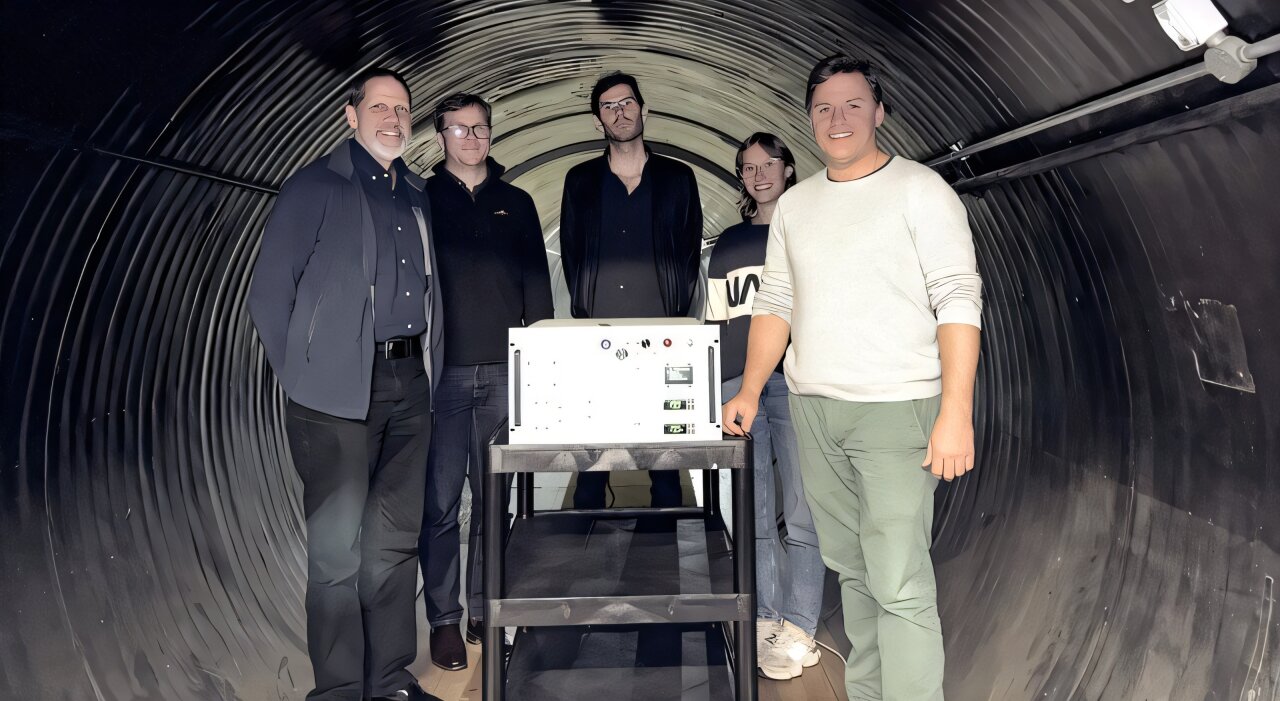
CSIRO researchers have built and delivered two portable quantum light sources for a Defense Science and Technology Group-led project aimed at securing satellite timing links. The work targets a growing weakness in systems that depend on Global Navigation Satellite System signals, including defense operations and civilian infrastructure.
GNSS satellites carry atomic clocks and send time-stamped signals to receivers on the ground, CSIRO said. Those timing signals support navigation and help keep mobile networks, banking, aircraft, ships and emergency services working. GPS, widely used in Australia and the United States, is one member of the wider GNSS family.
CSIRO said interference with GNSS is already occurring around the world. In contested areas, the agency said, signal disruption can be used in war and can affect operations across air, land, sea, cyber and space when communications fail.
Entangled photons for time transfer
The devices, called CSIRO Quantum Light Sources, generate linked particles of light known as entangled photons. CSIRO described the systems as high-flux, portable and designed for field deployment rather than laboratory-only use.
The agency said the project began with collaboration from Heriot-Watt University, whose design ideas CSIRO sought to adapt for practical use. CSIRO has recently delivered two of the light sources to DSTG in Adelaide, according to the agency.
Inside the device, photons are produced and then passed through a glass cube that places pairs of photons traveling in opposite directions into an entangled state, CSIRO said. In an intended ground-to-satellite link, one photon remains on Earth while its partner is sent to a satellite hundreds of kilometers away.
Quantum entanglement means the particles retain correlations even over long distances, CSIRO said. That property can be used to support a secure communications link between the ground and an orbiting satellite.
Detecting tampering
CSIRO said entanglement is useful for ground-to-satellite time transfer because the quantum state is highly sensitive to outside interference. If an attacker tries to intercept or alter the signal, the state changes and the disruption can be detected, allowing the user to move to another channel.
The agency said that continuous process, known as entanglement distribution, is central to making the timing link resistant to spoofing. Spoofing attacks can feed receivers false signals, a problem for systems that rely on trusted timing and positioning data.
The project is being developed with defense needs in mind, according to CSIRO. The agency said the same approach could also support communications networks, transport systems, power grids, financial services and other critical infrastructure that depend on accurate and resilient timing.
CSIRO said the work also builds Australian capability in quantum components for secure communication, navigation and timing. The agency framed the project as an example of turning research expertise into domestic technical know-how for future secure systems.
This story draws on original reporting from Phys.org.