
New gene-editing screen maps drivers of early human neural development
Researchers report a scalable organoid method that tests single-gene effects across whole tissues, pointing to genes tied to neural tube closure.
By Lucas Ferreira · Science & Environment Writer
3 min read
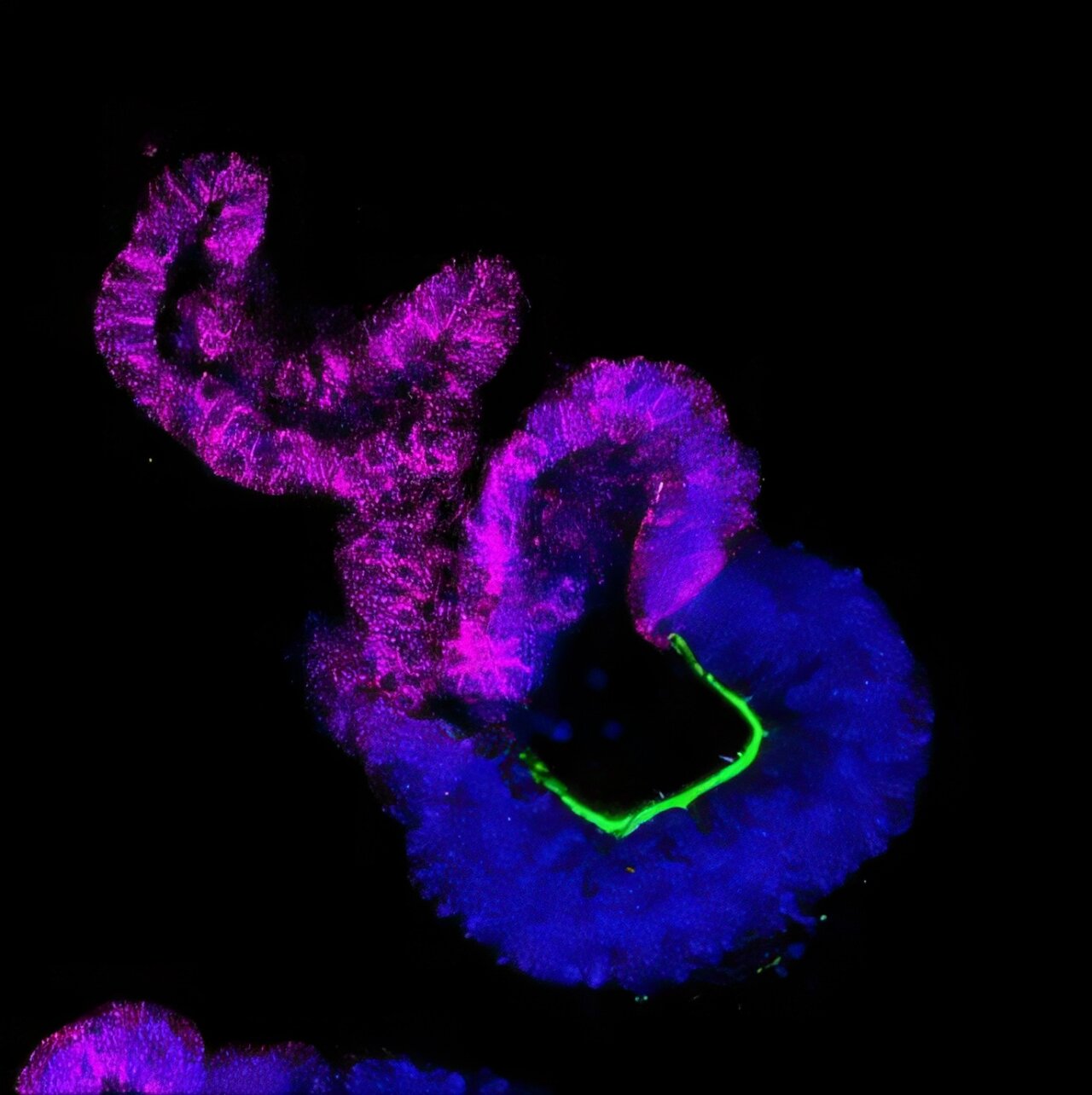
Researchers have reported a gene-screening method that can alter one gene across an entire lab-grown human tissue model, a step they say could make early development easier to study. The work, published in eLife, used neural tube organoids to identify genes involved in a key stage of brain formation.
The study addresses a long-running problem in human developmental biology. According to the authors, direct genetic screening in humans and animals faces ethical and practical limits, while organoids made from human pluripotent stem cells often produce uneven gene changes that leave researchers with a patchwork of edited and unedited cells.
Human pluripotent stem cells can give rise to many tissue types, and organoids offer a way to model aspects of development in the lab. But the researchers said earlier efforts to remove or reduce single-gene activity across organoids were not well suited to studying morphogenesis, the tissue-wide shaping process that occurs during embryonic development.
The team, led by senior author Sharad Ramanathan at Harvard University, developed a streamlined CRISPR-based approach that uses viruses to deliver gene-editing material into stem cells. Co-first authors Roya Huang and Giridhar Anand were in Ramanathan’s lab at the time of the study, according to eLife.
The researchers reported two main technical changes. They changed how plasmids, the circular DNA molecules used to carry genetic instructions, were prepared so that several steps could be run in parallel and clone-selection steps could be avoided. They also adjusted virus production and delivery, including growing virus in reduced media volume and adding the virus when stem cells were seeded onto growth plates.
According to the study, those changes produced viral uptake in nearly all of the human pluripotent stem cells. The researchers also created an arrayed setup in which different plasmids could be delivered to separate colonies on a microscope slide, allowing different gene changes to be tested in parallel as the cells developed into organoids.
The team then applied the method to neural tube organoids, which model the developmental step in which a flat neural plate closes into a tube. The study notes that failure of this process can cause anencephaly, a fatal birth defect involving severe forebrain and cerebrum malformation.
For the screen, the researchers selected 20 genes suspected to have roles in neural tube closure, along with 57 genes with weaker links to neural development. They introduced the CRISPR plasmids into human pluripotent stem cells and then directed the cells to form neural tube organoids.
After staining the organoids for neural tissue markers and examining their shapes, the researchers found that reducing activity of three genes — ZIC2, SOX11 and ZNF521 — produced major closure defects. The study reported fully open neural plates in organoids with ZIC2 or SOX11 knockdown, while ZNF521 knockdown produced several closure points.
The team also analyzed single-gene expression data to look for downstream changes associated with those three genes. According to the study, some genes became less active after ZIC2 and SOX11 knockdown and more active after ZNF521 knockdown, but reducing those genes one by one did not recreate the same closure defects.
The authors said that finding suggests ZIC2, SOX11 and ZNF521 may guide neural tube closure by controlling groups of downstream genes rather than acting through a single target. Ramanathan said the platform reduces time and cost compared with clonal knockdown methods and could help researchers study neural tube defects and other congenital malformations.
eLife editors described the study as a landmark technical advance and said it is among the first to use embryo models to reveal new knowledge about human development. The paper, “Arrayed single-gene perturbations identify drivers of human anterior neural tube closure,” was published in eLife with DOI 10.7554/elife.108224.3.
This story draws on original reporting from Phys.org.