
Early native seeding helps forests resist buckthorn regrowth
University of Minnesota researchers found that prompt herbicide follow-up and native plant seeding improved control of invasive common buckthorn.
By Priya Raghavan · Science Reporter
3 min read
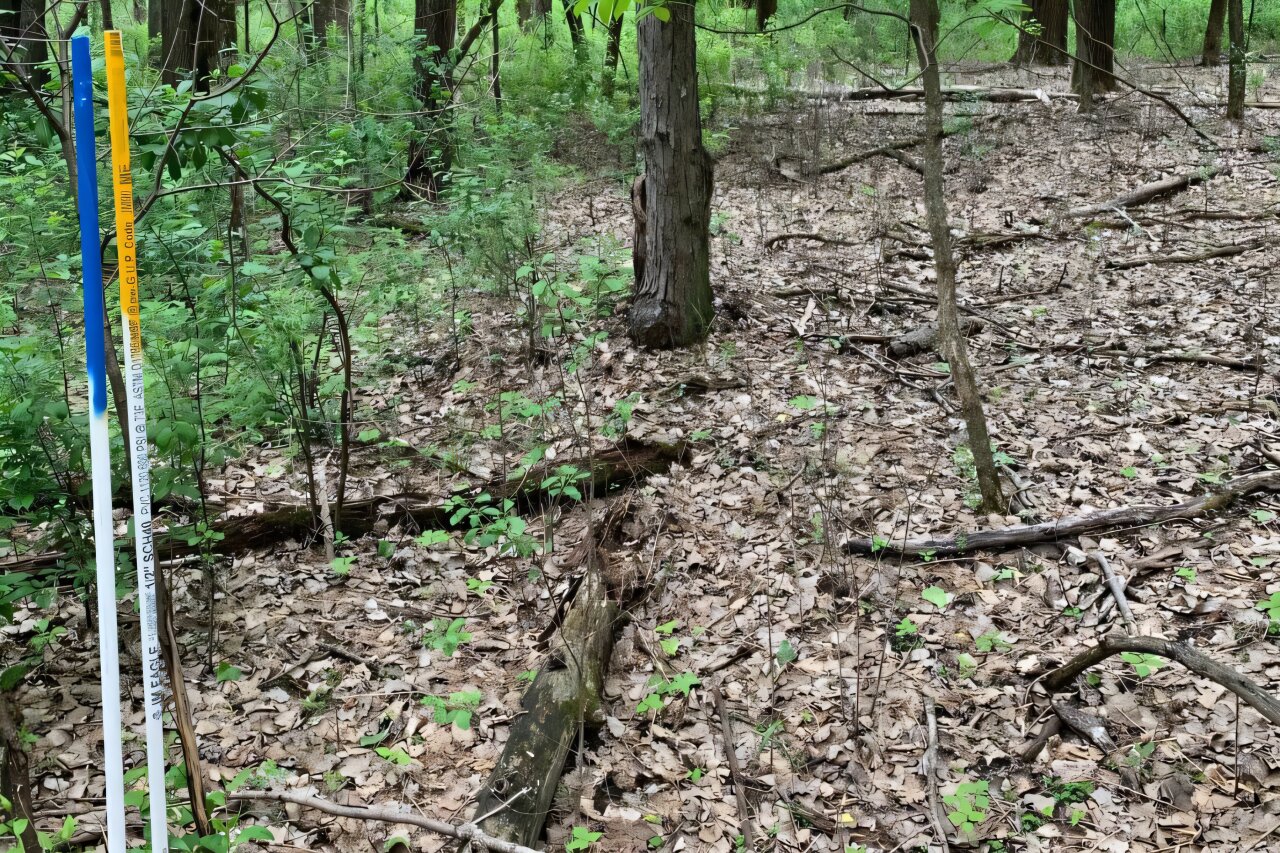
Land managers fighting common buckthorn may get better results by acting quickly after the first removal effort, according to University of Minnesota research. The study found that early follow-up herbicide treatment, paired with seeding native grasses and wildflowers, can reduce the invasive shrub’s return in forest understories.
The findings were published in Forest Ecology and Management. The University of Minnesota said the work offers a practical approach for controlling one of Minnesota’s most aggressive invasive plants, which often resprouts or reestablishes from seed after crews cut or remove it.
The research was conducted by scientists with the Cover It Up! Project, which is part of the Minnesota Invasive Terrestrial Plants and Pests Center. Earlier work from the project showed that native grasses and wildflowers can limit buckthorn seedlings, but researchers still needed to know how soon managers must treat resprouts after initial control work.
To test that question, the team compared forest understories where crews used herbicide soon after initial buckthorn management with areas where treatment was delayed for several years. The study focused on foliar treatment, meaning herbicide applied to leaves, using fosamine ammonium, sold as Krenite.
According to the University of Minnesota, treating buckthorn resprouts the year after initial removal killed many plants. A second application two years later brought buckthorn levels down further, nearly eliminating it in treated areas.
Delaying the first follow-up treatment for multiple years produced weaker results, the university said. Researchers also found that seeding native plants after the first treatment helped hold buckthorn back by giving its seedlings more competition, with the strongest benefit in places that did not have a dense tree canopy.
Andrew Kaul, the study’s lead author and a former postdoctoral researcher in the university’s College of Food, Agricultural and Natural Resource Sciences, said the results show buckthorn control takes sustained effort rather than a single treatment. Kaul is now with the Missouri Botanical Garden.
“There is no silver bullet for defeating buckthorn, but our work shows that control is possible with hard work and patience,” Kaul said in the university’s announcement.
The findings point to a timing issue for restoration projects. The University of Minnesota said seeding native species soon after management worked better than waiting until fall or winter, when buckthorn control is often done.
Mike Schuster, a researcher in the College of Food, Agricultural and Natural Resource Sciences, said the work shows the value of combining early herbicide treatment of resprouts with native seeding during the early phase of restoration.
The published study is titled “Act fast: improved control of Rhamnus cathartica with rapid foliar herbicide and herbaceous seeding.” Its authors include Andrew D. Kaul and colleagues, and the paper carries the DOI 10.1016/j.foreco.2026.123897.
The research team is continuing to test restoration methods in forest understories, according to the University of Minnesota. Current work includes comparing seeding approaches, seeding rates and mixes of native grasses and wildflowers, while also measuring additional benefits for nature and society.
This story draws on original reporting from Phys.org.