
Australian frog found to have rare iridescent thigh skin
University of Newcastle researchers say the green and golden bell frog shows angle-dependent color shifting rarely documented in amphibians.
By Tom Brennan · Health & Medicine Correspondent
3 min read
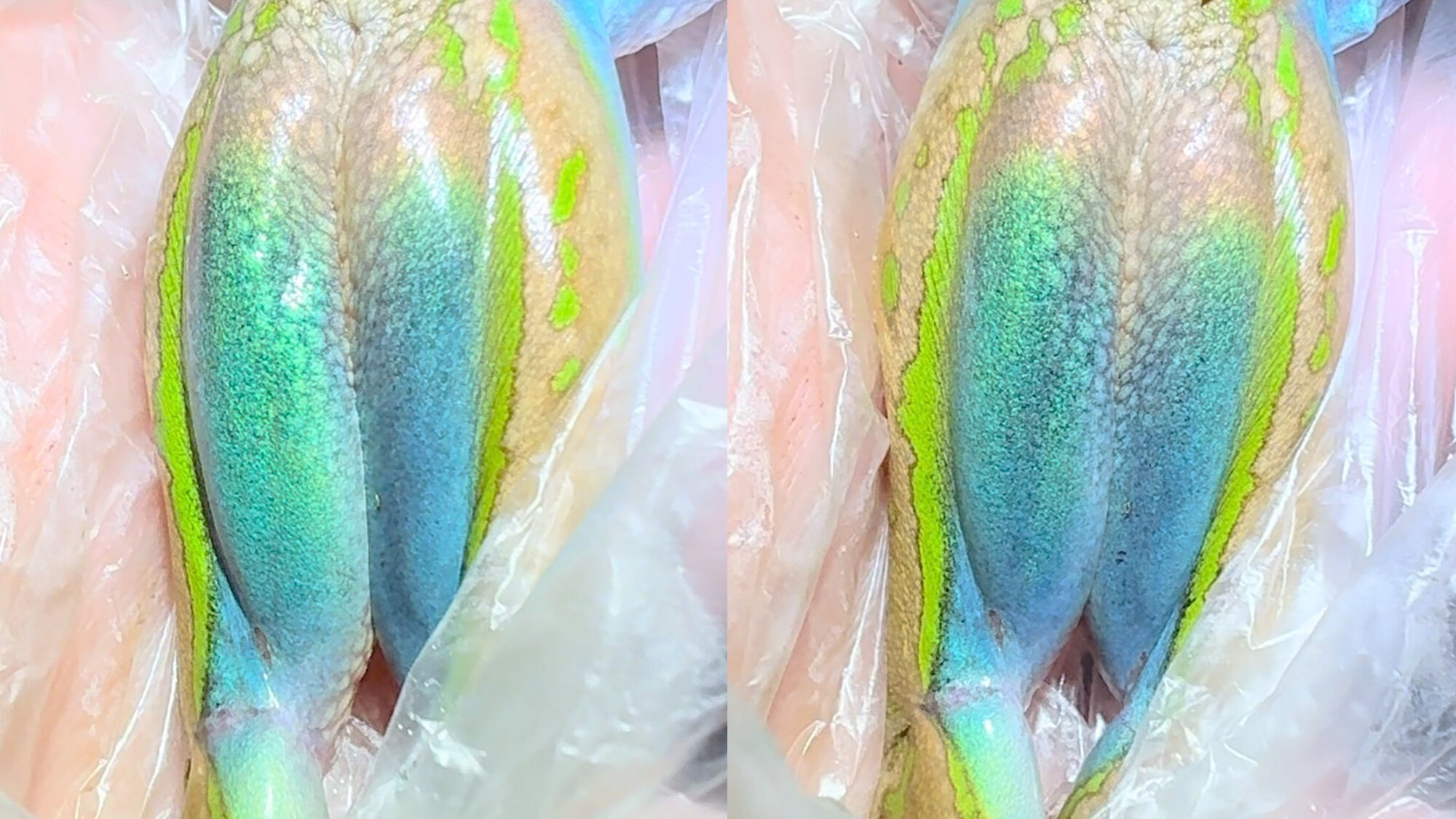
Researchers at the University of Newcastle have documented rare iridescence in the endangered green and golden bell frog, an Australian species whose blue inner-thigh skin can shift toward green depending on the viewing angle. The finding matters because it adds evidence that amphibian skin can produce complex structural color and may strengthen a defense signal used when the frog moves.
The study, published in Austral Ecology, reports what the university described as one of the clearest known cases of iridescence in an amphibian. The frog, formally known as Ranoidea aurea, had not previously been recorded with this kind of color-shifting skin, according to the researchers.
Dr. John Gould, a conservation biologist at the University of Newcastle and lead author of the study, said iridescence is better known from animals such as birds, butterflies and beetles. He described it as an optical effect in which the apparent color changes with the observer’s position.
According to Gould, two observers can look at the same tissue at the same time and see different colors if they stand at different angles. He said the discovery in a familiar Australian frog underlines how much scientists still have to learn about animal coloration.
Hidden blue skin that flashes during movement
The university said the evidence includes photographs showing the frog’s blue inner-thigh skin changing from blue to green as the angle changes. Researchers interpreted that shift as true iridescence.
The colored patch is usually concealed, according to the study. It can appear when the frog jumps or otherwise moves, and scientists have considered the bright thigh marking a form of “flash coloration” that may startle or distract predators.
Gould said the inner-thigh blue has already been viewed as part of the species’ anti-predator defense. The new finding suggests the iridescent effect could make that visual cue more noticeable when the frog is in motion, he said.
What the color shift suggests about frog skin
The researchers said the discovery also bears on how blue colors are made in frog skin. Across animals, blue is rarely produced by pigment; it usually comes from microscopic structures that interact with light, a process known as structural coloration, according to the university.
Frogs are known to create blue and green colors using reflective platelets inside specialized skin cells, the researchers said. Earlier explanations had suggested that blue coloration in frogs could arise from light scattering through randomly arranged structures.
Gould said true iridescence requires ordered microscopic structures rather than a fully random arrangement. In this frog, he said, the color shift points to organized reflective platelets as the basis of the blue structural color.
The study, titled “Shifty Frogs: Evidence of Iridescence Among Amphibians,” was published in Austral Ecology. The University of Newcastle said the finding opens new lines of inquiry into how amphibians produce color and raises the prospect that other iridescent frogs remain undocumented.
This story draws on original reporting from Phys.org.