
Protein complex found to restrain repetitive DNA in mouse cells
Two Molecular Cell studies describe how ChAHP blocks SINE B2 elements, a repetitive DNA class that can disrupt genome stability if activated.
By Priya Raghavan · Science Reporter
2 min read
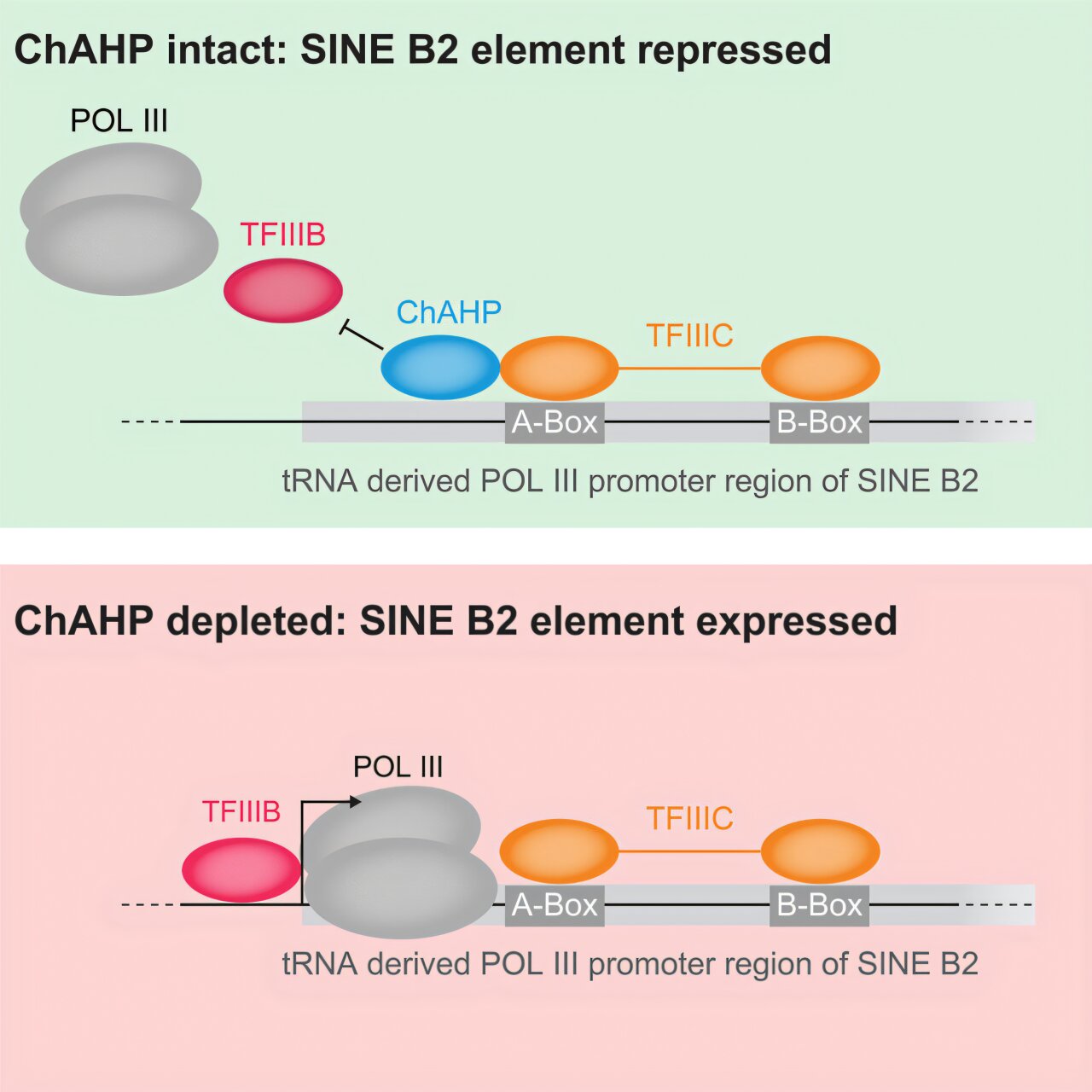
A protein complex called ChAHP helps mouse cells keep a class of repetitive DNA elements from being switched on, according to two studies published in Molecular Cell. The work matters because these elements sit throughout genomes and can create instability if cellular machinery activates them at the wrong time, the researchers report.
The studies come from scientists at the Friedrich Miescher Institute for Biomedical Research in the group of Marc Bühler. Together, they examine how cells control SINEs, a family of short repetitive DNA sequences that originated from mobile genetic elements.
According to the researchers, many DNA repeats in the genome descend from sequences that once could copy themselves and insert into new locations. Those mobile elements, known as transposons, have contributed to evolution, but the FMI team says they can also pose risks when their activity is not contained.
SINEs are especially widespread. The researchers note that human DNA contains more than 1 million copies of one type of SINE, though the new studies focused on mouse SINE B2 elements.
SINEs do not code for proteins, according to the FMI team. Some can still be transcribed into RNA by the cell’s own machinery, creating a route by which dormant repeats may interfere with genome function.
How ChAHP blocks activation
In one Molecular Cell paper, Jakob Schnabl-Baumgartner and colleagues report that ChAHP suppresses SINE retrotransposons by preventing recruitment of TFIIIB, a factor needed to start transcription at SINE B2 elements. Without that step, the transcription machinery cannot efficiently begin copying those sequences into RNA, according to the study.
A second Molecular Cell paper by Josip Ahel and colleagues describes how ChAHP helps make the DNA less accessible. The study reports that a component of the complex remodels chromatin, the DNA-protein packaging inside the nucleus, in a way that limits transcription factor access to SINE B2 elements.
The two studies point to ChAHP as a targeted defense system rather than a broad shutdown mechanism, according to the FMI researchers. That distinction may matter because SINEs often occur near genes, where sweeping repression could affect neighboring genetic activity.
The researchers say the findings help explain how cells control repetitive sequences embedded in DNA while preserving genome stability. The studies were published as “ChAHP silences SINE retrotransposons by inhibiting TFIIIB recruitment” and “Remodeling activity of ChAHP restricts transcription factor access to chromatin” in Molecular Cell.
This story draws on original reporting from Phys.org.