
Plasma-bonded gel dressing shows faster burn wound closure
Newcastle researchers say a plasma process helps hydrogels stick to flexible medical patches, a step that could reduce painful dressing changes.
By Lucas Ferreira · Science & Environment Writer
3 min read
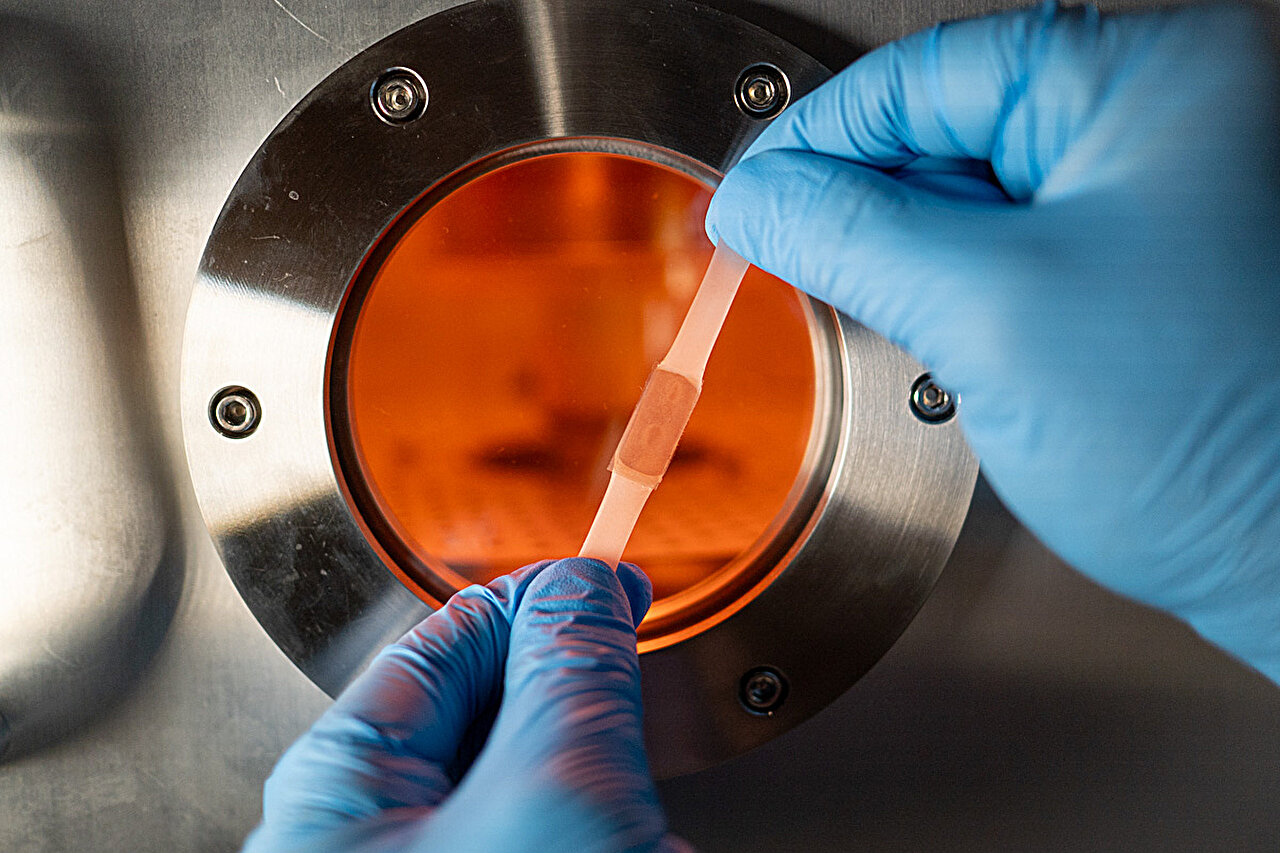
Researchers at the University of Newcastle have developed a plasma-based method for attaching soft hydrogels to stretchable medical materials, a problem that has limited long-wear wound dressings. The team says the approach could help burn patients by keeping dressings in place longer while allowing treatments to reach damaged tissue.
The work was led by Associate Professor Behnam Akhavan, an ARC DECRA Fellow at the University of Newcastle and the Hunter Medical Research Institute, according to Newcastle University. The research was reported in Advanced Materials in a paper led by Masoud Zhianmanesh and colleagues.
Burn care often involves repeated dressing changes, which Newcastle University said can be painful, slow healing and raise infection risk. The new platform is designed to reduce those disruptions by bonding a therapeutic gel to a flexible polymer backing that can move with the body.
How the material works
Hydrogels are useful in biomedical engineering because they resemble soft tissue, according to Akhavan. Their weakness, he said, has been poor mechanical stability and difficulty staying attached to the materials used in medical devices.
The Newcastle team used a plasma-based process to create a strong interface between the gel layer and a stretchable polymer support. Akhavan compared the backing to cling wrap because it conforms to the body while giving the gel a structure that helps hold it in place.
Newcastle University said the bonded structure can let liquid treatments, including antibacterial therapies, pass through the dressing. The device can also be configured with gel on the wound-facing side and a sensing layer on the other side, allowing clinicians to treat a wound and track signals such as pressure, which the team described as relevant to healing.
In laboratory tests assessed seven days after injury, the university said the technology achieved wound closure of up to 90%. Conventional dressings reached 50% closure over the same period, according to the same results.
Beyond burn dressings
Zhianmanesh, a postdoctoral researcher in biomedical engineering at the University of Newcastle, said the hybrid device can be stored dry for years without degrading and rehydrated in a selected biomolecule solution when needed in a clinic. He said that storage and rehydration feature could widen the ways body-worn medical materials are used.
The university said the platform was built with clinical translation in mind. Akhavan said the material is toxin-free and made with environmentally friendly plasma processes.
The technology is patent-pending in Australia and through the international PCT process, according to Newcastle University. The team said the same manufacturing approach could be adapted for several uses, including:
- Advanced wound dressings that stay attached during movement, sweating or longer treatment periods.
- Burn care products meant to reduce dressing changes, pain and infection risk.
- Wearable biosensing patches, including heart-rate or ECG monitoring devices.
- Soft robotics and artificial skin systems that need stronger links between soft biological materials and electronics.
The study, “Universal Method for Covalent Attachment of Hydrogels to Diverse Polymeric Surfaces for Biomedical Applications,” was published in Advanced Materials. The paper is listed under DOI 10.1002/adma.202503524.
This story draws on original reporting from Phys.org.