
Plant variety linked to picky eating in butterfly caterpillars
A global study finds caterpillar diets narrow where plant families are more diverse, especially in tropical regions, while heat can push diets wider.
By Priya Raghavan · Science Reporter
3 min read
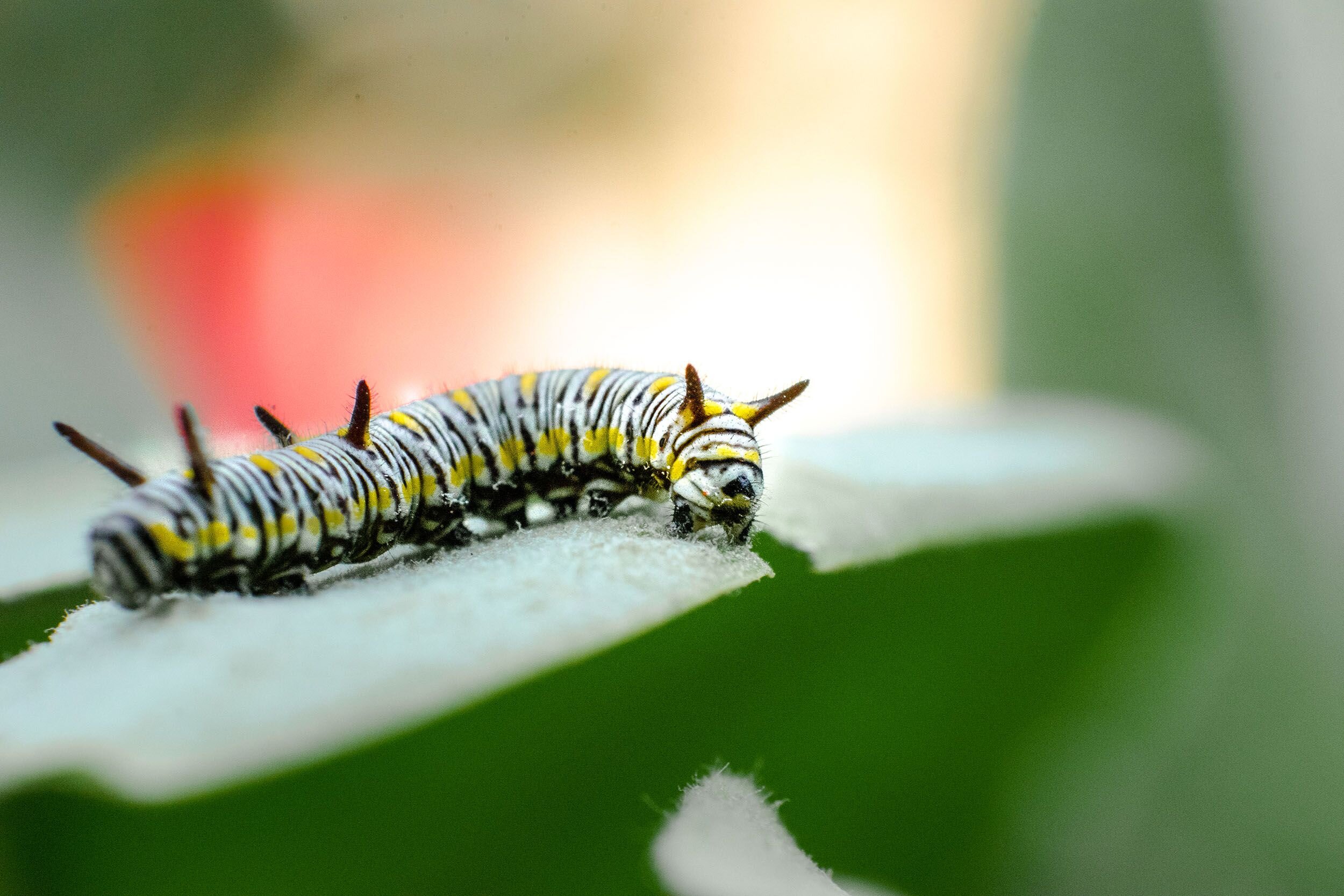
Butterfly caterpillars tend to become more selective eaters in places with a wider mix of plant families, according to a new study in Nature Communications. The finding helps explain a long-observed pattern in insect ecology: herbivorous insects near the equator often feed on fewer kinds of plants than their relatives closer to the poles.
The research was led by Collin P. Gross, a biologist at Stanford University, and examined global records for more than 10,000 butterfly species and more than 150,000 plant species. The team drew on about 87 million field records to compare caterpillar diets with local plant diversity and climate conditions.
Many insect herbivores eat from a broad menu, while others feed on a single plant family or a narrow set of hosts. The study focused on butterfly caterpillars, using diet records that grouped host plants by family and then comparing those diets across regions.
How the study measured diet breadth
Gross and colleagues divided the globe into squares measuring 100 kilometers by 100 kilometers, according to the study. For each square, they assessed the caterpillar species present, the number of plant families those caterpillars used, and how closely related those plants were.
The researchers then compared those diet patterns with local weather data, including temperature and rainfall. Using statistical models, the team assessed how climate and regional plant richness were associated with the range of plants caterpillars eat.
The study found that caterpillars had narrower diets in regions with more plant families. That relationship was especially strong near the equator, where plant diversity is high and where earlier studies had already documented more specialized insect diets.
The authors argue that abundant plant choices may favor specialization. In that situation, caterpillars can focus on a plant family, adapt to its chemical defenses and reduce overlap with other herbivores, according to the study.
Heat pushes in the other direction
Climate did not point in only one direction. The researchers found that hotter conditions were linked with broader caterpillar diets, suggesting that temperature stress and seasonal constraints may make it harder for insects to rely on a narrow set of plants.
Even so, Gross and colleagues reported that the effect of plant richness was strong enough that tropical regions still tend to have more specialized caterpillars. In the paper, the authors wrote that global patterns in plant diversity shaped by climate play a key role in caterpillar diet breadth, while climate also has direct effects of comparable size to plant diversity’s direct effects.
The study also identified islands as an exception to the broader pattern. The authors found that butterflies on islands often had wider diets, which they linked to the need for colonizing insects to use a broader range of available plants in a new setting.
That island pattern changed where islands were dominated by native species found nowhere else, according to the research team. In those cases, the study found a return to narrower diets, which the authors attributed to long periods of isolated evolution with a limited set of island plants.
The paper, “Climate and regional plant richness drive diet specialization in butterfly caterpillars,” was published in Nature Communications in 2026.
This story draws on original reporting from Phys.org.