
Permafrost thaw may spur rock reactions that absorb carbon, study finds
Research on 50 Qinghai-Tibet Plateau rivers found chemical weathering can offset some CO2 released as frozen ground thaws.
By Tom Brennan · Health & Medicine Correspondent
3 min read
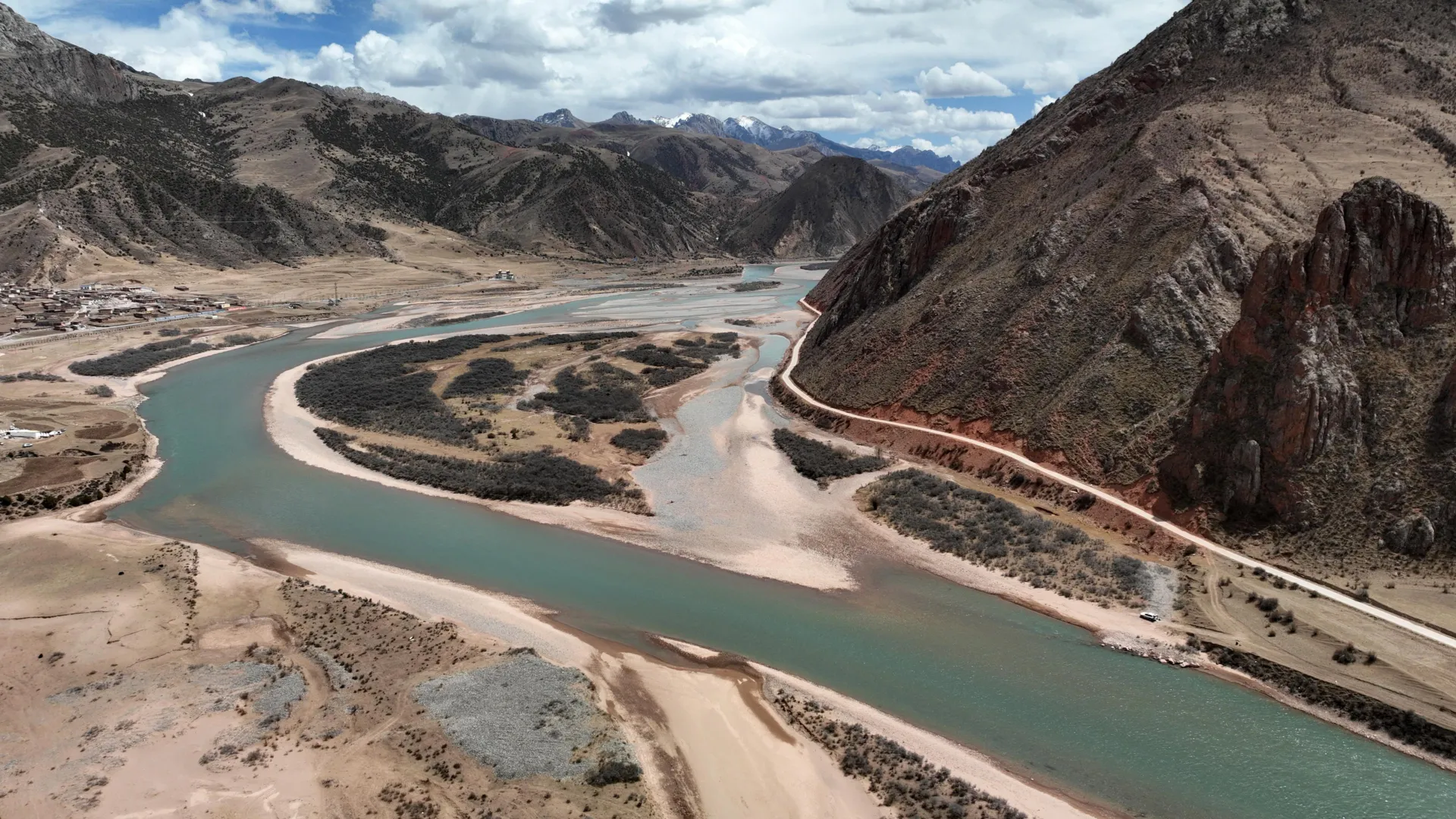
Thawing permafrost can set off rock-weathering reactions that pull carbon dioxide from the air, according to a study published in Nature. The finding matters because permafrost thaw is widely treated as a climate risk driven by greenhouse gas releases, but the researchers found a geological process that can offset part of those emissions in some river basins.
The work was led by scientists at Umeå University in Sweden and East China Normal University in China, according to Umeå University. The team studied 50 rivers on the Qinghai-Tibet Plateau, a high-altitude frozen region outside the polar zones.
Permafrost stores old organic material in frozen ground. As temperatures rise and that ground thaws, microbes can break down the exposed carbon and release greenhouse gases, Umeå University said.
The Nature study found that thaw can also expose minerals and allow water to react with more rock surfaces. Those chemical weathering reactions can consume atmospheric CO2 and move carbon into dissolved inorganic forms carried by rivers, according to the researchers.
Weathering offset varied by permafrost cover
The research team measured river CO2 emissions, dissolved carbon and isotopic tracers, and used geochemical models to assess how thawing ground changes carbon cycling, Umeå University said. The study found that river CO2 emissions fell as permafrost cover decreased, while carbon uptake through rock weathering rose.
Across the study area, rock weathering offset about 35% of river CO2 emissions on average, according to the researchers. The effect was smaller in areas with continuous permafrost.
In basins where permafrost was discontinuous or isolated, weathering-driven carbon uptake sometimes surpassed river CO2 emissions, the study found. Umeå University said those offsets exceeded 100% in some catchments with patchier permafrost.
Liwei Zhang, a biogeochemist at East China Normal University and an author of the study, said the team found stronger rock-weathering carbon uptake as permafrost became less extensive, according to Umeå University. In some of those basins, the uptake was large enough to balance or exceed CO2 released by rivers.
Climate models may need more geology
The study points to a tighter link between biological and geological carbon cycling in thawing regions, according to Jan Karlsson, a professor in Umeå University’s Department of Ecology, Environment and Geoscience. Karlsson said assessments of permafrost’s climate effect need to include both carbon released from old soils and carbon consumed through weathering.
The researchers cautioned that rock weathering should not be treated as a climate fix, Umeå University said. Carbon cycling in thawing regions is complex, and some weathering reactions can release CO2 depending on the minerals involved.
The study’s main conclusion is narrower: geological sources and sinks can emerge as frozen ground thaws, and they are not fully represented in many climate and carbon-cycle models, according to the researchers. Future assessments of permafrost thaw should account for those processes alongside microbe-driven greenhouse gas emissions, Umeå University said.
This story draws on original reporting from ScienceDaily.