
Oxford team creates new class of Schrödinger’s cat-like quantum states
University of Oxford physicists used a trapped ion to build superpositions from nonclassical components, with possible uses in quantum computing and sensing.
By Lucas Ferreira · Science & Environment Writer
3 min read
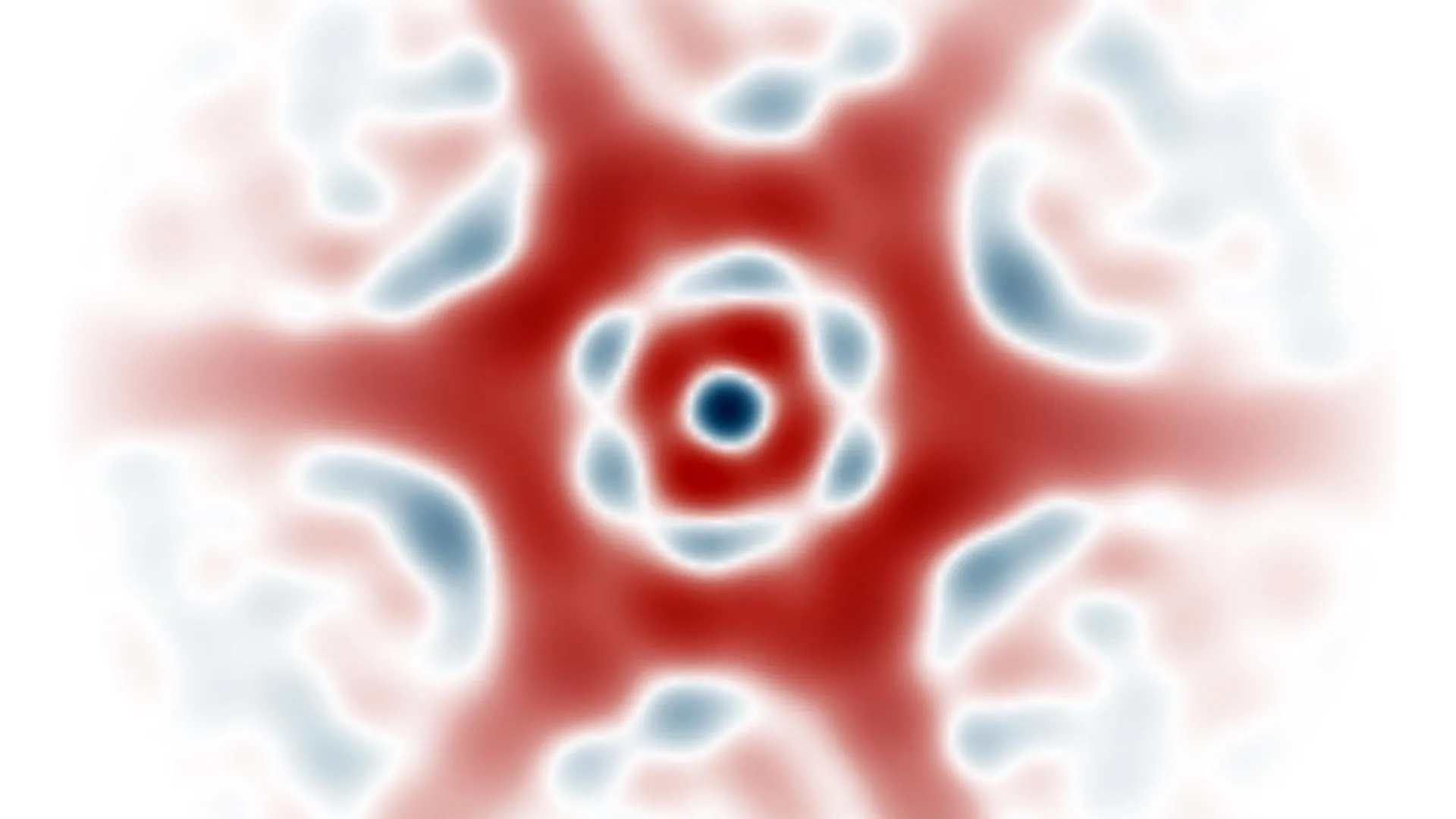
University of Oxford physicists have produced a new class of Schrödinger’s cat-like quantum states built from components that are already strongly quantum, the university said. The work matters because such states could support quantum computers that go beyond standard two-state qubits and may help researchers test the boundary between classical and quantum behavior.
The results were published in Physical Review X in a paper titled “Generating Arbitrary Superpositions of Nonclassical Quantum Harmonic Oscillator States.” The research was led by S. Saner with co-authors O. Băzăvan, D. J. Webb, G. Araneda, D. M. Lucas, C. J. Ballance and R. Srinivas, according to the journal reference released by Oxford.
Schrödinger’s cat is a thought experiment used to describe superposition, the quantum rule under which a system can exist in more than one state until measurement. In laboratories, researchers can make related superpositions with atoms, light and motion, Oxford said.
A common quantum-computing example is the qubit, which can occupy a mix of 0 and 1. Oxford said the new work uses a richer system: a quantum harmonic oscillator, which can hold many energy levels and can describe light, vibration and the motion of trapped particles.
How the experiment worked
Previous cat-state experiments often used coherent states, which Oxford described as the closest quantum counterparts to classical motion. In the new experiment, the Oxford team instead combined nonclassical motional states, including squeezed-state superpositions in which uncertainty is distributed differently across parts of the state.
The platform was a single trapped ion. Oxford said the ion’s internal state functions like a qubit, while its motion acts as a quantum harmonic oscillator with many possible motional states.
The researchers engineered interactions that linked the ion’s internal state with different motional states. They then made a mid-circuit quantum measurement of the internal state, which caused the ion’s motion to settle into the targeted superposition, according to Oxford.
“This approach gave us a tool to sculpt the quantum superposition into almost any shape,” said lead author Dr. Sebastian Saner of Oxford’s Department of Physics.
Evidence of nonclassical behavior
Oxford said the method let the team tune the size, direction and spacing of the components in the superposition. That control allowed the researchers to create a range of motional quantum states within the same trapped-ion system.
The team then reconstructed the states directly. Oxford said the measurements showed interference patterns and areas of Wigner negativity, features that indicate the states cannot be described as ordinary classical mixtures.
The university said the group is now working with theorists to assess how quantum the new states are. “We were really encouraged by our colleagues’ reaction when we showed them what we had made,” said Dr. Raghavendra Srinivas of Oxford’s Department of Physics, who supervised the work. “We believe we’re still scratching the surface of what’s possible, both for practical applications and for understanding these states at a more fundamental level.”
Possible uses
Oxford said the research points to quantum technologies based on oscillators rather than only simple qubits. The university said the states could be useful for quantum computing because they may resist errors better and could support more direct error-correction methods.
The university also said the states may aid sensing technologies and basic physics experiments. In particular, Oxford said the system gives researchers another way to study how the familiar classical world emerges from quantum rules.
This story draws on original reporting from ScienceDaily.