
Osaka team develops battery-free artificial photosynthesis device
The system uses a self-adjusting electrolyzer to make formic acid from water and carbon dioxide under changing sunlight.
By Tom Brennan · Health & Medicine Correspondent
3 min read
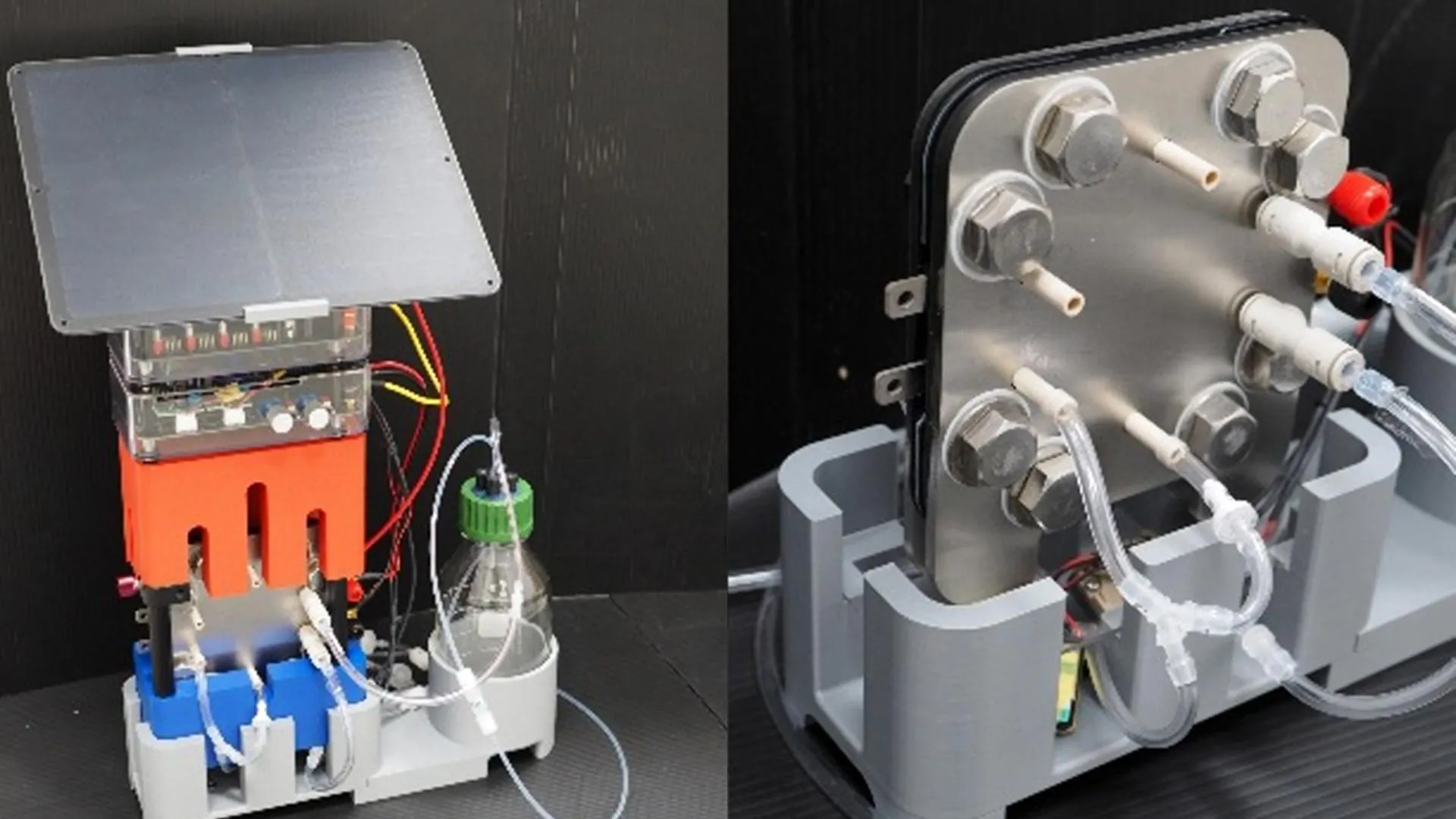
Researchers at Osaka Metropolitan University say they have built an artificial photosynthesis system that can produce solar fuel without the battery-based control equipment commonly used to manage variable sunlight. The work matters because removing batteries and extra electronics could make systems that turn water and carbon dioxide into fuel simpler and less expensive.
The system produces formic acid, a chemical that can store energy and be used as a fuel, according to Osaka Metropolitan University. The university said the device uses sunlight, water and carbon dioxide, echoing the broad principle of plant photosynthesis but using engineered components.
The findings were reported in the journal EES Solar by Yasuo Matsubara, Hinako Kawakami, Yasuhito Kajita and Yutaka Amao. The research was carried out by a team at Osaka Metropolitan University’s Research Center for Artificial Photosynthesis in collaboration with Iida Group Holdings Co., Ltd.
How the device manages changing sunlight
Artificial photosynthesis systems rely on an electrolyzer to convert electricity from solar cells into chemical energy. That chemical energy can then be stored in compounds such as formic acid, according to Osaka Metropolitan University.
A key engineering problem is that sunlight changes through the day, which can push a solar-powered system away from efficient operation. Many systems address that problem with maximum power point tracking, or MPPT, which adjusts voltage and current so solar cells can deliver strong output.
Osaka Metropolitan University said conventional MPPT arrangements often use batteries and additional electronic components to regulate the flow of electricity. Those parts can add cost and complexity to artificial photosynthesis designs.
The team’s approach moves that regulating role into the electrolyzer itself. According to the university, the device contains a specially designed solid electrolyte that allows it to perform an MPPT-like function without external batteries, converters or control electronics.
Yutaka Amao, a professor at Osaka Metropolitan University, said the electrolyzer warms as sunlight becomes stronger. The system was designed so that the warming lowers electrical resistance, allowing current to pass more easily and helping the device adjust its own electrical behavior, according to the university.
Outdoor tests produced formic acid
Osaka Metropolitan University said the researchers tested the system outdoors under real sunlight and found that it continued making formic acid from water and carbon dioxide as light levels changed. The university described the output as stable under fluctuating solar conditions.
The team also linked the research to a public demonstration at the Osaka Kansai Expo 2025. Associate Professor Yasuo Matsubara said the system generated enough formic acid to power a miniature diorama at the Joint Pavilion Iida Group × Osaka Metropolitan University exhibition, according to the university.
The researchers said the self-regulating design could reduce dependence on batteries and other external components in future artificial photosynthesis systems. Osaka Metropolitan University said that, by lowering complexity, the approach could help make solar-fuel production more practical, though the university did not report a timetable for commercial use.
This story draws on original reporting from ScienceDaily.