
New Zealand cave fossils reveal vanished birds from 1 million years ago
Researchers say fossils near Waitomo show volcanoes and climate shifts remade New Zealand’s wildlife long before people arrived.
By Tom Brennan · Health & Medicine Correspondent
3 min read
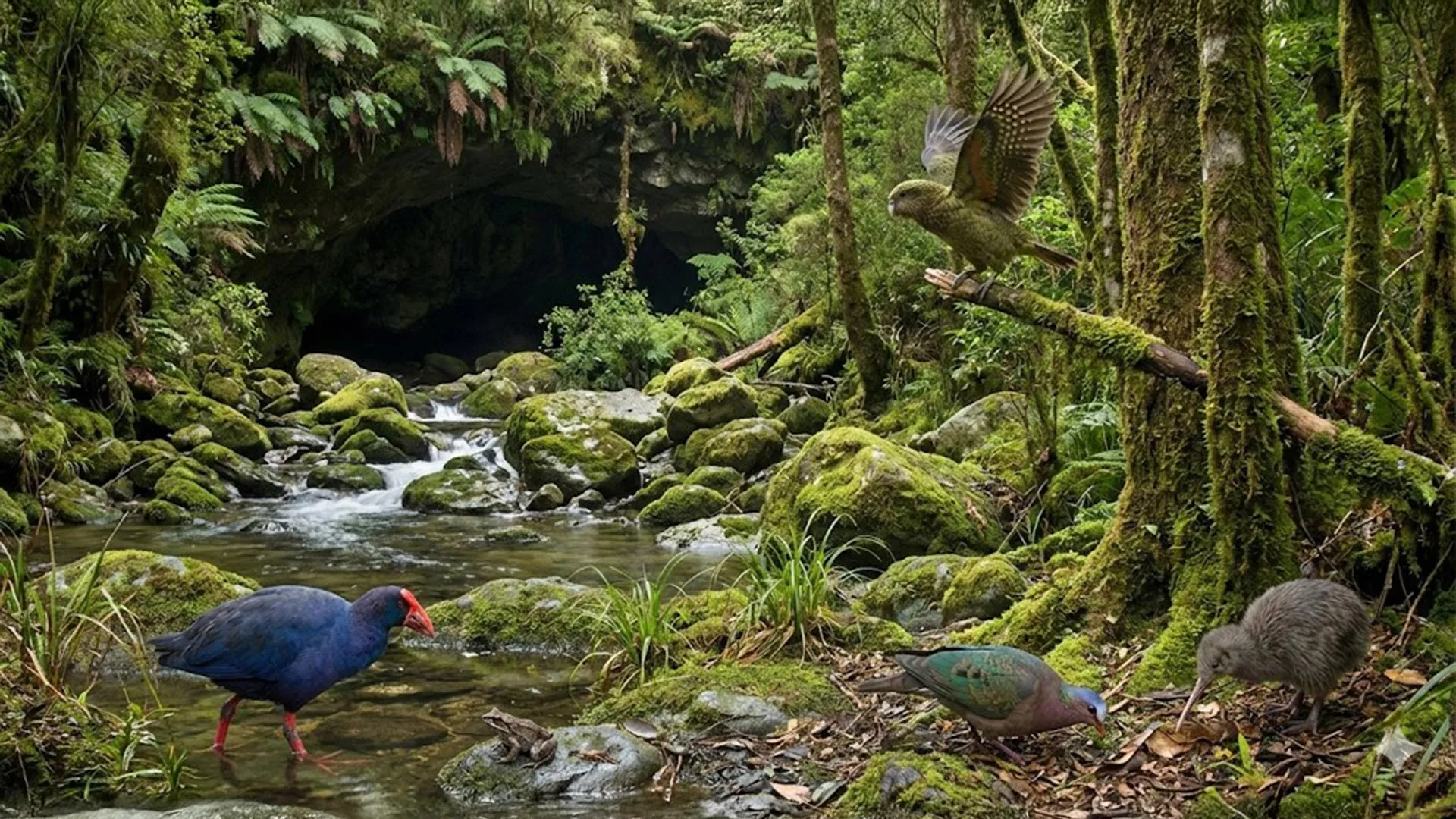
A cave near Waitomo on New Zealand’s North Island has produced a rare fossil record of birds and frogs that lived about 1 million years ago. Flinders University said the find shows New Zealand’s wildlife was changing under pressure from volcanic eruptions and climate swings long before human settlement.
The research, published in Alcheringa: An Australasian Journal of Palaeontology, describes fossils from 12 bird species and four frog species. Flinders University said it is the first large collection of land vertebrate fossils from this period found in New Zealand.
The team included researchers from Flinders University, Canterbury Museum, the University of Auckland and Victoria University of Wellington. Lead author Trevor Worthy, an associate professor at Flinders University, said the fossils point to a bird community unlike the one later encountered by humans in Aotearoa New Zealand.
A gap in the fossil record
Canterbury Museum senior curator Paul Scofield said the discovery helps fill a long blank in the country’s natural history. He said earlier work at St Bathans in Central Otago has shown what life was like between 20 million and 16 million years ago, while the new cave fossils shed light on a much later period that had been poorly documented.
According to the researchers, about 33% to 50% of species disappeared in the million years before humans arrived in New Zealand. Scofield attributed those losses to fast climate changes and major volcanic eruptions.
The fossils were preserved between two volcanic ash layers inside the cave, allowing the researchers to set age limits for the remains. Flinders University said one ash deposit came from an eruption about 1.55 million years ago, while another was produced by an eruption roughly 1 million years ago.
The younger eruption probably buried much of the North Island under meters of ash, the researchers said. Rain and erosion later stripped away much of that material, but some survived in caves. The older ash layer also indicates the site is the oldest known cave on the North Island, according to the research team.
A possible flying kākāpō relative
Among the fossils was a newly identified parrot species, Strigops insulaborealis, described as an ancient relative of the kākāpō. The modern kākāpō is a flightless, nocturnal New Zealand parrot and one of the heaviest parrots alive today.
Flinders University said the fossil bones suggest the ancient parrot had weaker legs than living kākāpō. Because modern kākāpō depend on powerful legs for climbing, the researchers said the extinct relative may have climbed less and may have retained flight, though further study is needed to test that idea.
The cave also yielded fossils from an extinct takahē ancestor and an extinct pigeon related to Australian bronzewing pigeons. Scofield said changing forest and shrubland habitats appear to have reorganized bird populations and helped drive evolutionary diversification on the North Island.
Worthy said the fossils give scientists a missing baseline for tracing New Zealand’s wildlife history. Flinders University said the findings broaden the picture of extinction beyond the period after humans arrived about 750 years ago, showing that natural forces had already been reshaping the islands’ animals for hundreds of thousands of years.
This story draws on original reporting from ScienceDaily.