
Machine learning study finds warning patterns before some major quakes
GFZ-led researchers say an unsupervised machine learning method detected foreshock patterns before several major earthquakes, but not all.
By Tom Brennan · Health & Medicine Correspondent
3 min read
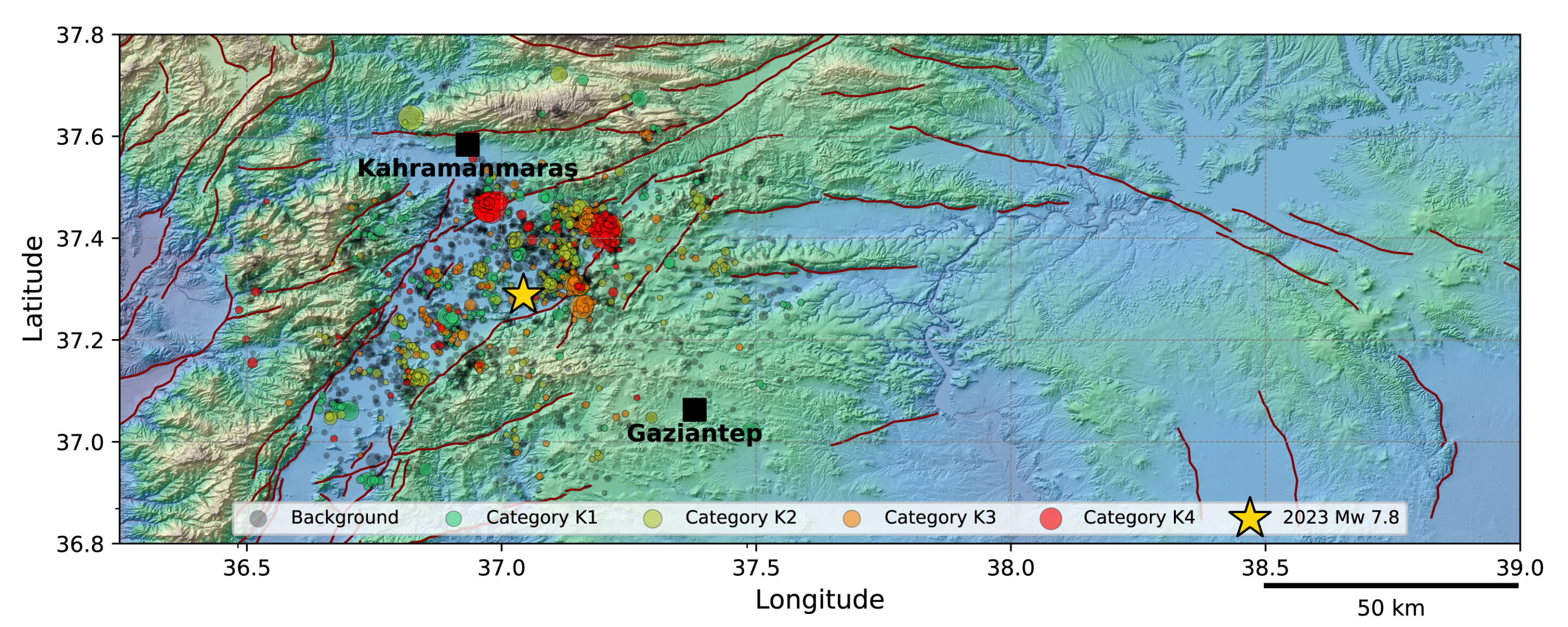
Researchers led by the GFZ Helmholtz Centre for Geosciences say a machine learning method has identified hidden shifts in seismic activity before some large earthquakes. The findings could aid operational earthquake forecasting, while underscoring that many quakes may still occur without clear warning signals.
The study, published in Nature Communications, was led by Sadegh Karimpouli and Patricia Martínez-Garzón of GFZ with international partners. According to GFZ, the team used unsupervised machine learning, meaning the system searched earthquake catalogs for structure without being told in advance what precursors to find.
Looking at earthquake “families”
Rather than studying single events one by one, the researchers grouped earthquakes into related “families” based on links in space, time and magnitude. GFZ said the approach was designed to capture how earthquakes interact as stress changes in the crust.
Karimpouli said the team let the data reveal its own structure instead of searching for a fixed precursor pattern. GFZ said similar unsupervised methods have been used to detect early stages of landslides and volcanic eruptions, and the researchers had previously tested this earthquake-family approach in laboratory earthquake experiments.
The team extracted physical and statistical features from seismicity catalogs, including clustering, spatial concentration and indicators tied to stress. The algorithm then sorted the earthquake families into categories that the researchers interpreted as different stages in stress development.
Patterns appeared in three major sequences
GFZ said the method found a distinct category of seismicity before three well-documented earthquakes where precursor activity had already been reported: the 2023 magnitude 7.8 Kahramanmaraş earthquake in Türkiye, the 2014 magnitude 8.1 Iquique earthquake in Chile and the 2009 magnitude 6.1 L’Aquila earthquake in Italy.
In those cases, the researchers said the signals emerged weeks to months before the mainshock. The “critical” patterns included stronger clustering and interaction among earthquakes, tighter spatial and temporal localization, and greater release of seismic strain, according to GFZ.
Karimpouli said the observations showed a shift from relatively stable activity known from earlier regional behavior to a more organized, critical state before rupture. GFZ said those features may indicate that a fault system is moving closer to instability.
Limits remain for forecasting
The method did not find the same kind of preparatory pattern before every earthquake the team examined. GFZ said no clear critical category appeared before the 2016 Amatrice earthquake in Italy, and long-running swarm activity before the 2024 Noto earthquake in Japan did not develop into a clear preparatory signal.
Martínez-Garzón said the variation reflects both monitoring limits and the complexity of earthquake processes. She said some faults may fail without obvious seismic warning signs, which remains a major obstacle for forecasting.
The researchers also tested the approach in a prospective way within the same earthquake sequences, GFZ said, by using earlier regional earthquakes as a baseline and then updating the analysis as additional events occurred. A new category of seismic behavior could flag that a fault system is acting differently from its past pattern.
Karimpouli cautioned that the work does not make deterministic earthquake prediction possible. He said it offers a way to recognize when a fault system departs from its usual behavior.
Martínez-Garzón said the next step is to connect such methods with real-time monitoring and to determine why some large earthquakes show detectable preparatory phases while others do not. GFZ said the work was funded through Martínez-Garzón’s ERC Starting Project QUAKEHUNTER.
This story draws on original reporting from Phys.org.