
New Horizons data show solar wind slowing in outer solar system
Measurements from NASA’s distant probe link a gradual solar wind slowdown to interstellar atoms entering the heliosphere.
By Tom Brennan · Health & Medicine Correspondent
3 min read
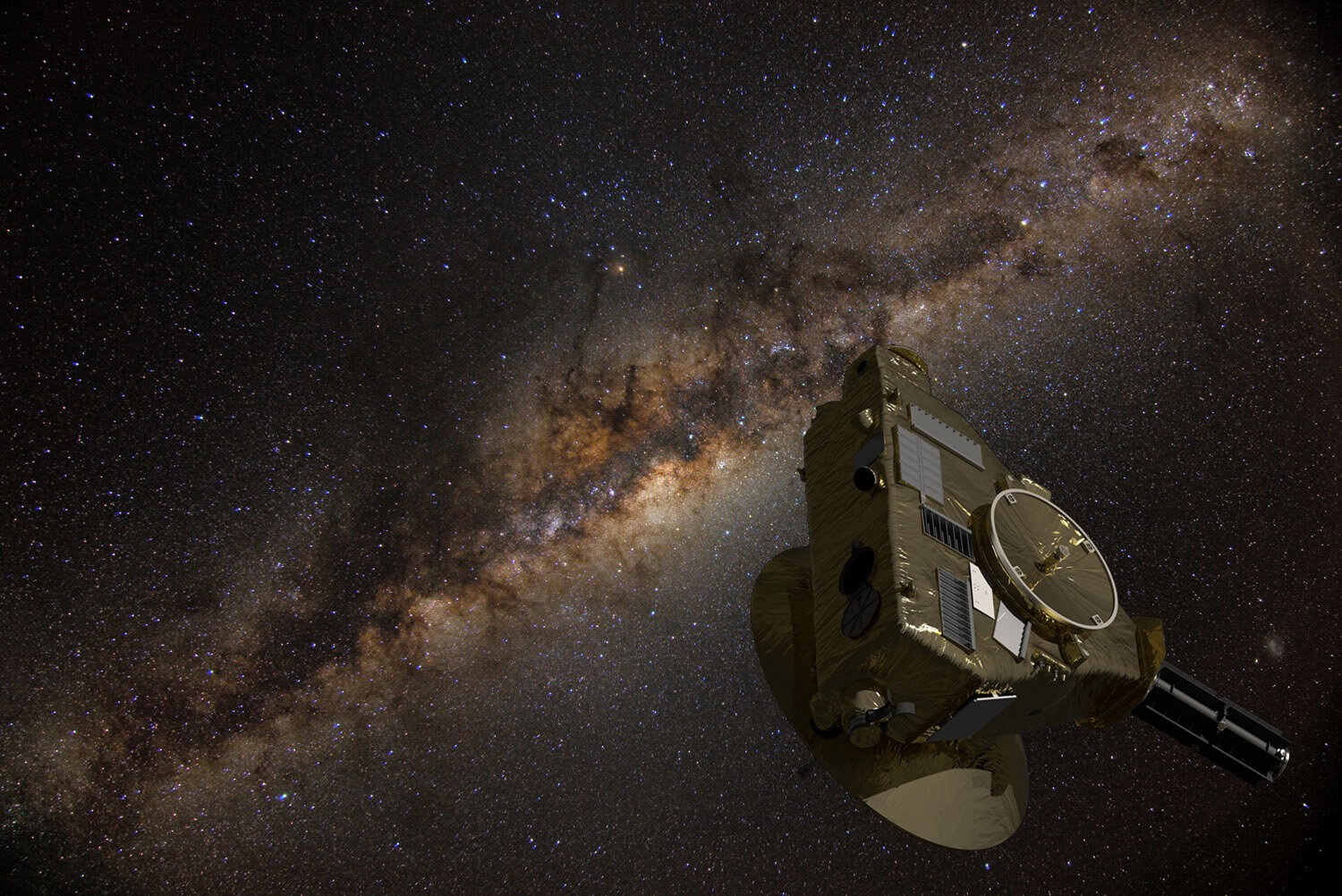
NASA’s New Horizons spacecraft has measured a steady weakening of the solar wind far beyond Uranus, giving researchers a clearer view of how the sun’s influence fades near interstellar space. Southwest Research Institute said the findings help explain how neutral atoms from outside the solar system add drag to the stream of particles flowing from the sun.
The study, led by SwRI scientist Heather Elliott, appears in The Astrophysical Journal. It uses readings from the Solar Wind Around Pluto instrument, known as SWAP, aboard New Horizons.
New Horizons is now about 66 astronomical units from the sun, according to SwRI. One astronomical unit is the average Earth-sun distance, about 93 million miles.
Interstellar atoms add mass to the flow
The research team examined solar wind speeds recorded by New Horizons between 21 and 58 astronomical units and compared them with measurements closer to the sun. SwRI said the data show the solar wind is slowing gradually as it moves through the outer heliosphere, the region shaped by the sun’s outflow of particles.
Elliott said the solar wind leaves the sun at supersonic speeds of about 1 million miles per hour. Far from the sun, it runs into neutral gas particles entering the heliosphere from interstellar space, she said.
According to Elliott, those neutral atoms can become ionized through charge exchange with solar wind ions. That process adds interstellar material to the solar wind, increasing its mass and reducing its speed.
Earlier measurements from New Horizons and Voyager 2 between 30 and 43 astronomical units found the solar wind was 5% to 10% slower than near Earth, SwRI said. The newer New Horizons data show that by 58 astronomical units, the solar wind is 13% to 15% slower than at 1 astronomical unit.
SwRI said the result matches earlier models describing how interstellar material enters the heliosphere and alters the solar wind. The slowdown also gives researchers a way to track the diminishing reach of the sun across very large distances.
A sharper drop lies farther out
The gradual deceleration measured by New Horizons is separate from the much steeper speed change expected at the termination shock. That boundary is where solar particles slow rapidly to below the local plasma speed of sound, with plasma including both solar wind particles and interstellar pickup ions.
Voyager 2 recorded a 46% speed drop at the termination shock at 84 astronomical units, according to SwRI. New Horizons has not yet reached that region.
SwRI said understanding the outer heliosphere matters because its boundaries help regulate how many galactic cosmic rays can enter the solar system and reach Earth. Elliott said New Horizons data, combined with observations from missions including IBEX, IMAP and Voyager, should improve models of the solar system’s edge.
Galactic cosmic rays are a concern for astronauts outside Earth’s protective atmosphere, including on the moon and on possible Mars missions, SwRI said. The institute said such radiation can raise cancer risks for travelers and affect spacecraft technology.
Clues for other stars
The findings may also help scientists study astrospheres, the heliosphere-like protective bubbles around other stars, according to SwRI. Those structures can show how stars interact with surrounding interstellar material.
Alan Stern, New Horizons’ principal investigator and an SwRI associate vice president, said the spacecraft remains the only mission operating in the sun’s outer heliosphere and is extending the record built by the Voyager probes.
The Johns Hopkins Applied Physics Laboratory designed, built and operates New Horizons and leads the mission for NASA’s Science Mission Directorate. SwRI directs the mission through Stern and built, calibrated and operates the SWAP instrument, while NASA’s Marshall Space Flight Center provides oversight for the New Frontiers Program mission.
This story draws on original reporting from Phys.org.