
Neuron scaffold may help limit Alzheimer’s-linked protein buildup
Penn State researchers say a lattice beneath neuron membranes controls cellular uptake and may be a target for slowing early neurodegeneration.
By Priya Raghavan · Science Reporter
3 min read
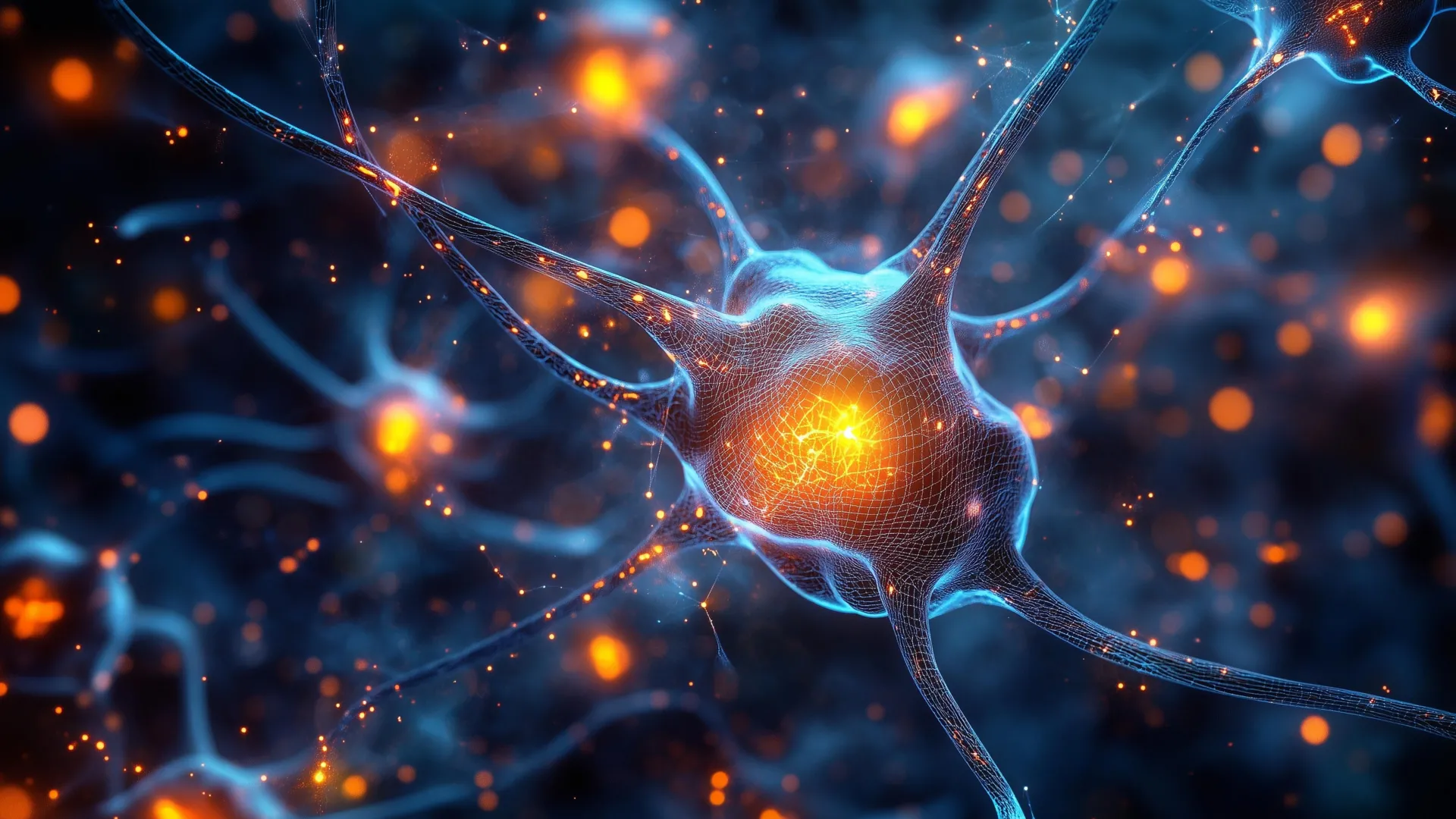
A protein lattice just under the surface of neurons appears to control how brain cells take in outside material, according to Penn State researchers. The finding matters because disruption of that structure sped the uptake of Alzheimer’s-linked proteins in lab-grown neurons and was tied to signs of cell death.
The work, published in Science Advances, focuses on the membrane-associated periodic skeleton, or MPS. Penn State said the structure was already known as part of a neuron’s internal support system, but the new study found it also regulates major forms of endocytosis, the process cells use to absorb nutrients, signaling molecules and other material.
Ruobo Zhou, a Penn State assistant professor and corresponding author of the study, said failures in that process are connected to neurodegenerative disease because abnormal protein buildup in the brain is a hallmark of conditions such as Alzheimer’s and Parkinson’s.
How the lattice controls uptake
The MPS is made of repeating protein rings beneath the neuronal membrane. Zhou helped identify the structure in 2013 while working as a postdoctoral researcher on a Harvard team, according to Penn State.
For the new study, researchers used super-resolution microscopy to examine neurons grown in laboratory dishes. Penn State said the imaging approach allowed the team to observe nanoscale structures while tracking how neurons absorbed different molecules.
The team also changed the condition of the MPS by damaging or protecting sections of the lattice. When the structure was disrupted, neurons took in material more rapidly, leading the researchers to conclude that an intact MPS normally acts as a brake on excessive uptake.
Zhou described the structure as a gatekeeper that can open when a neuron needs to bring in a nutrient. Penn State said that flexibility may help neurons respond to demands, but could become harmful if the control system breaks down.
Feedback loop raised concern
The researchers reported that faster endocytosis could further weaken the MPS. Penn State said the increased uptake activated molecular signals that caused proteins inside neurons to cut parts of the skeleton, creating more openings for material to enter the cell.
That finding points to a feedback loop in which damage to the lattice increases cellular uptake, and increased uptake causes additional damage to the lattice. The study identified that loop as a possible route by which neurons may become more vulnerable under aging or disease conditions.
To test links to Alzheimer’s-related biology, the researchers created cell experiments that Penn State said resembled early disease conditions. They increased levels of amyloid precursor protein, or APP, a marker associated with Alzheimer’s disease.
When the MPS was weakened, neurons absorbed APP more quickly. Once inside the cells, Penn State said APP was cut into amyloid-B42, a toxic fragment strongly associated with Alzheimer’s disease, and damaged neurons showed rising levels of that molecule along with more markers of cell death.
Jinyu Fei, a Penn State chemistry graduate student and lead author of the study, said the model showed that in aging neurons or neurons under pathological conditions, uptake of toxic proteins was enhanced and contributed to cellular stress and neuron death.
Possible target for future therapies
The researchers said the findings suggest the MPS may help protect neurons by limiting APP uptake and slowing accumulation of toxic fragments. Penn State said the structure is known to deteriorate during aging and neurodegenerative disease.
Fei said preserving or stabilizing the MPS could offer a way to slow early cellular changes that occur before Alzheimer’s symptoms. The National Institutes of Health funded the research, according to Penn State.
This story draws on original reporting from ScienceDaily.