
Iliad fragment found in Roman-era mummy at Egyptian site
University of Barcelona researchers say the papyrus is the first known Greek literary text used in mummification.
By Tom Brennan · Health & Medicine Correspondent
3 min read
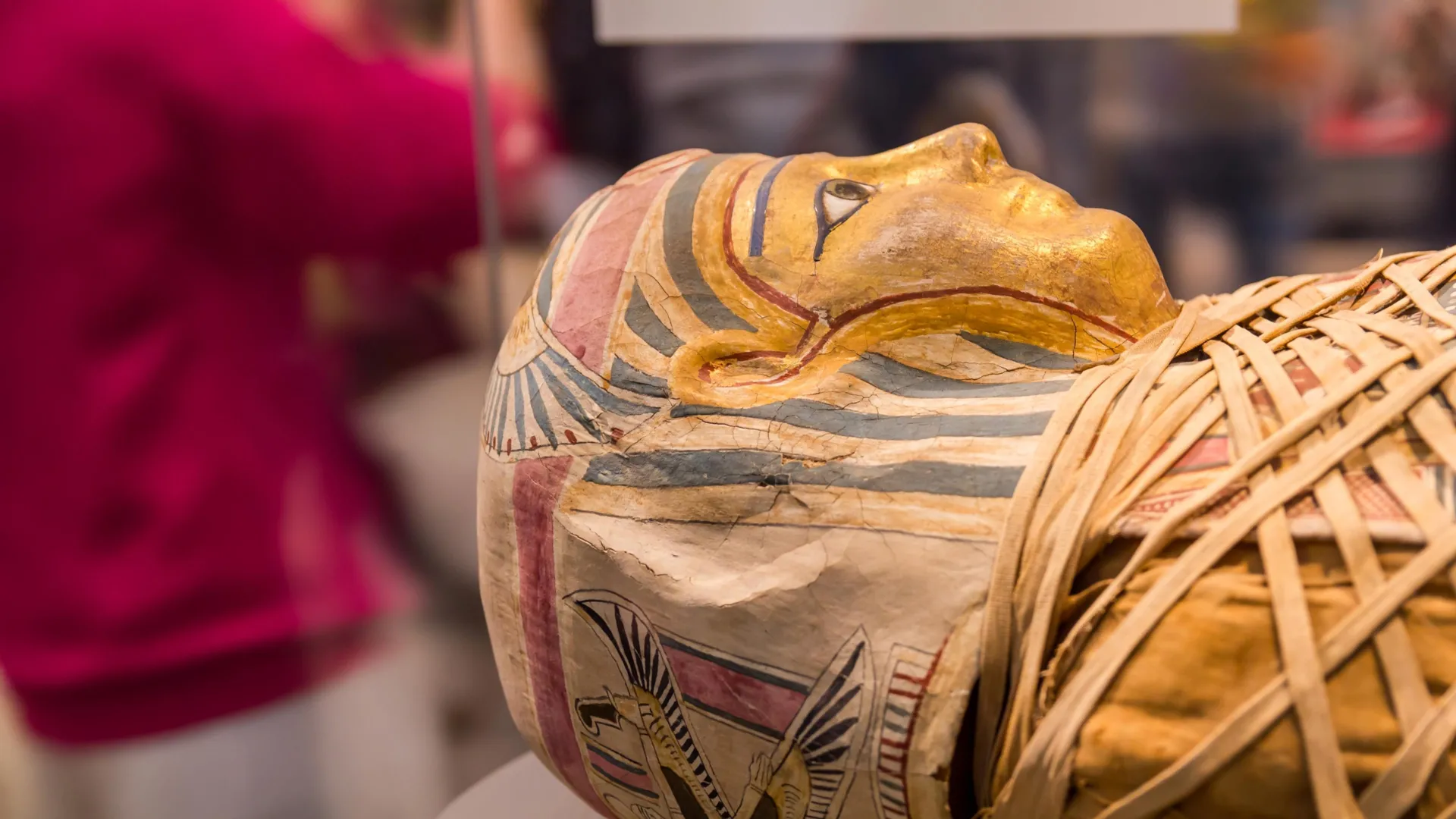
Archaeologists in Egypt have identified a fragment of Homer’s Iliad inside a roughly 1,600-year-old mummy, the University of Barcelona said. The find matters because researchers say it is the first archaeological evidence that a Greek literary text was deliberately used in the mummification process.
The papyrus was found at Al Bahnasa, the modern town that occupies the site of ancient Oxyrhynchus, during work by the Oxyrhynchus Archaeological Mission. The mission is directed by Maite Mascort and Esther Pons through the University of Barcelona’s Institute of Ancient Near East Studies.
According to the university, a team led by Núria Castellano uncovered the mummy between November and December 2025 in Tomb 65 of Sector 22. The mummy dates to the Roman era, and the papyrus had been placed on its abdomen as part of the embalming rite, the researchers said.
The mission had previously found Greek papyri incorporated into mummies in comparable positions, the University of Barcelona said. Those earlier examples were magical or ritual texts, making the newly identified literary papyrus unusual for its context.
Fragment traced to Book II
The papyrus was examined during a second campaign in January and February 2026. Conservator Margalida Munar, papyrologist Leah Mascia and Ignasi-Xavier Adiego, a professor in the university’s Department of Classical, Romance and Semitic Languages and director of the Oxyrhynchus project, studied the document.
Using Mascia’s reading, Adiego identified the text as part of the “Catalogue of Ships” in Book II of the Iliad, according to the university. The passage lists Greek forces preparing for the Trojan War and is among the best-known sections of the epic.
Adiego said the mission had found Greek papyri “bundled, sealed, and incorporated into the mummification process” before, but those texts were chiefly magical. He said the new feature is the discovery of a literary papyrus in a burial setting at Oxyrhynchus, a site long associated with major papyrus finds.
Work at Oxyrhynchus
Ancient Oxyrhynchus was one of the major cities of Greco-Roman Egypt, according to the University of Barcelona. The site lies about 190 kilometers south of Cairo, near the Bahr Yussef branch of the Nile, and has yielded thousands of ancient papyri since the late 19th century.
The recent excavation in the Al Bahnasa necropolis revealed a funerary complex with three limestone burial chambers, Roman-era mummies and decorated wooden sarcophagi, the university said. Many tombs at the site had been disturbed by looting, leaving some objects badly damaged.
The University of Barcelona’s mission at Oxyrhynchus began in 1992 under Professor Josep Padró. The university describes it as one of Spain’s longest-running archaeological projects in Egypt.
The latest field season ran from November 2025 to February 2026 and produced several finds the researchers consider historically and archaeologically significant, according to the university. The project is supported by Spain’s Ministry of Culture, the University of Barcelona, the Palarq Foundation, the Catalan Egyptology Society and AIXA Serveis Arqueològics, with cooperation from Egypt’s Supreme Council of Antiquities and Cairo University.
Members of the project presented the recent discoveries in a public lecture series at the University of Barcelona’s Faculty of Philology and Communication. The program included talks on archaeology, anthropology and conservation.
This story draws on original reporting from ScienceDaily.