
Cancer-prone pet gecko offers researchers a new tumor model
Researchers say lemon frost leopard geckos develop tumors naturally and share genetic cancer signals seen in humans.
By Lucas Ferreira · Science & Environment Writer
3 min read
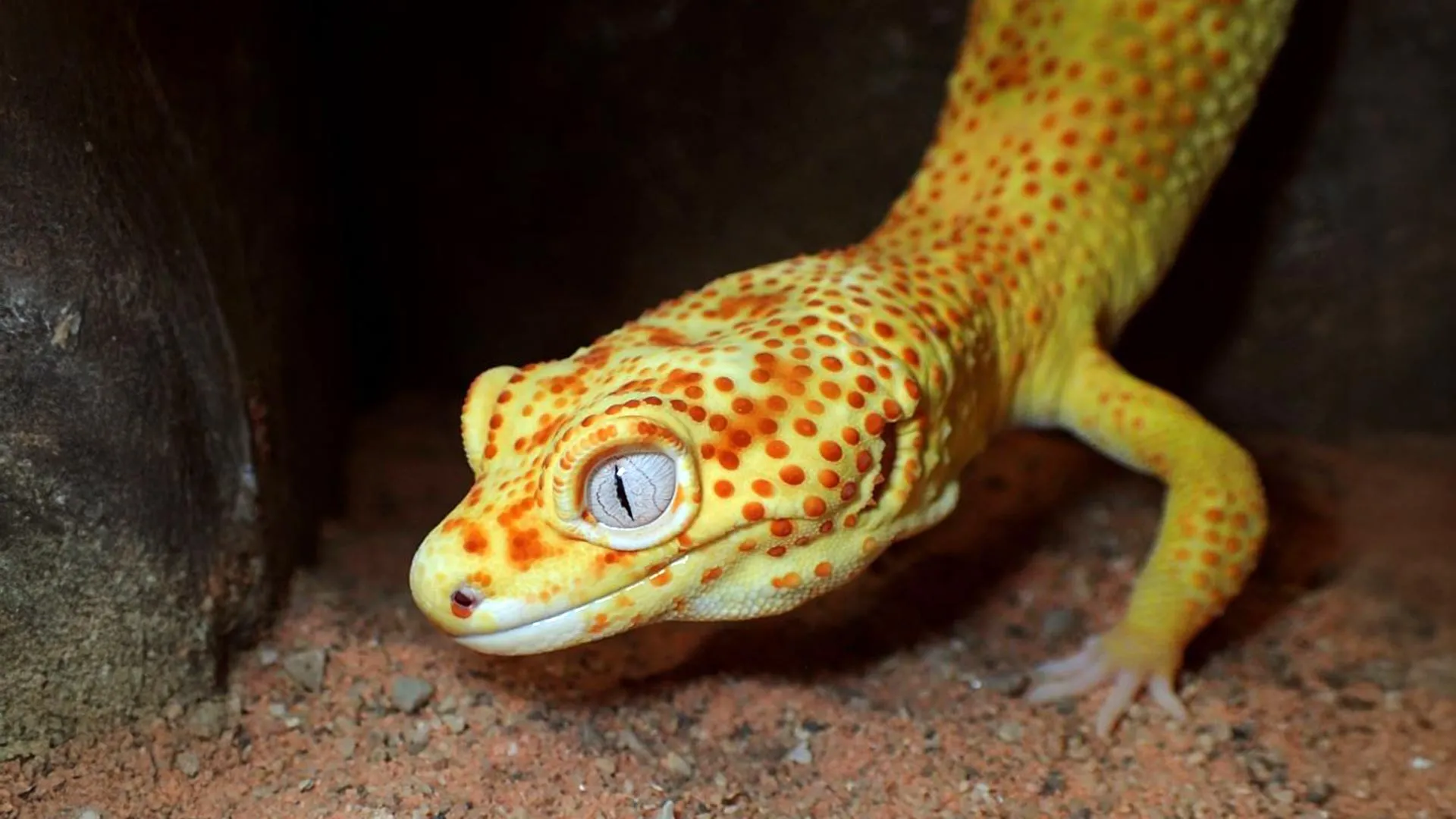
A white-and-yellow leopard gecko sold in the pet trade may give cancer researchers a new way to study how tumors arise and spread. A University of Nottingham-led team reported in BMC Biology that tumors in the “lemon frost” gecko carry genetic changes tied to cancer in humans and other animals.
The finding matters because the geckos develop cancer without researchers having to induce it in a lab. According to the University of Nottingham, about 80% of lemon frost geckos develop aggressive tumors, often at a young age.
Dr. Ylenia Chiari of the University of Nottingham’s School of Life Sciences led the study. The international team included Brandon Hastings of Nottingham, Dr. Scott Glaberman of the University of Birmingham, Dr. Tony Gamble of Marquette University, Dr. Robert Ossiboff of the University of Florida, and Virginia Gazziero and Dr. Giulio Caravagna of the University of Trieste.
A pet-trade mutation with a medical clue
The lemon frost variety began with a spontaneous mutation during selective breeding in a large leopard gecko colony, according to the University of Nottingham. Its bright coloration made it popular with breeders, who later observed that many of the animals developed tumors that could spread through the body.
The cancer pattern stands out among reptiles. The researchers said turtles and tortoises rarely get cancer, while lemon frost geckos show unusually high susceptibility.
Chiari said the gecko could become a useful cancer model because its tumors appear naturally and comparatively early. She said studying animals at both ends of cancer vulnerability could help researchers understand how species have evolved different defenses or weaknesses against the disease.
Genome sequencing links gecko tumors to known cancer pathways
To investigate the tumors, the team compared tumor samples with healthy tissue from the same animals using whole-genome sequencing. The researchers found repeated genetic alterations across the tumor samples.
Many of the affected genes and biological pathways have already been associated with cancers in humans and other animals, the University of Nottingham said. That overlap suggests the gecko may be useful beyond reptile biology, though the findings do not point to an immediate treatment.
The gecko model may complement traditional cancer studies in mice. According to the researchers, laboratory mice often need tumors to be triggered experimentally, while lemon frost geckos provide a chance to watch cancer develop under natural conditions, including metastasis.
Hastings said the work shows the value of looking across many branches of life for clues about human disease. He also said software built for analyzing human cancer genomes can be adapted to study cancer-related changes in other organisms.
Biodiversity as a research resource
Glaberman said the study supports broader investigation of species that either resist cancer or develop it readily. He linked that approach to biodiversity, saying a wider range of species can expand what researchers learn about disease.
The University of Nottingham said the study underscores the case for adding naturally cancer-prone species to the research toolkit. For lemon frost geckos, a trait that emerged in the pet trade may now help scientists study the biology of tumors as they form, evolve and spread.
This story draws on original reporting from ScienceDaily.