
New Stanford-ADP data points to AI pressure on entry-level jobs
A dashboard built on ADP payroll records shows young workers in AI-exposed roles losing ground while headline job numbers stay muted.
By Daniel Okafor · Business Editor
3 min read
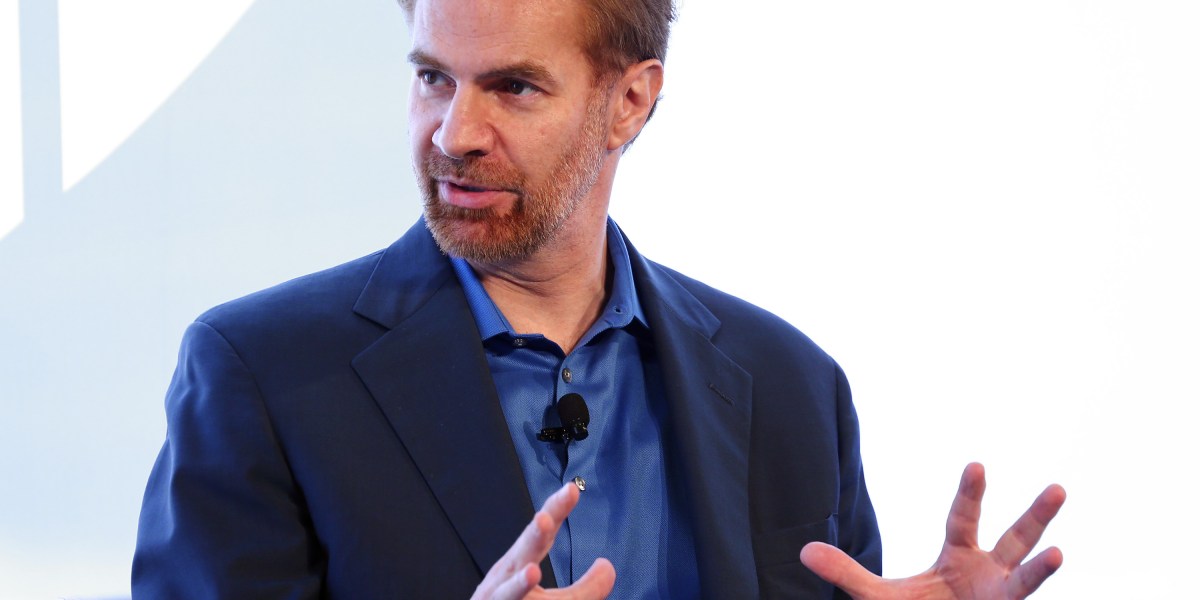
New payroll-based research from Stanford’s Digital Economy Lab and ADP Research shows employment weakening for young workers in jobs most exposed to artificial intelligence. The findings matter because the overall labor market figures mask a sharper split by career stage, according to Stanford economist Erik Brynjolfsson and ADP chief economist Nela Richardson.
The Canaries Dashboard, a new project from Brynjolfsson’s lab and ADP Research, draws on records covering 4.6 million workers across more than 730 occupations. ADP Research says its payroll data covers about one in six U.S. workers, giving the project a large view of labor shifts tied to AI exposure.
Brynjolfsson’s team first published related findings last August, using a large ADP administrative dataset to study the labor impact of generative AI. That paper found a relative decline in employment for workers ages 22 to 25 in occupations considered highly exposed to AI, even after accounting for other economic shocks.
Several critics disputed the explanation. Fortune reported that Google economists pointed to interest rates, while others cited tech-sector overhiring, remote-work effects and pandemic-era noise. Torsten Slok of Apollo Global Management has argued that weak entry-level hiring reflects a low-hiring, low-firing labor market rather than an AI jobs crisis.
Brynjolfsson told Fortune the updated data has not made the pattern disappear. “Whatever it is,” he said, “it’s not going away.”
Headline numbers show little disruption
The broad figures remain modest, according to the Canaries Dashboard. As of April 2026, the most AI-exposed occupations were down 0.2% from a year earlier, while the least-exposed jobs were up 0.1%.
Since ChatGPT’s introduction in late 2022, annual employment growth in AI-exposed occupations has risen 1.1%, compared with 2% growth in the least-exposed roles, according to the dashboard. Those aggregate numbers are why the researchers say the labor-market effect can look small until workers are separated by age.
For workers ages 22 to 25, employment in highly AI-exposed occupations is falling at a 3.8% annual rate, the dashboard shows. The decline was 2.8% through April 2024 and has exceeded 4% a year since then, according to Fortune’s account of the data.
In the same 22-to-25 age group, jobs with low AI exposure are growing 2% annually, according to the dashboard. Employment for workers ages 31 to 34 in highly exposed roles is down 1.7% year over year, while workers ages 35 to 40 are seeing 2% growth.
Researchers point to task-level automation
Brynjolfsson and Richardson argue that AI’s first labor-market effects are showing up in tasks rather than whole occupations. Fortune reported that the tasks most exposed include retrieving information, summarizing, scheduling, formatting and assembling information — work often assigned to employees early in their careers.
Richardson wrote in a June 16 ADP Research post that AI’s overall jobs effect remains modest, but that “dramatic differences emerge” when the data is viewed by career stage. She has argued that jobs where AI augments workers show more durable growth, while jobs where AI automates tasks show contraction.
Brynjolfsson told Fortune he tested the result against major alternative explanations. He said the pattern remained after removing the tech industry, excluding tech-related occupations and isolating remote-work effects.
The debate is also playing out among leading economists. Fortune reported that Brynjolfsson and MIT economist Daron Acemoglu, a Nobel laureate, have sparred over AI’s likely productivity impact, though both support using AI to complement workers rather than replace them.
Brynjolfsson has compared the shift to the Industrial Revolution and told Fortune he expects AI’s effect on work and productivity to be larger and faster. He also said he has a 10-year wager with Northwestern economist Robert Gordon that productivity will be significantly higher by the end of the decade.
This story draws on original reporting from Fortune.