
Surface-bound molecules reach Fourier quantum limit in optics experiment
Researchers cleaned an organic crystal surface in vacuum, then placed molecules on it cold enough to preserve their quantum-optical behavior.
By Tom Brennan · Health & Medicine Correspondent
3 min read
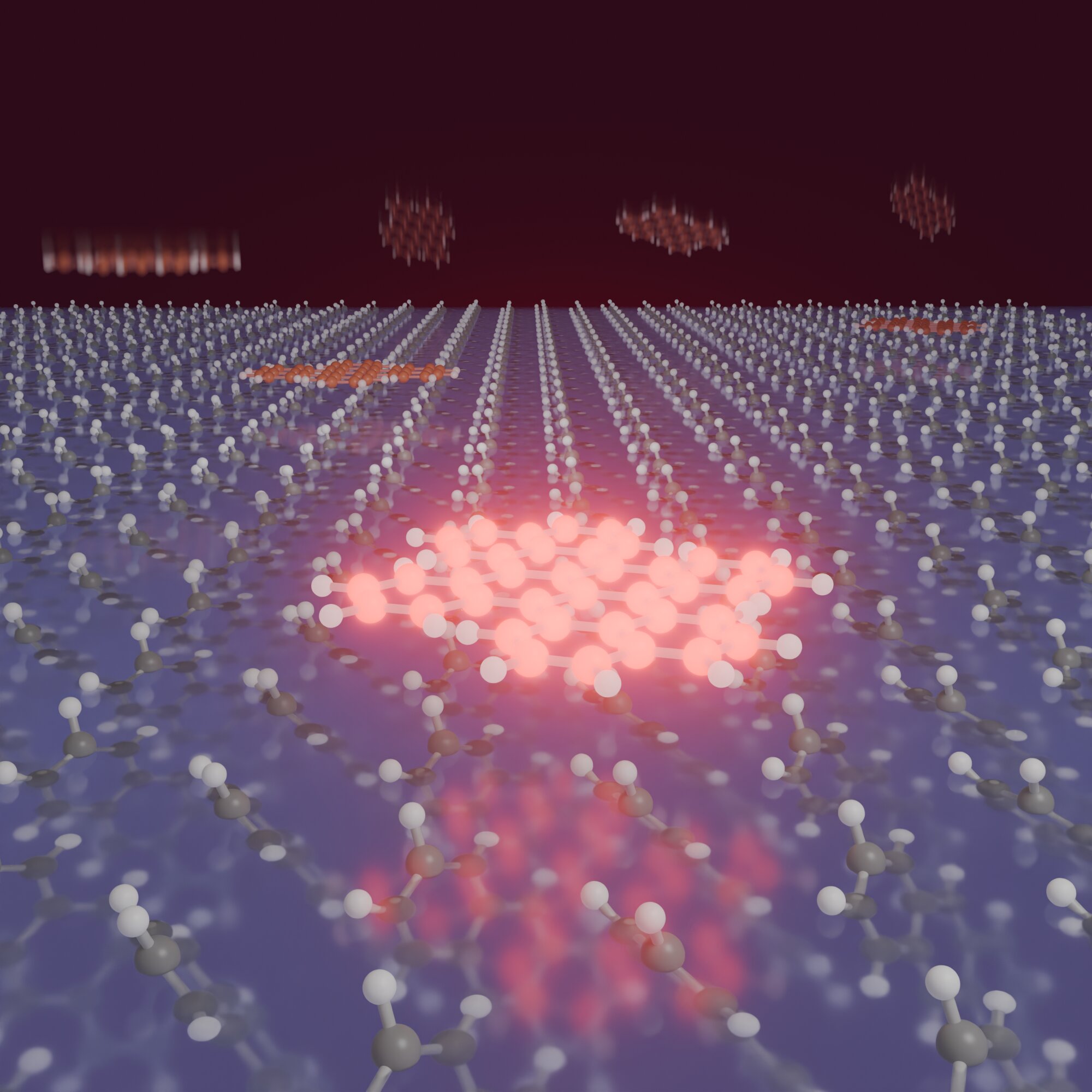
Researchers at the Max Planck Institute for the Science of Light say they have measured single molecules on a surface with enough precision to reach a basic quantum-optical limit for the first time. The work matters because surface-bound quantum emitters could be easier to control with nanoscale tools than emitters trapped in vacuum or embedded inside bulk materials.
The findings were published in Science in a paper by Masoud Mirzaei and colleagues, according to the institute. The study reports a nano-electron-volt Fourier-limited transition in a single molecule adsorbed on a surface.
Quantum emitters such as atoms and molecules can interact strongly with light, according to MPL. Such objects are used in research on single-photon generation, quantum information storage and entanglement distribution, which are relevant to quantum communication and computing.
Studying one emitter at a time requires holding it steady for long periods, MPL said. Researchers commonly do that by trapping emitters in vacuum or placing them inside a solid host, but a molecule sitting on a surface would offer another advantage: it could be manipulated locally with an atomically sharp probe of the kind used in scanning tunneling microscopy or atomic force microscopy.
Surface contamination was the barrier
The difficulty has been the surface itself, according to MPL. Exposed surfaces readily collect unwanted material from their surroundings, creating unstable local conditions that disturb the quantum-optical properties researchers want to measure.
The Nano-Optics Division at MPL, led by Prof. Vahid Sandoghdar, addressed that problem with a cleaning method based on the behavior of an organic crystal. The researchers placed a small crystal in a vacuum cryostat and used the fact that its upper layers gradually evaporate at room temperature, carrying contaminants away with them, MPL said.
After the surface was cleaned, the team cooled the crystal to a few degrees Kelvin above absolute zero to halt further sublimation. The researchers then used a microfabricated oven to deposit molecules onto the cold, clean crystal surface, according to the institute.
Dr. Alexey Shkarin of MPL said the performance of quantum emitters can be judged by their coherence times, meaning how long they retain quantum behavior. Those times cannot exceed the Fourier limit, which is set by how long the emitter takes to pass its energy to its surroundings, while noisy environments can shorten coherence by factors of hundreds or thousands, he said.
Quiet surroundings revealed surface effects
On the cleaned crystal surface, the molecules repeatedly reached the Fourier limit, according to MPL. The institute said that result shows the nearby environment was stable and quiet enough to preserve the molecules’ quantum-optical properties at the fundamental limit.
The experiments also showed that the surface was not passive, according to the researchers. MPL said the surface oriented the molecules in a particular direction, shifted their energies and may have changed their shape or vibrational behavior.
Sandoghdar said the group next plans to combine the method with atomic force microscopy and scanning tunneling microscopy to control individual quantum emitters on nanometer scales. According to MPL, that combination could help researchers study surface properties in greater detail and engineer quantum states of matter.
This story draws on original reporting from Phys.org.