
NASA names Artemis III astronauts for 2027 docking test mission
NASA says the four-person crew will test Orion dockings with Blue Origin and SpaceX lunar lander prototypes in Earth orbit before later Moon missions.
By Priya Raghavan · Science Reporter
3 min read
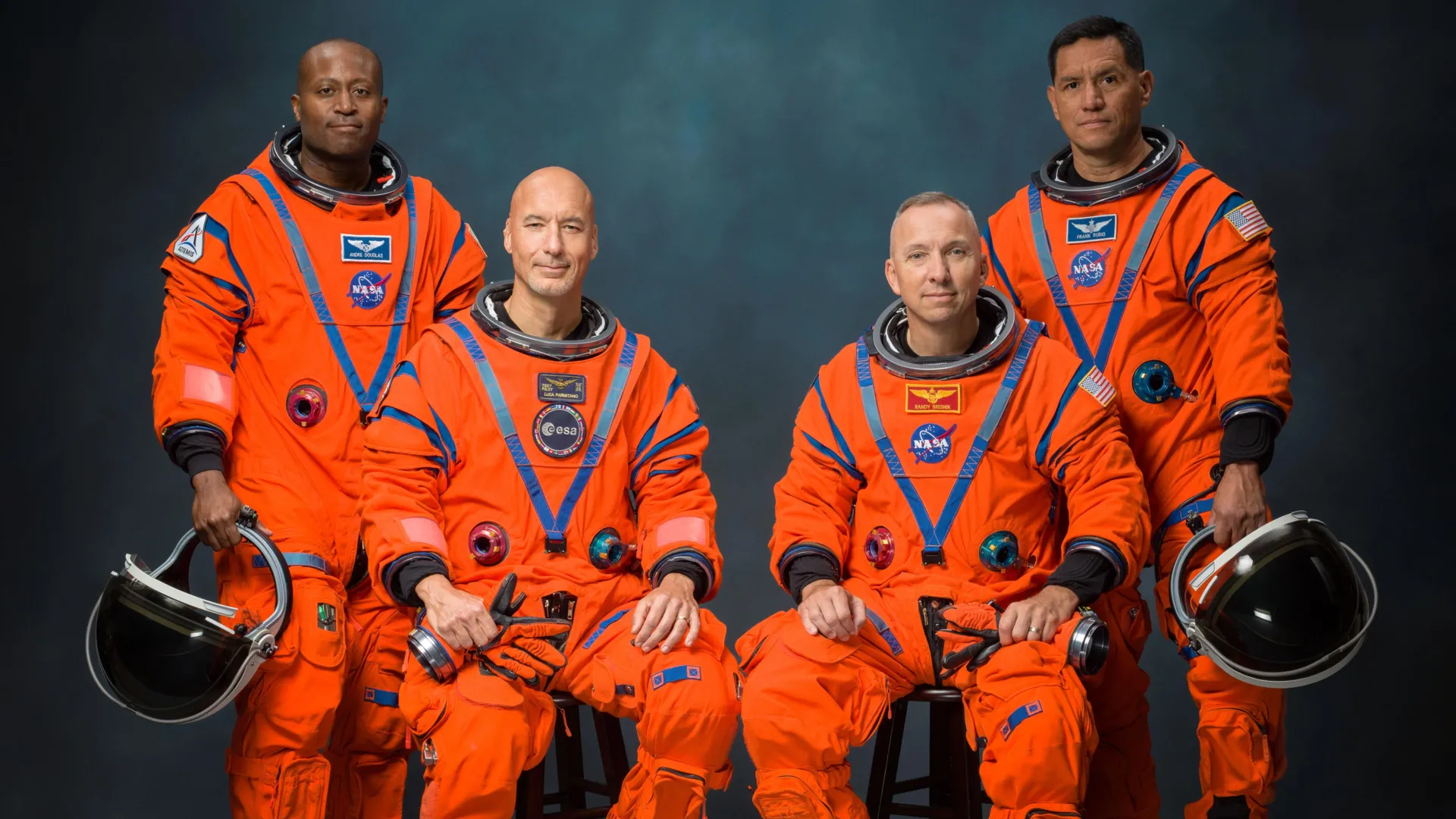
NASA has assigned four astronauts to Artemis III, a 2027 mission that the agency says will test key operations for future lunar landings rather than land on the Moon itself. The flight matters because NASA says it is meant to prove Orion can work with lander systems from Blue Origin and SpaceX before Artemis IV, planned as the first crewed mission to the Moon’s South Pole in 2028.
The agency named Randy Bresnik as commander, Luca Parmitano of the European Space Agency as pilot, and Andre Douglas and Frank Rubio as mission specialists. NASA astronaut Bob Hines will train as the backup crew member.
NASA said the crew will launch from Kennedy Space Center in Florida aboard the Space Launch System rocket, carrying Orion into low Earth orbit. After initial checks, Orion is expected to attempt rendezvous and docking with test versions of lunar landers being developed by Blue Origin and SpaceX.
NASA said the tests will examine how Orion and the lander prototypes perform together, including software, communications, propulsion and other systems. The agency said the astronauts will begin training on Orion while also supporting work on the lander test vehicles.
Crew and mission roles
Bresnik will be making his third spaceflight, according to NASA. He previously flew on space shuttle Atlantis to the International Space Station in 2009 and later served as a flight engineer and station commander during Expeditions 52 and 53.
Parmitano also is assigned to his third space mission. ESA said his selection makes him the first European astronaut assigned to an Artemis flight, and ESA Director General Josef Aschbacher said the role reflects Europe’s human spaceflight experience and its contribution through Orion’s European Service Module.
Rubio will be on his second spaceflight, NASA said. He spent 371 days in orbit after launching on Soyuz MS-22 in 2022, a mission NASA says set the record for the longest single spaceflight by an American astronaut.
Douglas is set for his first trip to space. NASA said he joined the astronaut corps in 2021 and previously worked as a backup and closeout crew member for Artemis II.
How NASA says the flight will unfold
NASA said the mission will require several heavy-lift launches. Under the plan, Blue Origin’s lander pathfinder will launch first and remain in orbit for weeks if needed while waiting for Orion and its crew.
Orion will then launch on SLS, meet the Blue Origin test lander and dock with it for about two days, NASA said. During that period, the crew is expected to perform demonstrations that include entering the lander.
After Orion separates, NASA said the spacecraft will wait for SpaceX’s Starship pathfinder. Starship is expected to rendezvous with Orion and remain docked for about one day while astronauts and engineers conduct more checks.
Once the demonstrations are complete, Orion will bring the crew back to Earth for a Pacific Ocean splashdown, with recovery by NASA and the U.S. Navy. NASA said the mission is expected to last about two weeks, though the final length will depend on launch timing, rendezvous operations and docking results.
Hardware work continues
NASA said engineers plan this summer to connect Orion’s crew module and service module and install the spacecraft’s docking system, which will fly for the first time. The agency also said heat shield blocks are undergoing ultrasonic inspections before installation.
Work on SLS is also moving ahead, according to NASA. The agency said teams are integrating the core stage engine section, preparing to install four RS-25 engines, and planning rocket stacking this summer after all booster segments arrived at Kennedy Space Center.
NASA said Blue Origin is developing a crewed Blue Moon lander, while SpaceX is developing a crewed lunar Starship. The agency said Artemis III is part of a broader campaign to expand lunar exploration, support longer-term operations on the Moon and build experience for eventual crewed missions to Mars.
This story draws on original reporting from ScienceDaily.