
Museum skull identifies early saber-toothed cat from North America
A UC Berkeley paleontologist linked a mislabeled fossil skull to Adelphailurus kansensis, clarifying how saber-toothed cats evolved longer fangs.
By Tom Brennan · Health & Medicine Correspondent
3 min read
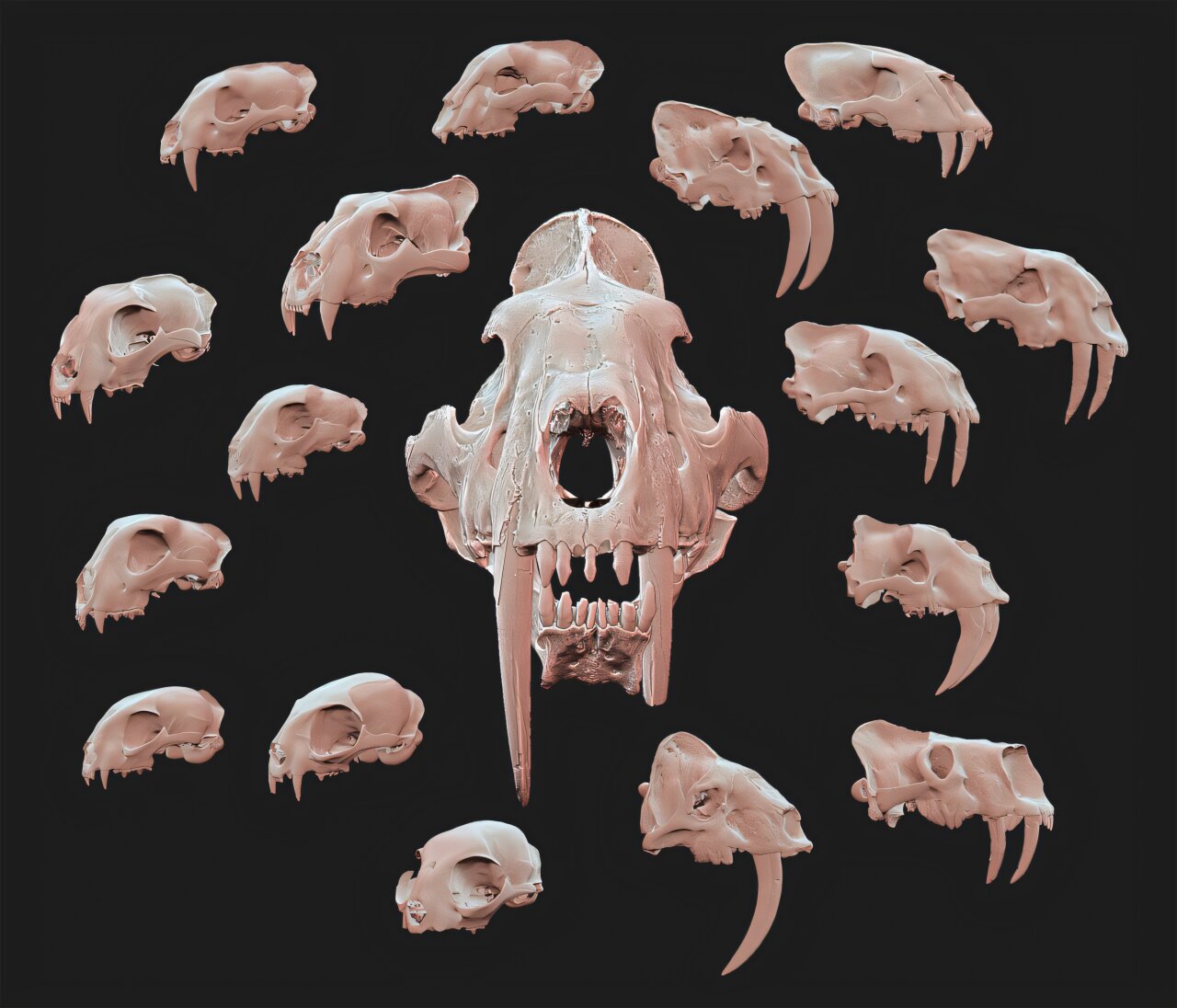
A nearly complete skull kept in a museum drawer has been identified as an early saber-toothed cat that lived in North America more than 5 million years ago. The finding gives paleontologists a fuller view of Adelphailurus kansensis, a species previously known mainly from jaws and teeth, according to the University of California, Berkeley.
Narimane Chatar, a UC Berkeley postdoctoral fellow, described the fossil with Berkeley integrative biology professor Jack Tseng in a paper published June 19 in the Journal of Vertebrate Paleontology. UC Berkeley said the skull, teeth and partial lower jaw were held at the American Museum of Natural History in New York and had been broadly labeled as feline material.
Chatar linked the specimen to Adelphailurus kansensis, a species first found in Kansas and described in 1934, according to UC Berkeley. The original fossil remains at the University of Kansas, while a cast at the Yale Peabody Museum helped Chatar recognize similarities with the New York material.
A broader saber-tooth family tree
The new skull helps place Adelphailurus among saber-toothed carnivores and compare it with later species such as Smilodon, UC Berkeley said. Smilodon fatalis, California’s state fossil, had upper canines as long as 7 inches, or 18 centimeters, and was among the last saber-toothed animals before the group disappeared about 10,000 years ago, according to the university.
Chatar said the find supports a more varied picture of saber-toothed predators than one built around Smilodon alone. UC Berkeley said early members of the group, including Adelphailurus, generally had shorter upper canines than later forms.
The American Museum skull also shows features that distinguish the animal from other saber-toothed cats of roughly the same period, according to Chatar. UC Berkeley said Adelphailurus had a relatively long, narrow snout, and its teeth had slight serrations along the edge, a trait seen in some saber-toothed animals.
Specialized teeth carried risks
Saber-shaped upper canines were flattened from side to side, unlike the rounder canines of living cats such as lions, tigers and house cats, according to UC Berkeley. The university said those teeth, along with blade-like premolars, were suited to slicing and shredding flesh.
That specialization came with a cost, according to Chatar’s research. UC Berkeley said tests using 3D-printed saber teeth found that the shapes were effective at piercing a flesh-like gel but broke more readily when pressed against simulated bone; in those tests, Smilodon performed best in penetration and worst in fracture resistance.
Chatar told UC Berkeley that carnivorous mammal teeth mainly slice or crush, and saber-toothed animals faced a tradeoff between cutting efficiency and durability. The university said their fragile teeth may have left them at a disadvantage after preferred large plant-eating prey, including bison and camels, died out after the last Ice Age.
UC Berkeley said saber-like teeth evolved in multiple carnivore groups over tens of millions of years, including felids, South American thylacosmilids and nimravids, an older lineage of catlike carnivores. Chatar argues that once lineages began evolving long upper canines, they did not return to a less specialized condition, a pattern she describes as a macroevolutionary ratchet, according to the university.
The discovery also points to the value of old museum collections, Chatar said. UC Berkeley said the skull had been found during Chatar’s visits to museums where she scanned saber-toothed fossils for her doctoral work, suggesting that other significant specimens may remain in drawers under broad or outdated labels.
This story draws on original reporting from Phys.org.