
Murray River flood sent a nutrient surge into coastal waters
A 2022-23 Murray River flood carried organic carbon and dead carp to sea, feeding crabs, fish and other marine life, researchers report.
By Tom Brennan · Health & Medicine Correspondent
3 min read
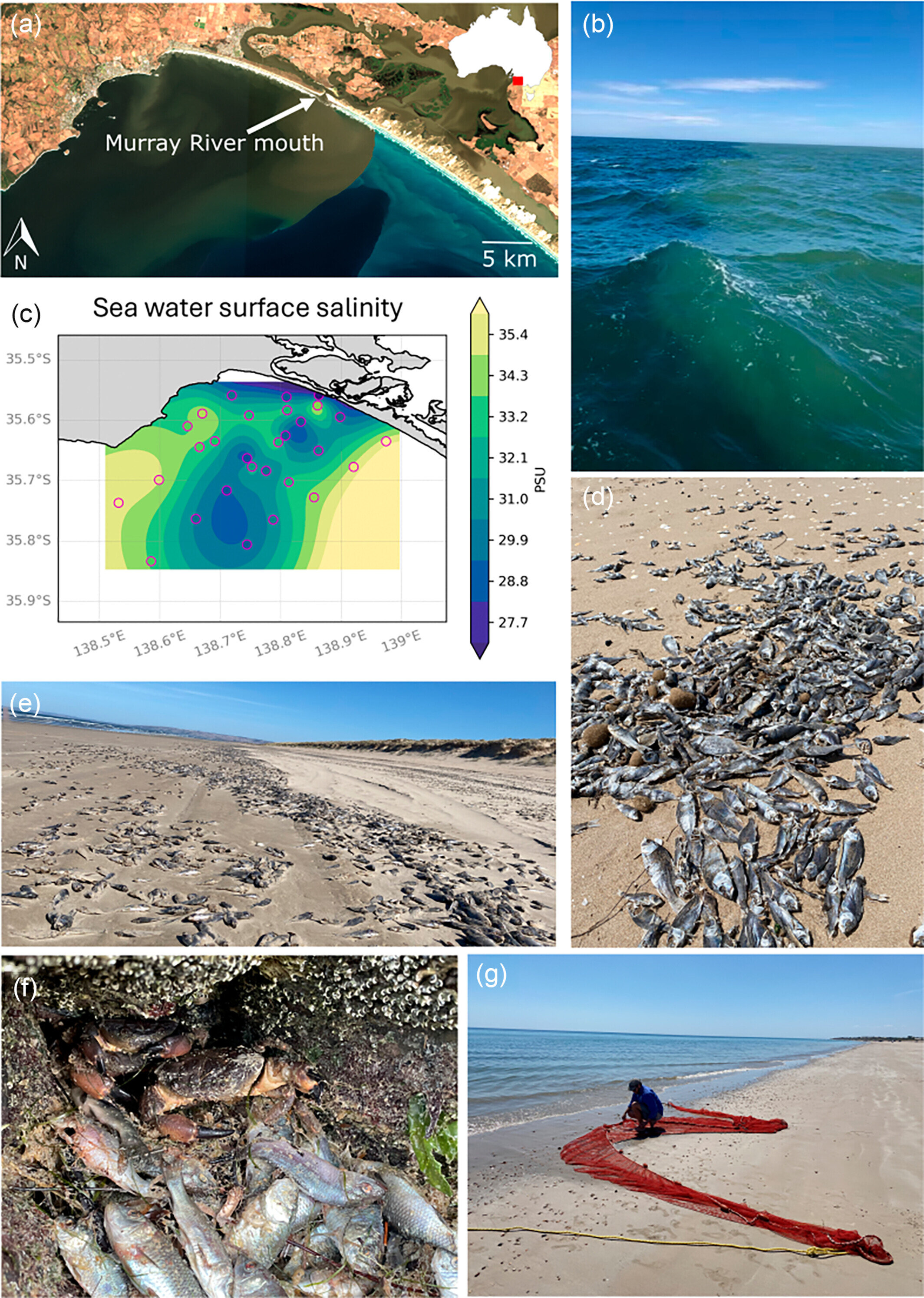
The Murray River’s largest flood in 66 years pushed a plume of muddy freshwater far into coastal waters and delivered a large pulse of food to marine animals, according to new research. The findings matter because they show that floods in heavily managed river systems can transfer nutrients from land and rivers into ocean food webs.
The study, published in Limnology and Oceanography by Paul J. McInerney and colleagues, examined the 2022-23 floods in the Murray-Darling Basin. The researchers compared animals living inside the flood plume with those in nearby saltwater outside it to track how river-borne material moved through the coastal ecosystem.
The Murray-Darling Basin has been reshaped for decades by dams and irrigation networks. The researchers said the amount of water reaching the ocean is now about 60% lower than it was a century ago, but heavy rains in 2022 and 2023 filled waterways across the basin.
A flood on the Murray is defined at the Victoria-South Australia border when daily flow reaches 50 gigalitres. During the 2022-23 event, flow peaked at 168 gigalitres a day, and the flood plume extended about 40 kilometres from the Murray mouth into the Southern Indian Ocean, according to the study.
Carbon and carp washed offshore
The researchers estimated that more than 200,000 metric tons of organic carbon entered the ocean from July 2022 to June 2023. That was 29 times the amount recorded for the same period in 2020-21, they reported.
Some of that material came from rivers and floodplains. It also included large numbers of juvenile common carp, an invasive freshwater fish in the Murray-Darling system. Because carp cannot live in saltwater, many died after being flushed into the sea.
The researchers reported dead carp accumulating on beaches at densities as high as 7 kilograms per square metre. They also observed crabs, including purple mottled shore crabs and reef crabs, feeding in rock pools more than 20 kilometres from the river mouth.
Food web effects
The study found that animals in the middle of the marine food web gained from the flood pulse. Scavenging crabs and smaller fish such as yellow-eye mullet fed on river-derived organic matter, including dead carp, the researchers said.
Using chemical signatures in animal tissue, the team estimated that 35% of the tissue in these animals came from organic material carried by the flood in the months after the event. The researchers said sulfur and nitrogen patterns in crabs caught inside the plume showed they had been eating land- and river-derived food rather than their usual low-value detritus.
Larger predators also benefited indirectly, according to the study. Australasian snapper moved in and out of the flood-affected areas and ate smaller fish and crustaceans that had consumed flood-derived material, allowing river nutrients to persist higher in the marine food web.
Algal bloom link remains uncertain
The researchers also addressed whether the 2022-23 nutrient pulse may have contributed to a harmful algal bloom off South Australia in March 2025. That bloom has been linked by authorities to a marine heat wave and nutrient-rich seasonal upwelling currents.
The Murray flood has been suggested as a possible factor, but the study said any connection remains speculative because of the 18- to 24-month gap and the lack of continuous monitoring data. The authors said better post-flood monitoring would help clarify whether such events can influence later blooms.
The study concludes that floods can reconnect river, floodplain and marine ecosystems in ways that have been reduced by human control of rivers. McInerney and colleagues said more research is needed to understand how these events affect coastal ecosystem health and fisheries over time.
This story draws on original reporting from Phys.org.