
Mining push raises water fears in Argentina’s dry San Juan province
Residents and experts in San Juan say drought, shrinking rivers and new Andean mining projects are putting scarce water under greater pressure.
By Tom Brennan · Health & Medicine Correspondent
3 min read
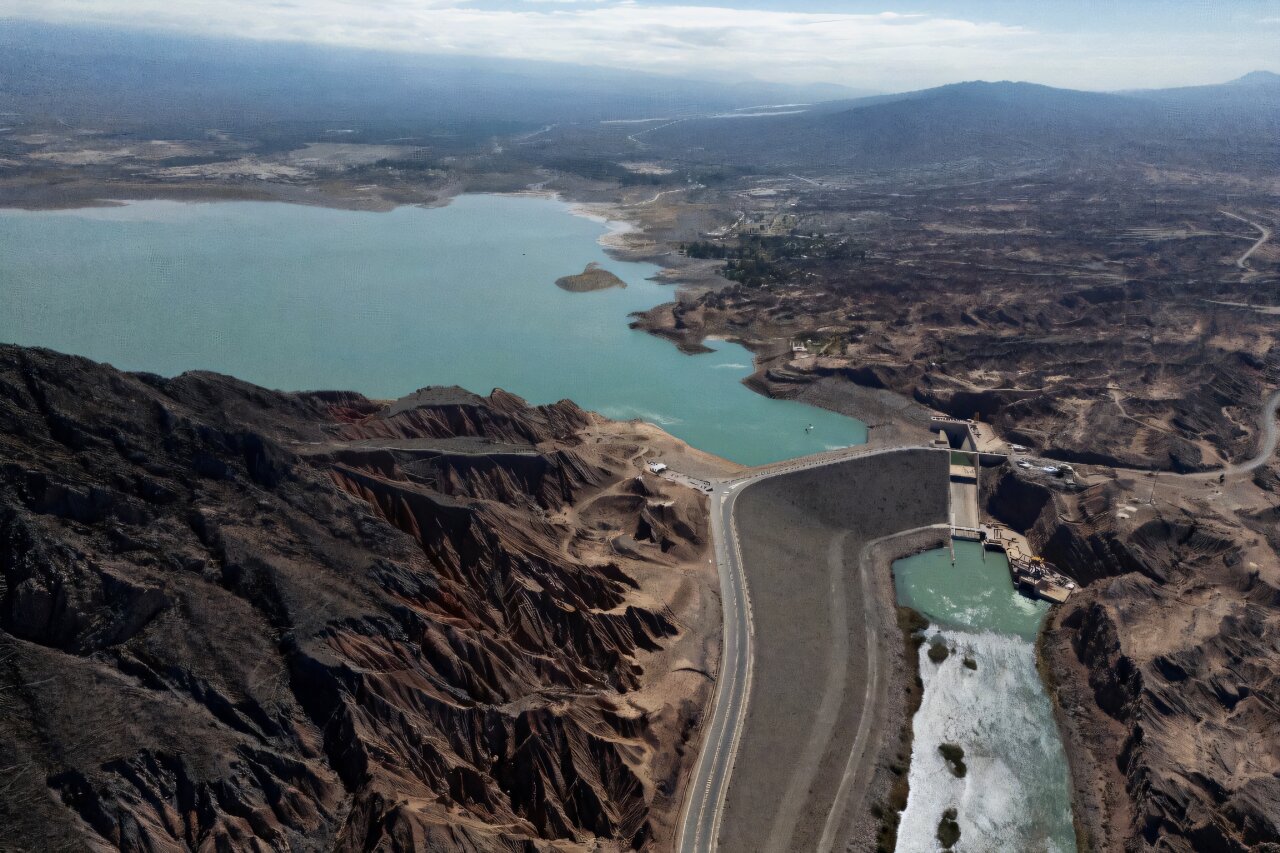
Mining projects in Argentina’s Andes are drawing concern in San Juan, where drought has already reduced rivers that supply farms and towns. AFP reported that residents, farmers and scientists fear new extraction projects could add pressure to one of the country’s driest food-producing provinces.
San Juan, a western province of mountains and desert steppe, receives just over 100 millimeters, or about 4 inches, of rain a year, according to AFP. Only 3% of its land is arable, and water shortages mean farmers can cultivate about a third of that area.
The province remains an important producer of olive oil, grapes, tomatoes and pistachios for Argentina. Nicolas Yanzon, who grows grapes, alfalfa and onion seed near Media Agua, told AFP that water rationing keeps him and other producers from using more of their land.
“The situation is delicate,” Yanzon said.
Rivers fed by snow and glaciers are shrinking
AFP reported that snowfall and more than 4,000 glaciers feed San Juan’s two main rivers, which provide most irrigation water in the province. Both rivers have declined sharply, with flows at historic lows.
Provincial Production Minister Gustavo Fernandez told AFP that San Juan faces “a scenario of permanent scarcity.” Silvio Pastore, a geology professor at the National University of San Juan, described the situation from an environmental standpoint as “chaos.”
Pastore said projections made by the United Nations in 2000 for the San Juan River under warming scenarios have been overtaken by current conditions. According to AFP, he said the river’s flow has fallen to nearly half its historical average, driven by reduced snowfall and higher temperatures.
Glaciologists cited by AFP said glaciers in northwest Argentina have shrunk by 17% over the past decade. Experts disagree on how much San Juan’s glaciers contribute to water supplies, partly because many are covered by sediment, rocks or debris and are less visually prominent than the ice formations associated with Patagonia.
Pastore told AFP that the glaciers contribute no more than 20% of river flow, even in severe drought. Glaciologist Juan Pablo Milana said their role needs more study and told AFP that when snow is absent, glaciers can provide two to three times more water.
Mining expansion enters political fight
AFP reported that copper, lithium and other mineral projects have expanded across Argentina’s Andean region. Those minerals are used in energy-transition technologies, but critics say water use and glacier damage could worsen climate risks for nearby communities.
The debate sharpened this year after President Javier Milei amended a law protecting glaciers, according to AFP. Environmentalists challenged the regulation in court, saying it allows provincial governments to redraw protected areas to open more land to mining.
Mining uses less water than agriculture, AFP reported, but residents and activists say the margin for error is small in a province with depleted dams and shrinking river flows. Lawyer and activist Raul Orduna told AFP that San Juan’s “water system is in intensive care” and criticized giving water to transnational organizations instead of reserving it for essential uses.
Fernandez told AFP that about 40% of agricultural water use could be saved with public investment in infrastructure and more efficient irrigation. Local authorities and mining companies say new projects will operate under strict environmental standards, according to AFP.
Past incidents have left doubts. AFP reported that three toxic spills from a Barrick Gold mine between 2015 and 2017 contaminated provincial rivers to varying degrees.
Milana told AFP that inadequate oversight is the main danger posed by mining, and accused the state of being aligned with large mining companies. Yanzon said he does not oppose mining but believes it must be sustainable, telling AFP that if development is not sustainable, “then it’s not development.”
This story draws on original reporting from Phys.org.