
Millipede family tree points to life on land 460 million years ago
A Virginia Tech-led study places millipedes on land far earlier than vertebrates and completes the family tree of living millipede orders.
By Tom Brennan · Health & Medicine Correspondent
3 min read
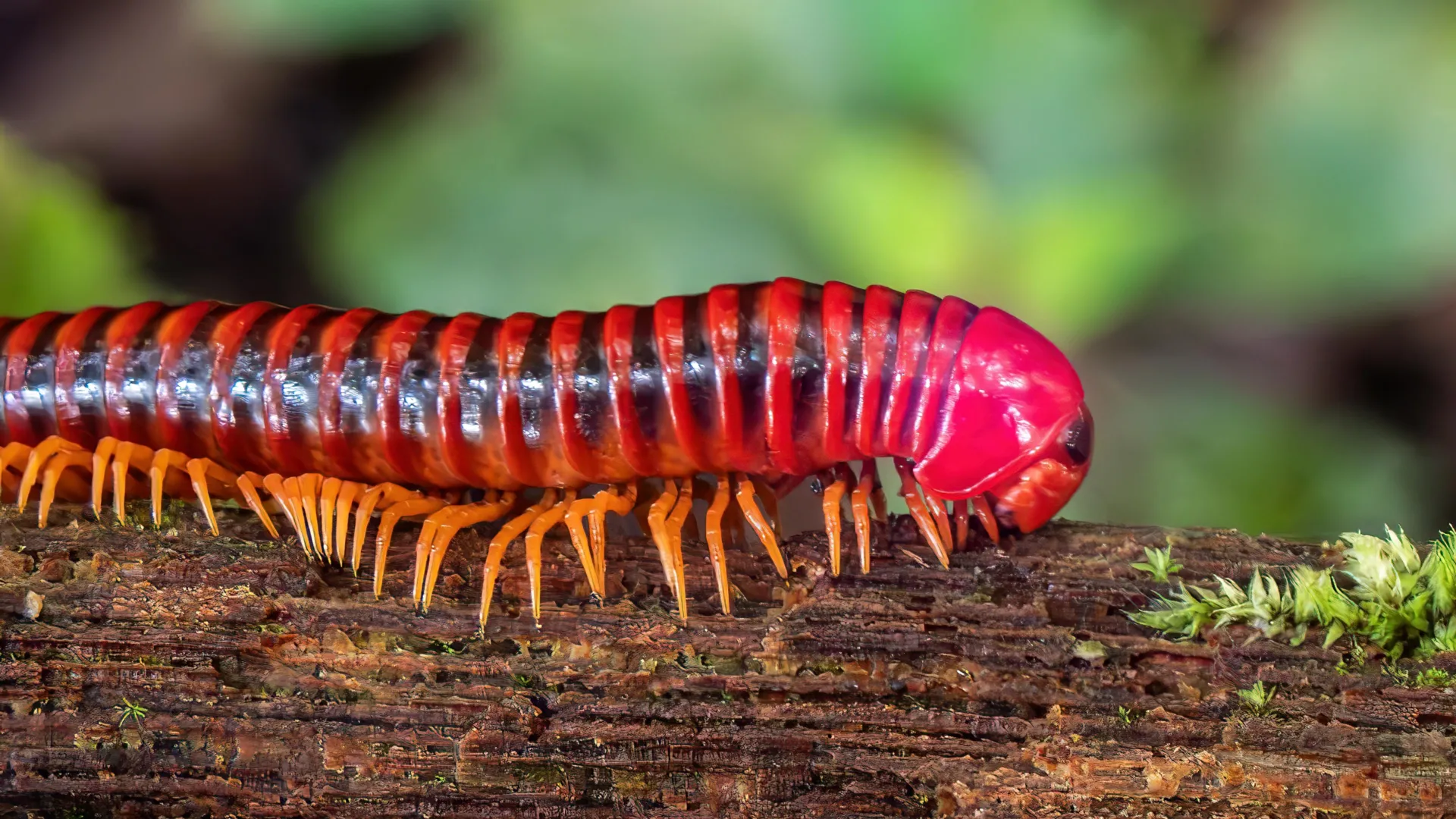
Millipedes may have been living on land nearly 460 million years ago, long before vertebrates made that move, according to a Virginia Tech-led study published in Current Biology. The work matters because it fills a long-standing gap in the evolutionary history of animals that helped build some of Earth’s earliest land ecosystems.
Virginia Tech said the research is the first full evolutionary history covering all living millipede orders. The team combined genetic data from modern millipedes with evidence from fossils to estimate when major lineages appeared and how they are related.
Paul Marek, the study’s lead investigator and an associate professor in Virginia Tech’s Department of Entomology, said millipedes reached land more than 80 million years before vertebrates. He said their role in breaking down organic matter helped prepare terrestrial ecosystems for later animals, including humans and other vertebrates.
Rare groups filled a key gap
For more than a century, scientists had recognized two unusual millipede groups, Siphoniulida and Siphonocryptida, Virginia Tech said. Their exact positions on the millipede family tree remained unresolved because researchers lacked fresh specimens suitable for DNA analysis.
One of those groups includes underground millipedes under a centimeter long, while the other is known from only a small number of locations, according to the university. Marek described the two groups as difficult targets for millipede researchers.
To obtain the missing DNA, the team collected specimens in Los Tuxtlas, Mexico, and in Spain’s Canary Islands. Virginia Tech said the species collected were Siphoniulus neotropicus and Hirudicryptus canariensis, neither of which had previously been included in an evolutionary DNA study.
Luisa “Fernanda” Vasquez-Valverde, the paper’s first author and an assistant in Marek’s lab, said the fieldwork was slow because the animals were tiny and hard to distinguish in the soil. She said researchers could not confirm one small white specimen was a millipede until they examined it under a microscope.
DNA and fossils reshape the tree
The researchers compared hundreds of genes across 82 millipede species and added information from 29 fossils, according to Virginia Tech. The project produced terabytes of genetic data and used Virginia Tech’s Advanced Research Computing resources to infer evolutionary relationships across hundreds of millions of years.
The study found that Siphonocryptida should not stand as a separate millipede order, Virginia Tech said. Instead, the researchers placed it within an existing lineage, while Siphoniulida was assigned to its closest relatives on the broader millipede tree.
The analysis dated millipede origins to nearly 460 million years ago, about 35 million years earlier than the oldest known millipede fossils, according to the study summary from Virginia Tech. Marek said one of the biggest surprises was the age of some lineages.
At the time these early millipedes lived, Marek said, Earth had no vertebrates, trees, leaves, flowering plants or seed plants. He said millipedes likely fed on decaying mosses, decomposed slime and other early organic material on the surface.
Chemical defenses came later
The completed evolutionary tree also helped the team estimate when millipedes evolved chemical defenses. Virginia Tech said the study places the origin of those defenses at about 260 million years ago.
Marek described millipedes as small chemical factories because of those defensive compounds. The new timing gives researchers a clearer marker for when that adaptation arose, according to the university.
Millipedes remain major detritivores today, helping recycle nutrients by breaking down dead plant material, Virginia Tech said. More than 14,000 species have been described worldwide, but researchers cited by the university expect that tens of thousands more remain unknown.
The research was funded by the National Science Foundation, according to Virginia Tech. Collaborating institutions included the Field Museum of Natural History, Hampden-Sydney College, Universidad de La Laguna, Virginia Tech’s School of Plant and Environmental Sciences, the Australian National Insect Collection, West Virginia University and Universidad Autonoma del Estado de Hidalgo.
This story draws on original reporting from ScienceDaily.