
Search of interstellar object finds no radio signs of technology
SETI researchers found only Earth-made interference after scanning 3I/ATLAS, the third confirmed interstellar object seen in the Solar System.
By Lucas Ferreira · Science & Environment Writer
3 min read
SETI Institute scientists found no evidence of extraterrestrial technology after checking the interstellar object 3I/ATLAS for radio signals, the institute reported. The work matters because objects arriving from other star systems are rare targets that can test how quickly astronomers can search for both natural clues and possible technosignatures.
The study, published in The Astronomical Journal, focused on 3I/ATLAS, which the SETI Institute described as the third confirmed interstellar object observed entering the Solar System. The object was first identified in July 2025, after earlier detections of 1I/‘Oumuamua and 2I/Borisov, according to the institute.
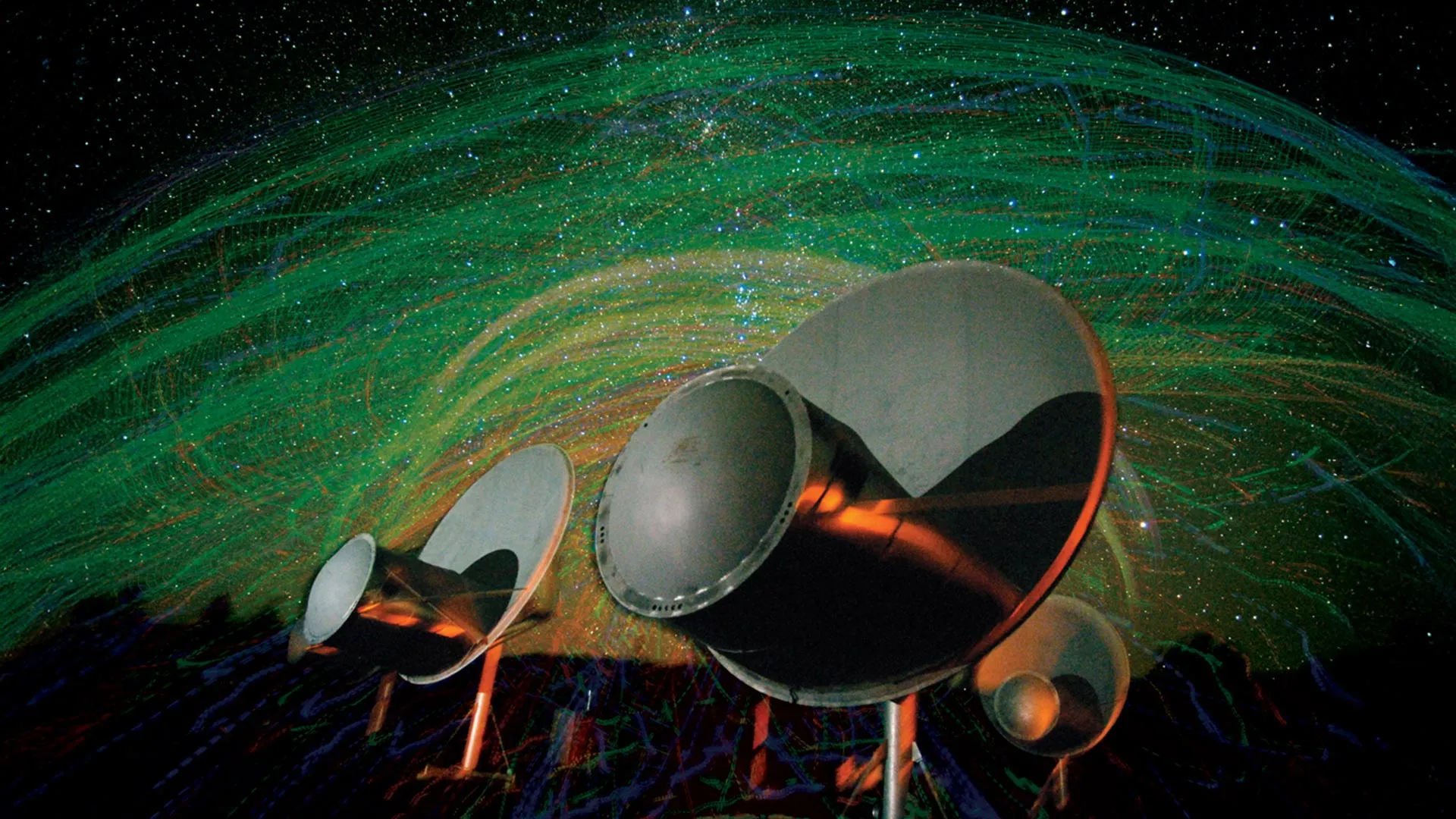
Researchers used the Allen Telescope Array at Hat Creek Radio Observatory in Northern California to examine 3I/ATLAS, the SETI Institute said. The team observed the object for more than seven hours and searched radio frequencies from 1 to 9 gigahertz.
According to the institute, that frequency range is useful for looking for narrowband radio transmissions. The SETI Institute said such signals are not known to arise naturally and would be treated as possible evidence of technology if they were found coming from an object such as 3I/ATLAS.
The scan produced nearly 74 million narrowband signals, the SETI Institute said. Researchers identified most of them as interference from human technology, then filtered the remaining signals for ones that appeared consistent with the motion of 3I/ATLAS.
About 200 candidates remained after that screening, according to the institute. Further analysis traced all of them to technology on Earth or satellites in orbit around Earth, leaving no detected technosignature from the interstellar object.
The SETI Institute said the result adds support to the current view that 3I/ATLAS is a natural, comet-like body. The institute also said earlier observations had already pointed strongly toward a natural origin.
The study set limits on what kind of transmitter could have gone unnoticed near 3I/ATLAS, according to the SETI Institute. Across the searched frequencies, the team ruled out radio transmissions stronger than roughly 10 to 110 watts, which the institute compared with the power use of a typical household appliance.
Lead author Sofia Sheikh said, according to the SETI Institute, that humanity’s Voyager spacecraft will eventually become artifacts from another star system’s point of view. She said understanding the normal population of interstellar objects could help researchers recognize unusual cases that might one day suggest an artificial origin.
Co-author Valeria Garcia Lopez said the 3I/ATLAS observations show what current technology can detect, according to the institute. She said that is a reason to continue searching for technosignatures, including from objects that are not expected to produce signals.
The SETI Institute said the observations began less than 24 hours after 3I/ATLAS was announced. The institute said that quick start demonstrates how the Allen Telescope Array can be used for rapid follow-up when unusual objects are discovered.
Beyond the search for intelligent life, the institute said studies of interstellar visitors can help scientists learn about material formed around other stars and improve understanding of how planetary systems develop. The SETI Institute said future interstellar discoveries will give astronomers more chances to study natural objects from beyond the Solar System while also checking for signs of technology.
This story draws on original reporting from ScienceDaily.