
Sawdust foam shows promise as a polystyrene alternative
Researchers made prototype foams from sawdust, cellulose binders and beeswax that matched some polystyrene properties in lab tests.
By Lucas Ferreira · Science & Environment Writer
3 min read
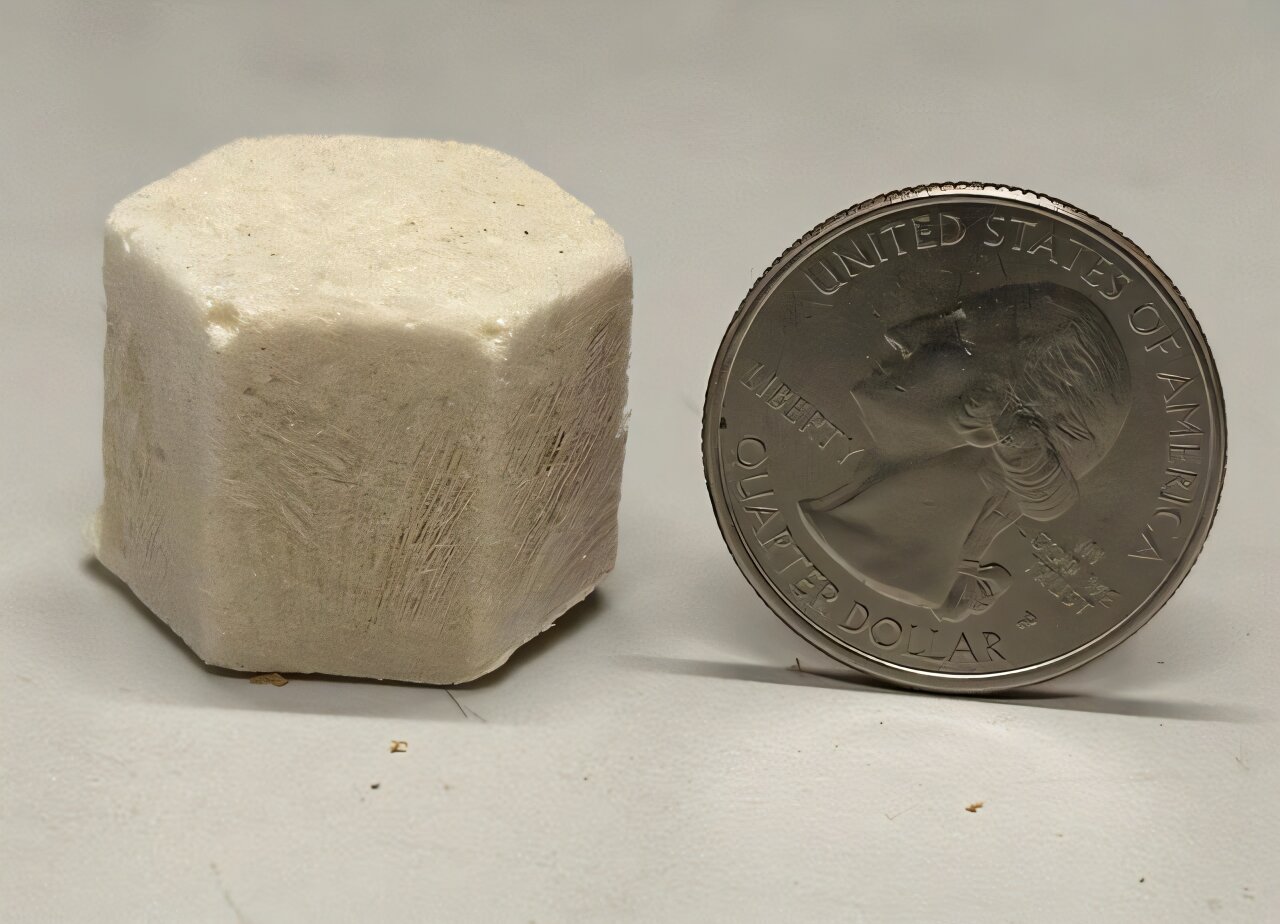
Researchers have turned sawdust into prototype foams that could replace some fossil-fuel-based polystyrene used in packaging, according to a study in ACS Applied Polymer Materials. The work matters because polystyrene is widely used for packing peanuts and box inserts, while sawdust can be collected as a waste material from farms and sawmills.
The American Chemical Society said the team combined sawdust with cellulose-based binders and cross-linking additives to make foams with different levels of stiffness and flexibility. Some samples matched polystyrene in strength and impact resistance, according to the study.
Todd Emrick, the study’s corresponding author, said the project began with interest in making materials from waste rather than ordering conventional chemicals. According to the American Chemical Society, first author Isha Farook collected waste sawdust from nearby farms and sawmills for the experiments.
How the foam was made
Emrick, Farook and colleagues tested both fine processed wood powder and coarse, unprocessed mill waste, according to the study. The researchers mixed the sawdust with cellulose binders and cross-linking ingredients, poured the mixtures into molds, froze them and then freeze-dried them to remove moisture.
A final heating step activated the cross-linked structure, the American Chemical Society said. One version used processed sawdust, a cellulose binder and a citric acid cross-linker, according to the study materials.
The foam’s behavior depended strongly on the binder, according to the researchers. Versions made with carboxymethyl cellulose were stiffer than polystyrene, while those made with hydroxypropyl cellulose were softer.
The team found little difference between foams made from processed sawdust and those made from unprocessed sawmill waste, according to the study. That result points to a possible advantage for waste-based production, because the material may not need extensive preparation before use.
Beeswax improved water resistance
The study also examined how the foams handled liquids and solvents. Samples containing cross-linking ingredients absorbed and released water while resisting dissolution in acetone, unlike polystyrene, according to the American Chemical Society.
The researchers coated some samples with beeswax to improve moisture resistance. The coating helped the foam withstand high humidity and did not change its mechanical properties, according to the study.
Emrick said the team has not yet completed a long-term stability study. He said the material showed strong liquid stability over periods ranging from weeks to months, which could help during shipping, spills, production or storage under varied conditions.
Impact tests pointed to packaging use
The researchers tested impact performance using a 4.5-kilogram weight, equal to 10 pounds, according to the study. The sawdust-based foams dispersed energy better than polystyrene of similar thickness, bouncing the weight 21% less distance.
The team said those results suggest the biopolymer foams may be strong enough for packaging uses now served by polystyrene. Emrick said packaging foams were the initial target because they are widely used to protect goods in transit.
Emrick also said the early mechanical results could support further testing for construction materials and high-end packaging for consumer electronics. The study, titled “Biopolymer Foams Composed of Sawdust: Fabrication and Structural Integrity,” lists Isha Farook and colleagues as authors and carries the DOI 10.1021/acsapm.6c00854.
This story draws on original reporting from Phys.org.