
Hepatitis E mice barrier traced to blocked viral entry
Ruhr University Bochum researchers found hepatitis E fails in mouse liver cells because viral entry stalls, a clue for future mouse models.
By Lucas Ferreira · Science & Environment Writer
3 min read
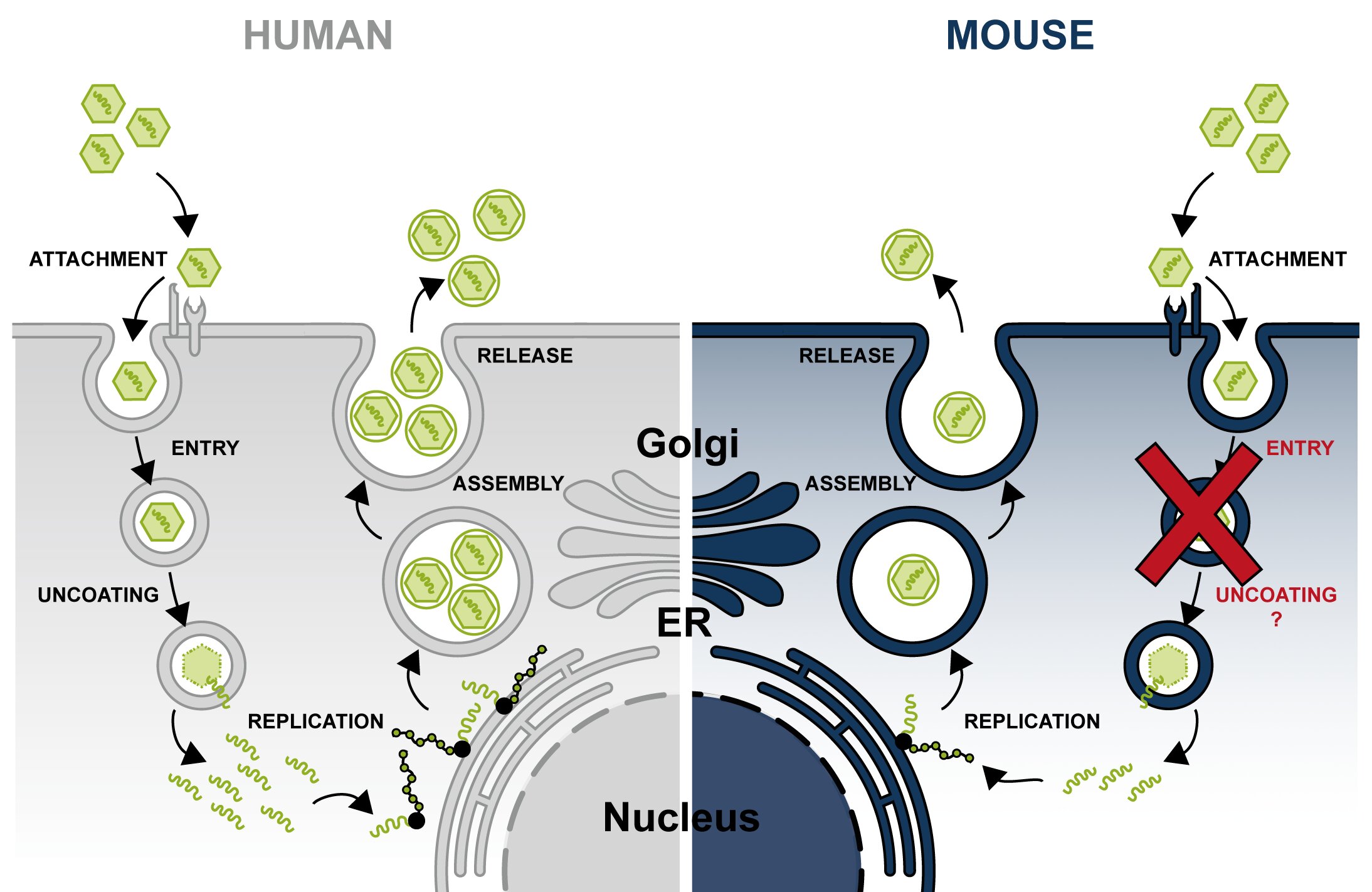
Hepatitis E mice research has identified the step that keeps the virus from infecting mouse liver cells: viral entry does not complete properly. Ruhr University Bochum said the finding helps explain a species barrier that has limited hepatitis E research and could inform efforts to build a mouse model for testing treatments.
Dr. Nicola Frericks and colleagues in the university’s Department of Molecular and Medical Virology reported the work in Emerging Microbes & Infections on July 27, 2026. The study examined the hepatitis E virus replication cycle in mouse liver cell cultures to find where infection breaks down.
Why can't hepatitis E infect mice?
According to the Bochum team, mouse liver cells allow several parts of the hepatitis E virus life cycle, but the key block occurs when the virus tries to enter the cell and release its genetic material. Frericks said viral particles can attach to murine hepatocytes, and the researchers found that new virus particles can be made and released if the entry step is bypassed.
The team concluded that the virus appears to be imported into mouse cells, but its genome is probably not released there. In practical terms, the virus reaches the doorway and may get inside, yet the process needed to start infection does not go far enough.
That distinction matters because it narrows the species barrier to a defined stage of infection. Ruhr University Bochum said the result improves understanding of the host range of a zoonotic virus and may help researchers judge the risk that hepatitis E could spread to other animal species.
What is hepatitis E?
Hepatitis E virus, or HEV, is a cause of acute viral hepatitis and can pass from animals to people. Ruhr University Bochum said infections are often linked to contaminated meat products, including raw or undercooked pork and wild game.
The disease usually clears without treatment in people with healthy immune systems, according to the university. It can become chronic in people whose immune systems are reduced or suppressed, including organ transplant recipients and people with HIV, and it is especially dangerous for pregnant women.
Ruhr University Bochum said up to 70,000 people die each year from hepatitis E. The university also noted that although the first documented epidemic outbreak occurred in 1955 to 1956, intensive research on the virus began about five decades later.
Why the finding matters for treatment research
Researchers have long known that hepatitis E does not establish infection in mice, but the reason had remained unclear, according to the Bochum team. Pinpointing the block at viral entry could support attempts to create a mouse model, which would give scientists a standard laboratory system for studying the disease.
Frericks said such a model would be helpful for testing therapeutic approaches. Ruhr University Bochum said there is no specific effective treatment for hepatitis E, and no vaccine or specific antiviral treatment is available in Europe.
The study, titled “Viral entry defines the hepatitis E virus species barrier in murine hepatocytes,” was published in Emerging Microbes & Infections. Its central finding is that the mouse barrier is not a failure of every viral process, but a failure at the stage that should make the virus’s genetic material available inside the host cell.
This story draws on original reporting from Phys.org.