
Glacier retreat is reshaping sacred traditions in mountain communities
A Nature Climate Change viewpoint says melting ice is disrupting rituals, beliefs and water supplies from the Andes to the Himalayas.
By Priya Raghavan · Science Reporter
3 min read
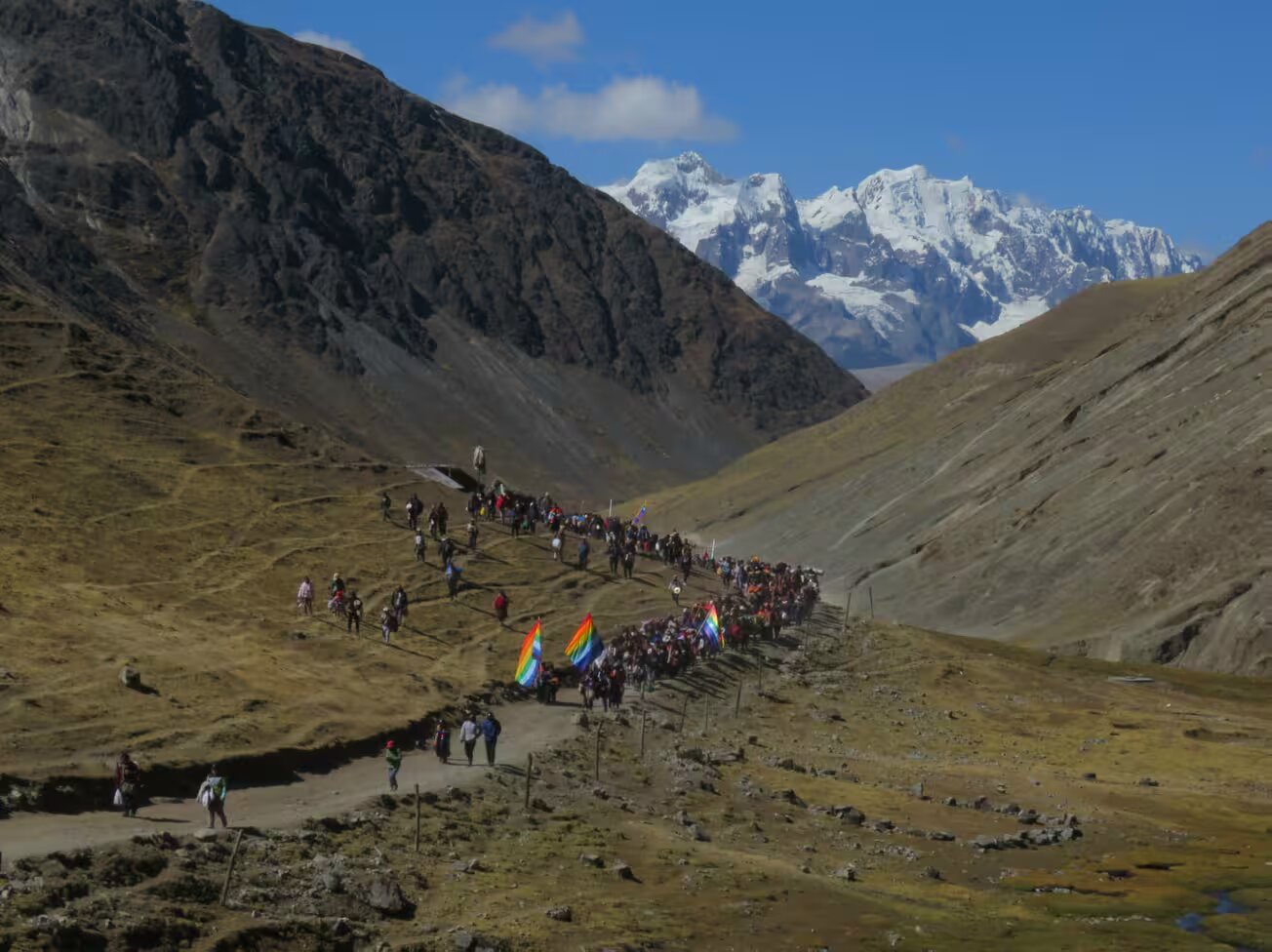
Glacier loss is altering religious life, community rituals and local ideas of moral responsibility in high-altitude regions, six researchers wrote in a viewpoint published in Nature Climate Change. The authors argue that climate policy should treat cultural and spiritual loss as part of the damage from warming, alongside changes to water supplies and ecosystems.
The researchers, from South America, Asia and Africa, examined communities in the Andes, the Himalayas and other mountain regions where glaciers hold social and sacred meaning. They wrote that some local communities understand melting ice as a sign of punishment, weakening ancestral protection or a rupture in relationships with deities.
The viewpoint also says some communities connect climate shifts to their own conduct, even though industrial economies are driving much of the climate change accelerating glacier retreat. The authors say Indigenous communities should have a central role in defining climate responses and what repair means.
Bolivia’s vanished Chacaltaya glacier
In Bolivia, the Chacaltaya glacier disappeared in 2009, six years before scientists had expected, according to the Earth Institute at Columbia University. Elizabeth Allison, a study author and professor of ecology and religion at the California Institute of Integral Studies, said the loss affected reservoirs serving La Paz and El Alto and became a visible marker of warming’s effects in Bolivia.
Allison also said the disappearance carried spiritual weight for Indigenous people in the region. In the Milluni Valley, which sits nearly 14,000 feet, or 4,300 meters, above sea level and still has about 12 glaciers, Aymara residents regard glaciers as ancestors and protectors, according to the report.
Allison wrote that Aymara community members interpret melting as a weakening of that protective power. She reported that one resident described the changes as punishment tied to disregard for the environment, including plastic use and poor care for community trees.
Pilgrimage changes in Peru
In southern Peru, the Qulqipunku glacier has long been tied to the annual pilgrimage for the Lord of the Star of Snow, known as Qoyllur Rit’i. The Earth Institute described the event, undertaken by Quechua-speaking pilgrims, as the largest Indigenous pilgrimage in the Western Hemisphere.
As the glacier retreats, the ritual has changed, according to archaeologist and anthropologist Constanza Ceruti. Pilgrims once carried ice home as a sign of devotion and as a substance valued for medicinal use; Ceruti wrote that many now avoid taking large pieces of ice and instead carry meltwater.
Ceruti also wrote that local belief holds the receding glacier may reflect a mountain spirit trying to hide from devotees after hearing many prayers. The authors say such changes force communities to adapt practices that are tied to long-standing relationships with sacred places.
Tourism and belief in Nepal
In Nepal’s Gokyo Valley, near the Ngozumpa glacier, tourism adds another pressure, according to the viewpoint. Pasang Yangjee Sherpa, an assistant professor in the University of British Columbia’s Department of Asian Studies and an Indigenous contributor to the paper, wrote that Gokyo Lake, fed by the glacier, is understood locally as the home of a deity.
Sherpa said conversations with residents focused less on the glacier itself than on respect for the lake deity. The report says local moral judgments about tourism include whether visitor behavior, such as swimming in the lake, violates spiritual expectations.
Talita André, a student in Columbia Climate School’s M.A. in Climate and Society program, told GlacierHub that climate change is often treated as a technical problem. She said losses in Andean communities also involve “sacred relationships, ancestral memory, spiritual practices and ways of belonging to a territory,” forms of value that conventional metrics struggle to capture.
The authors wrote that glaciers have helped ground belief systems over long periods, while current warming is changing those systems within decades. They argue that international climate policy should account for cultural, spiritual and place-based relationships, with Indigenous peoples helping define loss, repair and solutions.
This story draws on original reporting from Phys.org.