
Berkeley Lab maps process controls for spintronic perovskite films
A data-driven study points to solvent choice, temperature and thickness as key controls for more reliable chiral perovskite films.
By Lucas Ferreira · Science & Environment Writer
3 min read
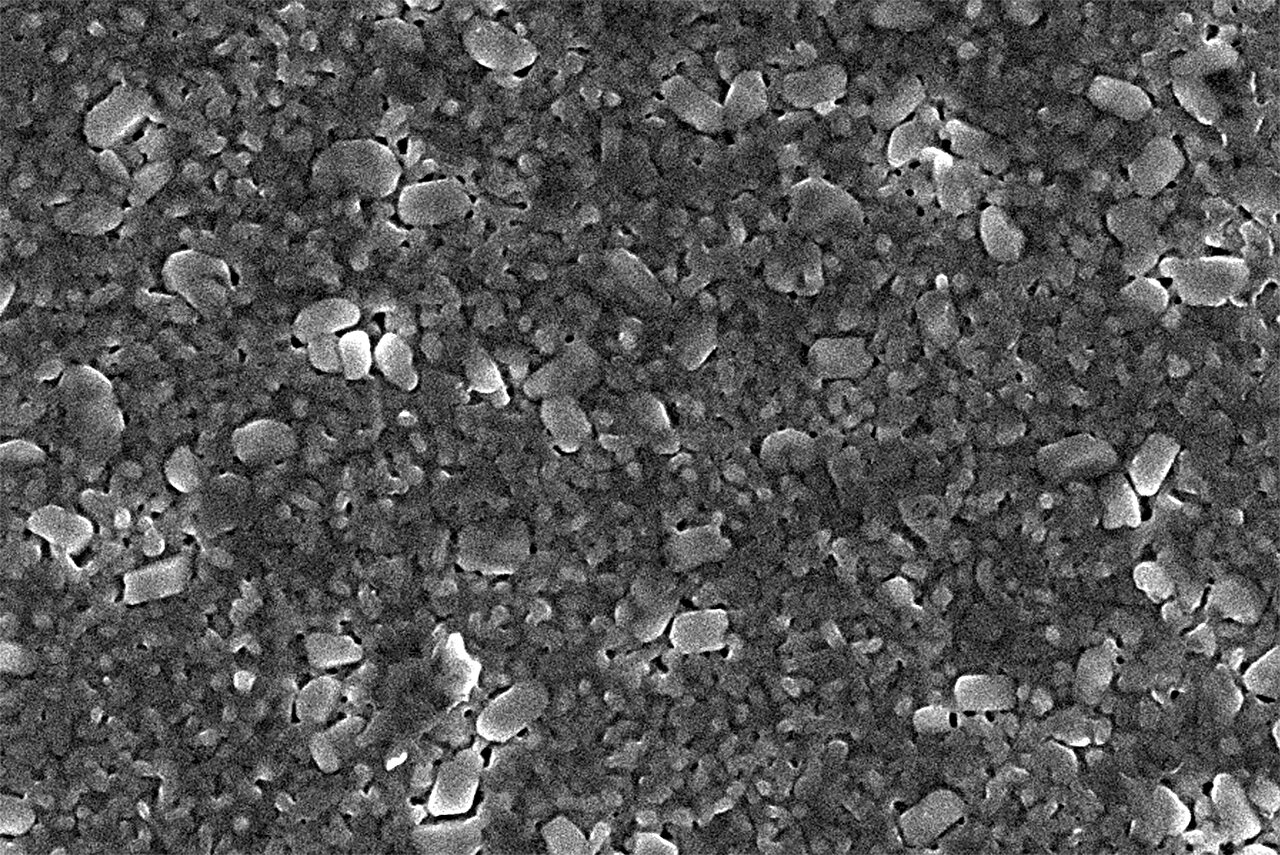
Scientists at Lawrence Berkeley National Laboratory have built a data-driven method for improving chiral two-dimensional metal halide perovskite films, materials being studied for spin-based optoelectronics. Berkeley Lab said the work addresses a consistency problem that has slowed efforts to use these films in devices that handle data with circularly polarized light.
The study, published in Matter, links fabrication conditions to the films’ chiroptical response, or how strongly they interact with circularly polarized light. According to Berkeley Lab, the approach gives researchers a practical way to tune film-making conditions rather than relying on trial and error.
Chiral 2D metal halide perovskites are attractive to researchers because Berkeley Lab describes them as low-cost and easy to make as thin films. The lab said they are candidates for optoelectronic uses including light-emitting diodes and photodetectors, as well as spintronics systems that exploit electron spin.
Berkeley Lab said the challenge has been reproducibility. Reported performance for nominally identical chiral 2D perovskite materials has varied by more than two orders of magnitude among laboratories, according to the lab.
Testing the fabrication controls
The Berkeley Lab team was led by scientist Carolin Sutter-Fella at the Molecular Foundry. First author Raphael Moral prepared thin films from single-crystal precursor solutions, and the team used X-ray methods at the Advanced Light Source to study how the material crystallized, according to the lab.
Moral and co-first author Maher Alghalayini then used statistical methods to identify which fabrication variables had the strongest connection to performance, Berkeley Lab said. The analysis included correlation studies and machine-learning methods supported by the Center for Advanced Mathematics for Energy Research Applications, known as CAMERA.
The work examined several processing factors, including the solvent used to make the film, annealing temperature and film thickness. Berkeley Lab said the model connected those variables to the absorption dissymmetry factor, a measure tied to the material’s chiroptical performance.
Acetonitrile produces stronger signals
The strongest factor identified by the framework was solvent choice, according to Berkeley Lab. Films made with acetonitrile produced the strongest and most consistent chiroptical signals in the study, the lab said.
The analysis also found that annealing temperature and film thickness influenced signal strength, according to Berkeley Lab. X-ray diffraction experiments at the Advanced Light Source were used to check the predicted results.
Sutter-Fella said in Berkeley Lab’s announcement that connecting fabrication conditions to material response gives other researchers a guide for making higher-quality chiral perovskite films. Moral said the findings show that the same material can display different chiroptical behavior depending on how it is processed.
Berkeley Lab said the team plans to apply lessons from the study to machine-learning-driven experiments involving different chiral molecules. The paper, “Absorption dissymmetry factor enhancement: A data-driven approach to unravel the synthesis knobs of chiral 2D perovskites,” lists Raphael F. Moral and colleagues as authors and has DOI 10.1016/j.matt.2026.102676.
This story draws on original reporting from Phys.org.