
Europe braces for hotter days as heat wave disrupts public life
France, Spain, Britain and other countries issued alerts or curbed events as forecasters warned June temperature records could fall.
By Lucas Ferreira · Science & Environment Writer
3 min read
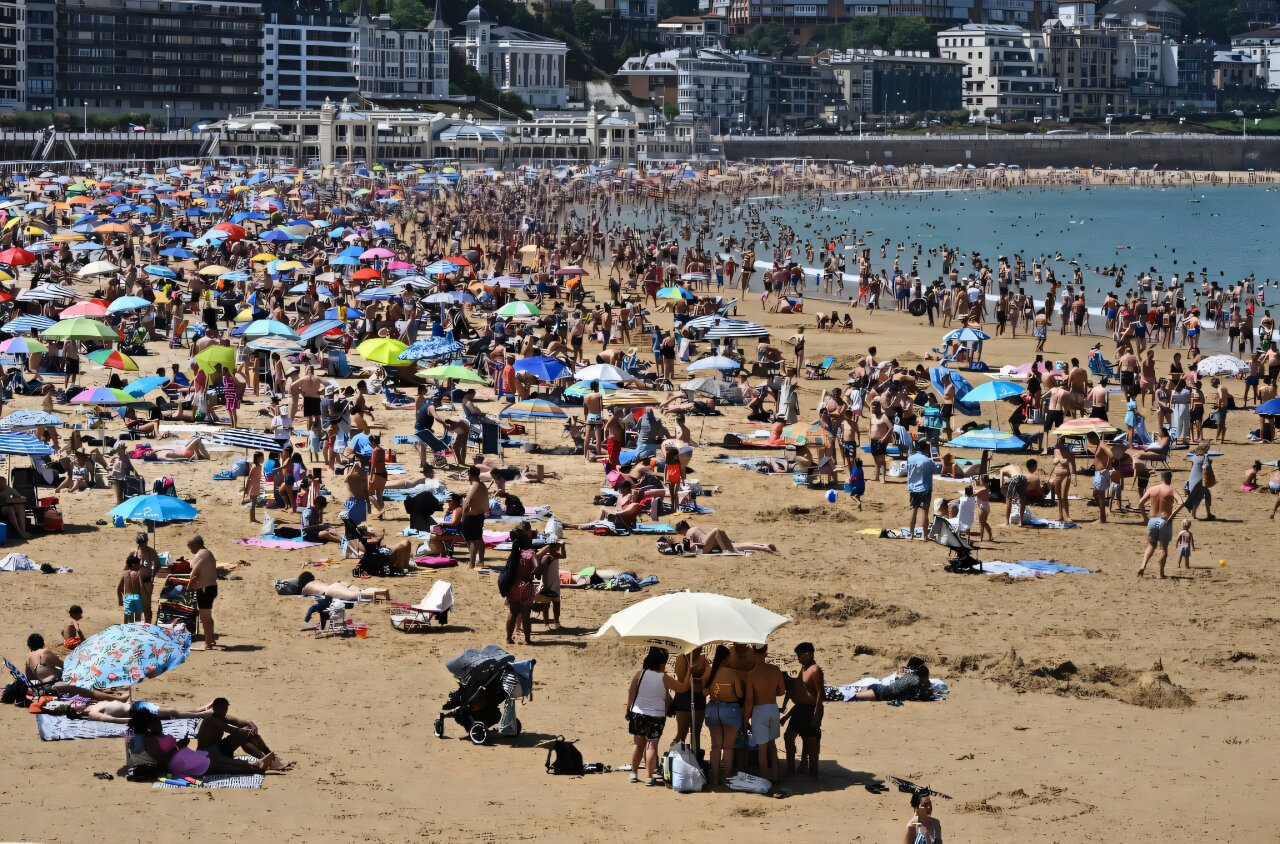
A new heat wave is disrupting public life across Europe, with governments and event organizers restricting gatherings, canceling sports screenings and warning residents to limit exposure. Forecasters cited by AFP said temperatures could climb further in the coming days, raising the risk of June records, health strain and pressure on transport and services.
The latest spell follows a May heat wave that AFP reported broke records in several European countries. Scientists cited by AFP link repeated heat waves to global warming driven mainly by the burning of coal, oil and gas, and warn that such events are expected to become more common, longer and more intense.
France expands heat alerts
France allowed its annual Fete de la Musique street music festival to go ahead, AFP reported, but the Louvre Museum canceled a free concert planned under its glass pyramid in Paris. The government also banned public alcohol consumption during festivities in departments under red alert, citing health and public-order concerns.
Temperatures in parts of France had already exceeded 40 degrees Celsius, according to AFP, including 42.2 C in Pissos in the southwest Landes region. France’s national weather service placed 35 departments under red alert and said that number would rise Monday to 49 of the country’s 96 mainland departments.
Paris officials opened the Canal Saint-Martin for swimming to help residents cool down, AFP reported.
Sports and transport affected
In Germany, organizers suspended the Berlin Open tennis final and cleared the venue because of severe thunderstorms, AFP reported. The match resumed six hours later after a weekend in which temperatures in Berlin topped 30 C and storms moved across much of the region.
Belgium’s temperatures had also passed 30 C on Sunday, AFP reported. David Dehenauw, head of forecasting at the IRM meteorological institute, warned that next week could bring the hottest temperatures ever recorded in Belgium.
Belgium’s national rail company, SNCB, said some rush-hour trains would be canceled Monday and Tuesday to lower the risk of breakdowns blocking tracks, according to AFP.
Spain, Portugal and the Balkans face extreme heat
Spanish officials canceled a public screening in Madrid of the national football team’s World Cup match against Saudi Arabia because of the heat forecast for the capital, AFP reported. Spain declared its first official heat wave of the year from Sunday through Wednesday, with temperatures expected to reach 44 C in some areas.
AFP reported that crowds filled beaches in Spain and Portugal, while others used hand-held fans or umbrellas against the sun. Switzerland’s weather service warned of a strong heat wave with temperatures up to 37 C in lower-altitude areas and said it was unclear when the spell would end.
Weather alerts were also forecast for parts of Croatia and Serbia, where temperatures could reach 35 C, AFP reported. Croatian authorities issued health guidance, while North Macedonia, Bosnia and Montenegro prepared for extreme temperatures.
Britain warned of hot nights
Britain’s Met Office issued amber warnings for extreme heat from Monday to Thursday, with temperatures expected to reach 38 C in England and Wales. The agency said overnight temperatures would remain high across southern England, with “tropical nights” in which temperatures do not fall below 20 C.
Liz Bentley, chief executive of the Royal Meteorological Society, told AFP that Britain could see an unprecedented heat wave, with temperatures likely to reach 38 C to 39 C and exceed the June record of 35.6 C. Akshay Deoras, a research scientist at the University of Reading’s meteorology department, told AFP the spell could be record-breaking and affect public health, infrastructure and essential services.
This story draws on original reporting from Phys.org.