
Engineered yeast enzyme screen points to ALS and Parkinson’s targets
Washington University researchers built a faster way to find Hsp104 enzyme variants that act on protein clumps tied to neurodegenerative disease.
By Tom Brennan · Health & Medicine Correspondent
3 min read
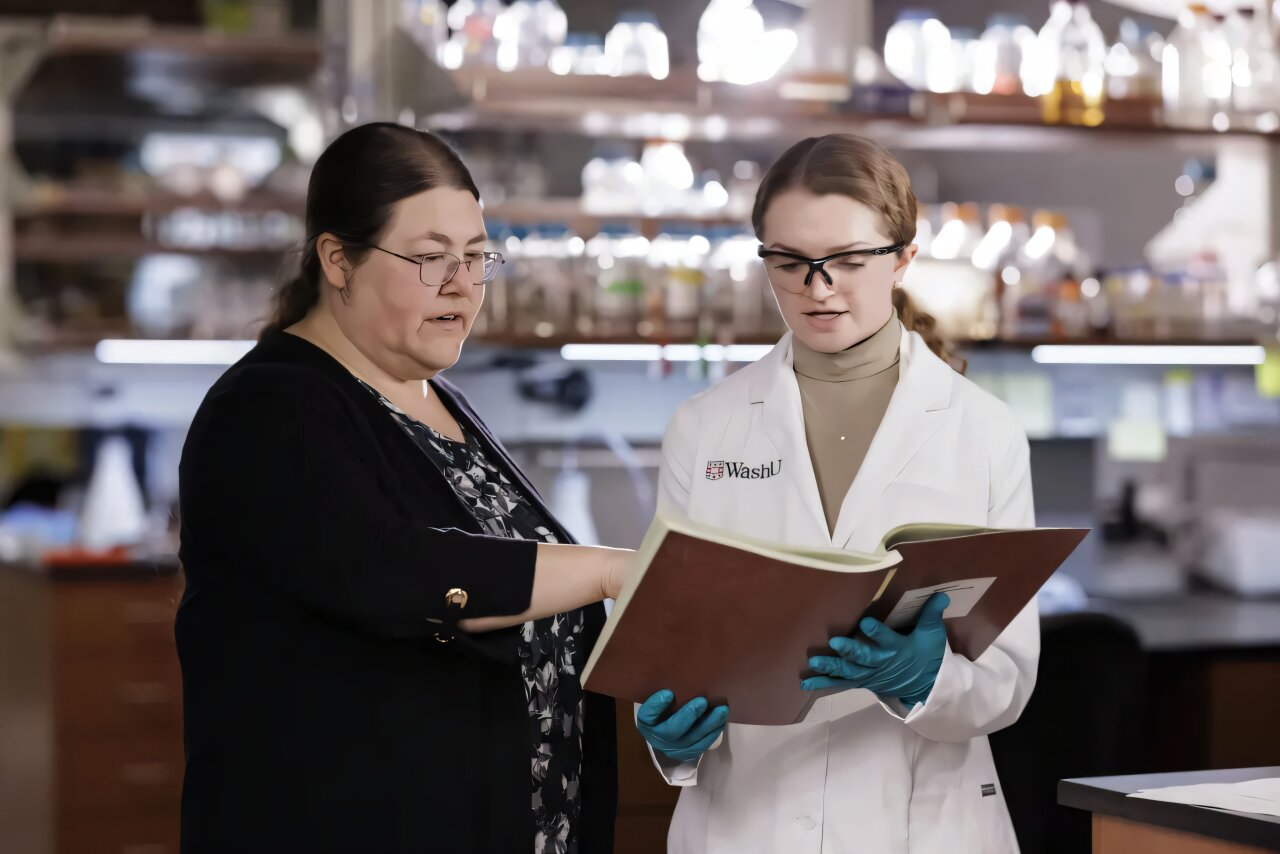
Washington University in St. Louis chemists have developed a high-throughput method to generate and test engineered enzymes that attack protein clumps linked to ALS and Parkinson’s disease. The work matters because misfolded proteins such as TDP-43 and alpha-synuclein are central targets in neurodegenerative disease research, but finding useful enzyme variants has been slow.
The study, published in Molecular Cell, was led by Jeremy Ryan, a former graduate student in Meredith Jackrel’s laboratory who is now a scientist at Bayer, according to Washington University. Jackrel is an associate professor of chemistry in Arts & Sciences at the university.
Jackrel said disaggregase enzymes have promise, but earlier approaches for making and selecting them were labor-intensive. Her team’s new system is meant to speed that search by allowing researchers to examine very large pools of enzyme variants at once.
Testing many versions of Hsp104
The Washington University team focused on Hsp104, a disaggregase found naturally in yeast. According to the university, yeast uses Hsp104 to help withstand heat and other stresses, and the enzyme can separate aggregated proteins.
Jackrel’s group is studying Hsp104 because it can act on TDP-43, a misfolded protein that accumulates in the nervous systems of people with ALS, and alpha-synuclein, which builds up in Parkinson’s disease, according to Washington University. Jackrel said Hsp104 can also help misfolded proteins regain a healthier shape, which may help restore cell functions.
The researchers created a library by introducing many mutations into a region of the Hsp104 gene and placing the resulting variants into yeast, according to the study description from Washington University. In that setup, different yeast cells produce different versions of the enzyme.
Earlier screening methods could identify promising Hsp104 variants by growing yeast colonies and sequencing selected samples, Jackrel said. But that process could examine only a few hundred versions at a time, according to the university.
Deep sequencing speeds the search
In the new work, Jackrel’s team began with the normal Hsp104 gene and introduced mutations to create tens of millions of versions, according to Washington University. The group then used deep sequencing, which reads many DNA fragments in parallel, to track which mutations were present.
Jackrel said the method lets researchers assess the full population and identify which Hsp104 variants perform well under certain conditions. The paper reports that the screen found substrate-selective Hsp104 variants that counter amyloid seeding while showing reduced off-target effects.
Washington University said the approach does not mean every new Hsp104 version will outperform previously known enzymes. Jackrel said the value is that researchers can now search a much wider set of possibilities and more readily identify candidates with improved properties.
Long path to possible therapies
TDP-43 is a major focus for scientists and drug developers, according to Washington University, because it has a major role in ALS and is also associated with dementia, including some forms of Alzheimer’s disease. The university said efforts to create drugs that remove TDP-43 or slow disease progression have not yet succeeded.
Jackrel said additional experiments and refinement would likely take years before Hsp104 could be assessed as a possible ALS therapy. She said reversing buildup of misfolded TDP-43 and alpha-synuclein could be useful in neurodegenerative disease, and that Hsp104 may contribute to that effort.
This story draws on original reporting from Phys.org.