
Dying cells leave vesicle trails that flu viruses may exploit
La Trobe-led researchers say newly identified particles left by dying cells help immune cleanup but may also conceal influenza viruses.
By Tom Brennan · Health & Medicine Correspondent
3 min read
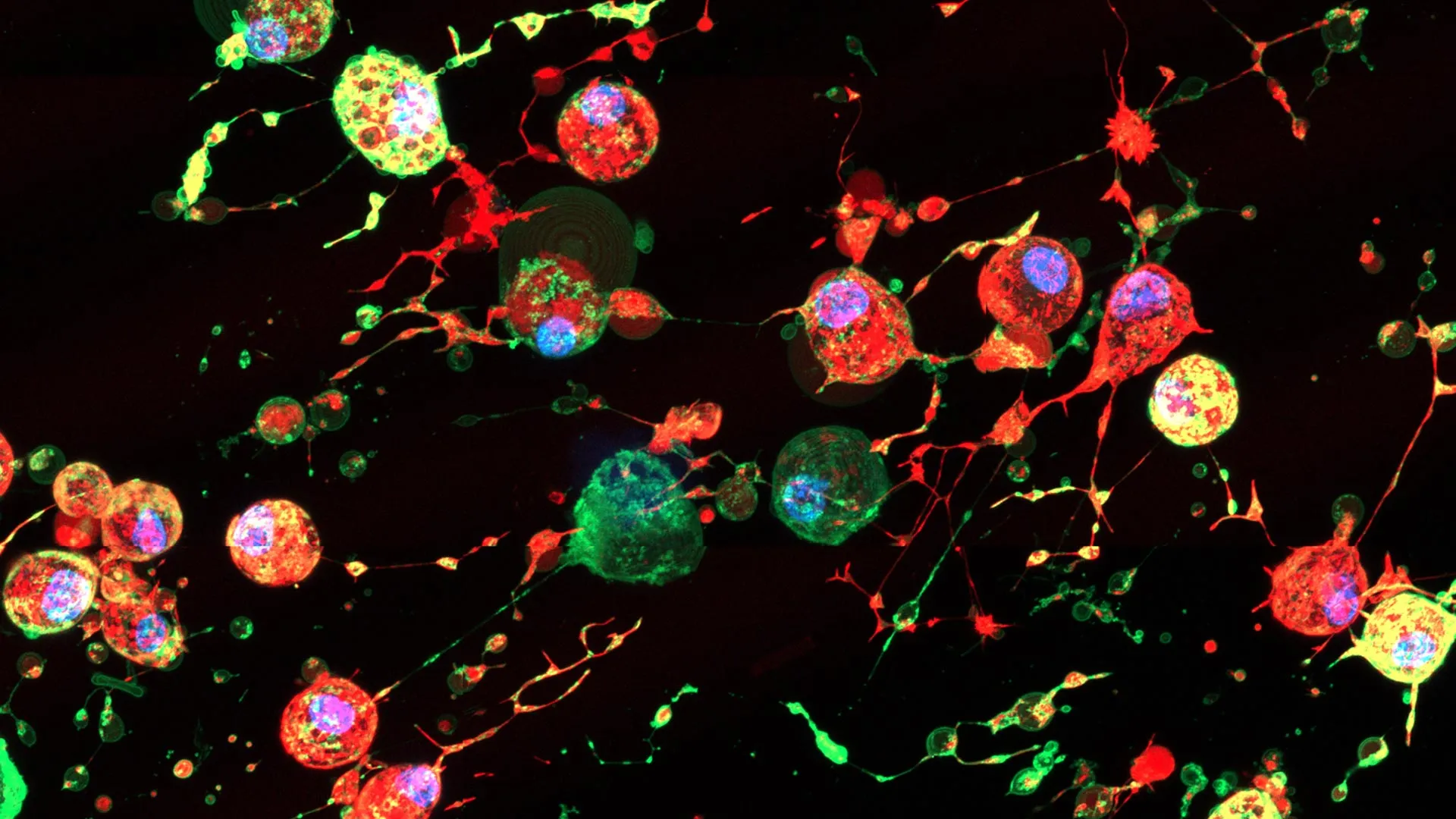
Researchers have identified a previously unknown process in which dying cells leave behind microscopic material that helps the immune system find and clear cellular remains. La Trobe University said the same process may also be used by influenza viruses to hide and spread to nearby cells.
The study, published in Nature Communications, was led by PhD candidate Stephanie Rutter in Professor Ivan Poon’s laboratory at the La Trobe Institute for Molecular Science. The work involved scientists from La Trobe University, WEHI and Toronto Metropolitan University in Canada, according to La Trobe.
A trail left after cell death
La Trobe said the team studied what happens as cells go through programmed death and break apart. During that process, the researchers observed cells changing shape, detaching from surrounding structures and leaving a residue at the place where the cell died.
The researchers called that residue the “footprint of death.” Within it, they found a newly described type of extracellular vesicle, which they named F-ApoEVs.
Extracellular vesicles are tiny cell-released packages that can carry proteins, lipids, DNA and RNA between cells, La Trobe said. The university said the F-ApoEVs remain at the death site and appear to help mark where immune cells should remove leftover fragments.
According to La Trobe, that cleanup is important because dead-cell material that is not cleared can contribute to inflammation and autoimmune disease. Rutter said the body’s removal of dead-cell fragments helps prevent them from lingering, including in conditions such as systemic lupus erythematosus.
Influenza finding
The team also tested cells infected with influenza, La Trobe said. In those laboratory experiments, the researchers found viral particles could be contained inside F-ApoEVs.
La Trobe said that finding suggests influenza viruses may exploit a normal disposal process, using these vesicles as cover while moving to neighboring cells. The study does not claim this is the only way influenza spreads, but it identifies a mechanism the researchers say may affect infection.
Poon, who directs La Trobe’s Research Centre for Extracellular Vesicles, said the work changes how his team views cell fragmentation during death. According to La Trobe, Poon said the process had often been considered relatively simple, while the findings point to a more ordered set of steps that helps dying cells break down and be removed.
La Trobe said Poon also sees the work as a possible starting point for research into therapies that strengthen immune responses. The university did not report any treatment tested in patients.
Links to immune disease research
Rutter said the results show that communication between cells can continue after a cell has died, according to La Trobe. She said the unexpected part of the study was the ability of viruses to take advantage of F-ApoEVs.
Study co-leader Dr. Georgia Atkin-Smith of WEHI said, according to La Trobe, that the findings show dying cells can still influence immune activity. La Trobe said the researchers believe the work may help future studies of infectious disease and autoimmune disorders.
The paper is titled “The formation of the ‘footprint of death’ as a mechanism for generating large substrate-bound extracellular vesicles that mark the site of cell death.” Its listed authors include Rutter, Atkin-Smith and Poon, and the journal reference gives the DOI as 10.1038/s41467-025-64206-3.
This story draws on original reporting from ScienceDaily.