
Foreign student decline could cost US up to $481 billion, study says
Peterson Institute researchers say fewer international STEM graduates could weaken entrepreneurship, productivity and long-term U.S. growth.
By Hana Yoshida · Markets Reporter
3 min read
A drop in international students at U.S. universities could carry costs far beyond campus budgets, according to new research from the Peterson Institute for International Economics. The institute said a sustained decline in foreign-born STEM graduates trained in the United States could cut U.S. GDP by $240 billion to $481 billion over the next decade.
The estimate is based on a scenario in which the number of foreign-born STEM graduates educated in the U.S. falls by one-third, the Peterson researchers said. They linked that loss to weaker entrepreneurship, lower productivity and less business formation, especially in industries that rely on advanced science and engineering skills.
Enrollment losses are already showing up
NAFSA, an education nonprofit, said U.S. schools reported a 17% drop in international student enrollment last fall. The group estimated that the decline cost universities $1.1 billion in tuition revenue and was tied to nearly 23,000 fewer jobs.
The Chronicle of Higher Education, citing its analysis of State Department data, said the decline in visa issuances during the last academic year may have reached 36%. QS, a higher education analytics firm, projected in a separate report that enrollment could fall by an additional 1% each year through 2030.
The Peterson Institute said the risk is especially high because international students are concentrated in technical fields. The Institute of International Education said 1.2 million international students attended U.S. schools last year, and 57% of them were enrolled in STEM programs.
Universities serve as a hiring pipeline
The Peterson researchers said U.S. universities are the main route through which many high-skill foreign-born STEM workers enter the American labor market. They found that foreign-born workers make up 42.1% of STEM employees whose highest degree is a master’s and 49.2% of those with a PhD.
From 2000 to 2023, foreign-born professionals accounted for more than 60% of new STEM workers with doctorates, according to the Peterson paper. The researchers also said nearly 40% of highly skilled foreign-born professionals remain in the United States more than eight years after finishing their degrees.
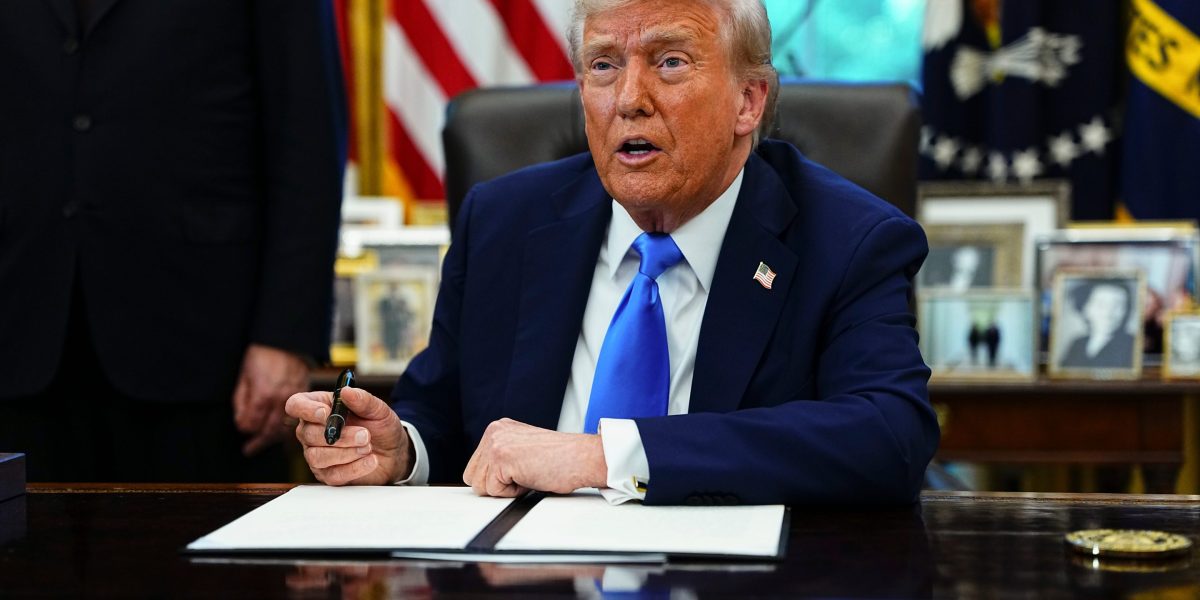
The Trump administration has tightened immigration policies affecting students and skilled workers, including measures directed at foreign students and post-graduation employment, according to White House materials and reports cited by the Peterson researchers. The administration also changed the H-1B visa program last year by requiring employers to pay $100,000 per application, up from about $5,000, according to NPR; Reuters reported that a federal judge struck down the order this month and that the administration said it would appeal.
Those visa rules matter to employers in technology, artificial intelligence and health care, where companies have used H-1B visas to hire specialized workers, according to CBS News, the Bulletin of the Atomic Scientists and the Association of American Medical Colleges.
Other countries may benefit
The National Foundation for American Policy said immigrants have founded or co-founded 59% of U.S. billion-dollar startups. Stanford economists reported in 2023 that immigrants accounted for 23% of patents issued over recent decades, partly because U.S.-born inventors often cite work by foreign-born researchers.
NAFSA said 82% of schools in Asia and 47% in Europe reported undergraduate enrollment growth last year, compared with 18% in the United States. Universities in Hong Kong and Japan also sought to attract international Harvard students during the university’s dispute with the Trump administration, according to public announcements and Kyodo News.
The Peterson researchers said students who do not study and work in the United States are likely to use their skills elsewhere. In their words, “These high-skill STEM workers lost to the United States won’t disappear. They will supply their talents instead to competitor countries.”
This story draws on original reporting from Fortune.