
Dune fly study finds mating dances resist evolutionary change
Researchers found genetically isolated Australian dune flies kept nearly identical courtship routines, suggesting female choice may slow changes in mating displays.
By Priya Raghavan · Science Reporter
3 min read
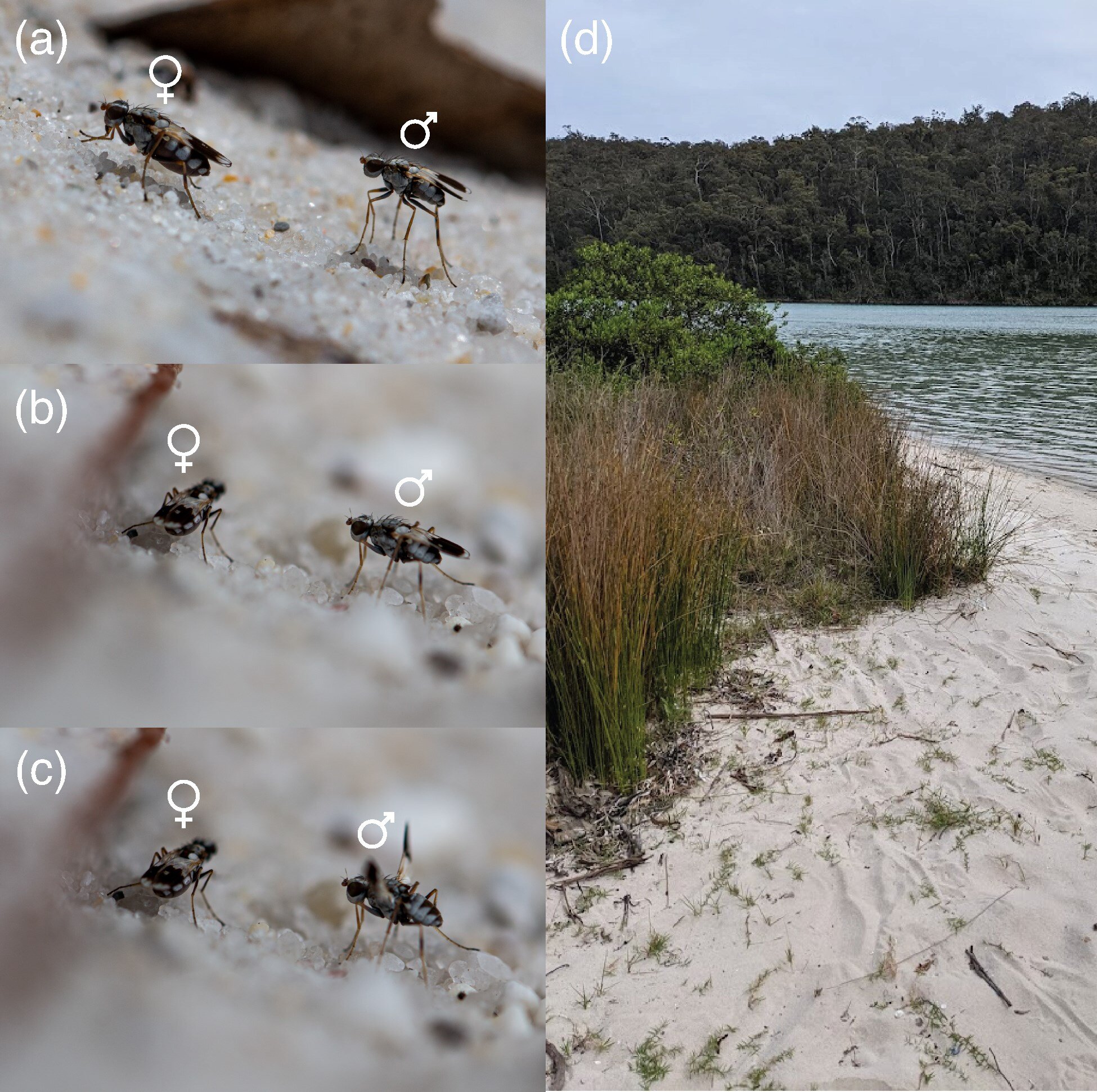
Male dancing dune flies in eastern Australia appear to keep the same courtship routine even after populations become genetically separated, according to a new study in Behavioral Ecology. The finding matters because it suggests animal mating dances may be harder to change than their striking diversity across species might imply.
Nathan J. Butterworth and Keith M. Bayless, writing in The Conversation about their peer-reviewed study, examined the courtship behavior of Apotropina ornatipennis, a small fly that lives along beach dunes. The species has patterned wings and reflective patches, and males use turns, wing movements and other displays during courtship.
The researchers said the flies offered a useful test case because populations live on separate stretches of coastline divided by headlands and estuaries. Those barriers mean different groups have been evolving independently over generations.
If courtship displays readily drifted apart as populations became isolated, the researchers expected the fly groups to develop distinct local routines. They compared genetic differences among populations with the details of their behavior, cataloging 41 dance moves.
The dances showed little variation despite the genetic separation, according to the study. Butterworth and Bayless reported that only one slight timing difference in a wing movement pointed to any divergence among the populations.
Female choice may favor familiar routines
The authors interpret the stability as evidence that new courtship choreography may come with a cost for males. A male that departs from a known display could fail to attract a female if the new performance does not match what she recognizes as a reliable sign of mate quality.
Biologists describe such displays as “honest signals” when they reveal something about the performer’s condition or ability. Butterworth and Bayless wrote that physically demanding routines requiring precise execution can help females distinguish stronger or better-coordinated males from weaker ones.
Under that model, females do not need novelty if an established display already provides useful information. A male that alters the sequence may appear either unfamiliar or unskilled, reducing his chance of mating, the researchers said.
The finding addresses a long-running question raised by sexual selection, the idea first proposed by Charles Darwin that mate preferences can shape traits such as ornaments, songs and displays. If females prefer the best performers, researchers might expect evolution to push a species toward one ideal display, yet courtship behavior varies widely across closely related animals.
Change can still happen
Butterworth and Bayless stressed that mating displays are not fixed forever. They pointed to Hawaiian crickets as one example of rapid behavioral change: after a parasitic fly that tracks cricket songs invaded the islands, some male crickets stopped calling within about 20 generations and instead used the calls of other males to find mates.
The researchers also noted that genes can produce new courtship behavior. In fruit flies, other scientists identified a gene linked to males regurgitating nuptial gifts during courtship, and activating it in another species triggered the same gift-giving behavior.
Social learning can also shift displays over time, according to the authors. They cited lyrebirds and songbirds, where younger animals may learn from older ones, allowing small changes to spread if other males copy them and females come to prefer them.
The dune fly study adds evidence that, at least in some species, courtship choreography can remain stable even when populations are genetically distinct. Butterworth and Bayless argue that female preferences may slow the evolution of mating dances by rewarding familiar performances that reliably signal male quality.
This story draws on original reporting from Phys.org.