
AMD faces questions over memory encryption on consumer Ryzen chips
Users say a firmware change disabled TSME memory encryption on some consumer Ryzen CPUs, while AMD says the feature belongs to its Pro line.
By James Whitfield · Staff Writer
3 min read
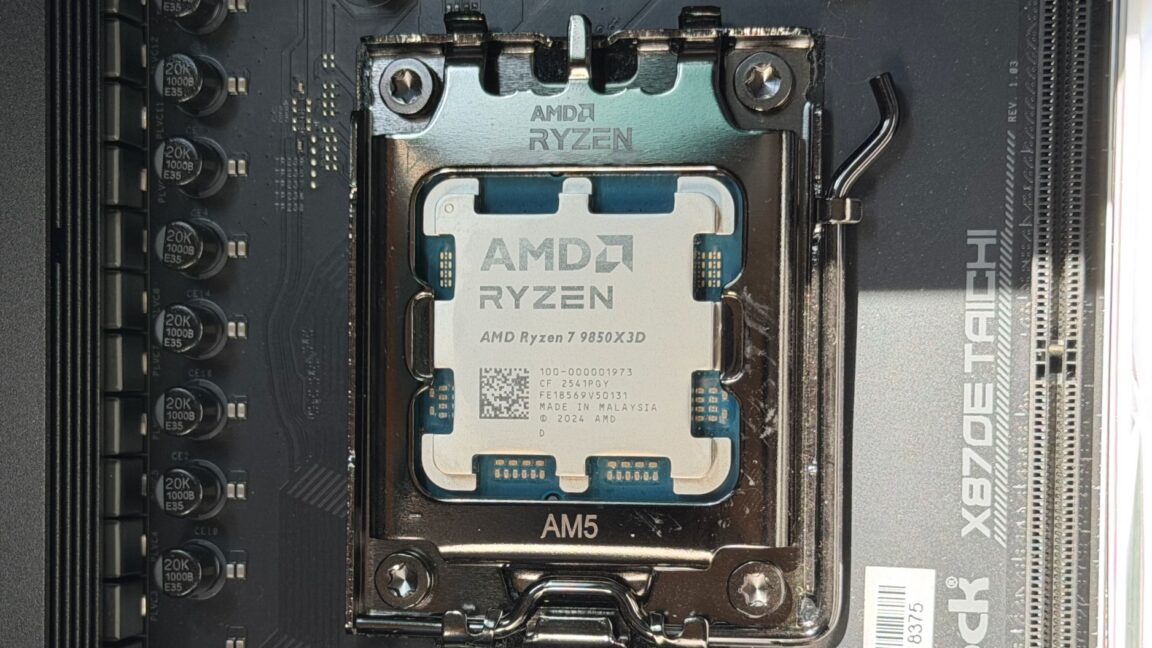
AMD is facing complaints from users after Transparent Secure Memory Encryption, a memory-protection feature, stopped working on some consumer Ryzen processors. The change matters because TSME can reduce the risk that attackers with physical access can extract usable data from a computer’s RAM, according to Ars Technica.
AMD told Ars Technica by email that TSME “is a security feature only applied to PRO CPUs as part of AMD PRO Technologies.” Ars Technica reported that AMD did not answer further questions or explain why the feature had worked on consumer chips before.
TSME encrypts the full contents of system memory through firmware, without requiring the operating system to manage individual memory pages. Ars Technica reported that the feature can help defend against attacks such as cold boot attacks, DRAM interface snooping and removal of memory modules.
The issue drew attention after Ben Kilpatrick, described by Ars Technica as a privacy-conscious Linux hobbyist, checked the security status of a system running a Ryzen 7 9700X. Using Host Security ID, an auditing tool for firmware and hardware security settings, Kilpatrick found that encrypted RAM was listed as unsupported even though he had enabled TSME in BIOS, Ars Technica reported.
Kilpatrick then pushed motherboard maker MSI to test the behavior, according to Ars Technica. MSI engineers found that consumer Ryzen processors on MSI and Gigabyte motherboards showed TSME enabled when older boot firmware from AMD’s AGESA package was used, but showed the feature as unsupported with AGESA version 1.2.7.0.
According to Ars Technica, the same testing found that Pro Ryzen processors supported TSME across the tested boards and AGESA versions. Kilpatrick told Ars Technica the unresolved question is whether AMD intentionally limited the feature to Pro chips or whether the change was an accidental firmware regression.
Kilpatrick also filed a report on AMD’s public engineering GitHub repository, where AMD engineers Tom Lendacky and Mario Limonciello responded, Ars Technica reported. Both initially suggested toggling the BIOS setting or asking the motherboard vendor to investigate if the feature still failed.
After MSI’s testing, Kilpatrick reported back that MSI’s product marketing team had told him AMD had officially said TSME was supported only on Pro series processors, according to Ars Technica. He also cited testing on an Asus X870E motherboard with a consumer Ryzen 9800X3D and a Pro Ryzen 9945, where TSME status was off for the consumer part and on for the Pro part.
Ars Technica reported that MSI’s engineering work included AMD Boot Loader memory captures showing an internal AGESA flag, DfIsTsmeEnabled, returning false for consumer processors and true for Pro or Epyc processors when TSME was enabled in BIOS. When Kilpatrick asked whether that reflected a silicon limit or a firmware policy decision, Limonciello replied that he had no more information to share, according to the report.
Earlier AMD engineering comments had pointed in a different direction. Ars Technica cited a 2020 GitHub comment in which Lendacky said a Ryzen 3700X, a consumer chip, “should support TSME,” and a 2025 follow-up in which he recommended using TSME if the BIOS exposed the option.
Ars Technica reported that AMD has not been shown to have marketed TSME as a consumer Ryzen feature. The company has said a related memory encryption feature, Secure Memory Encryption, is available only on Pro and Epyc chips, according to the report.
Joe Fitzgerald, described by Ars Technica as a silicon-level security expert, said AMD should explain what happened, even if the answer is that earlier firmware enabled an unsupported feature by mistake. Users’ complaint is less about marketing language than about a protection that worked for years and then disappeared without clear notice, according to Ars Technica.
This story draws on original reporting from Ars Technica.