
Migrating predators may connect evolution across distant species
A PNAS study says predators that move between regions could help separate species evolve similar warning signals without meeting.
By Tom Brennan · Health & Medicine Correspondent
3 min read
Predators that migrate between far-apart regions may help shape the evolution of prey species that never share the same habitat, according to a new study. The finding matters because it challenges the common view that coevolution depends on species living in the same place.
The research, published in the Proceedings of the National Academy of Sciences, was led by Akiva Topper, Yotam Ben-Oren and Oren Kolodny of the Hebrew University of Jerusalem. The team used computer simulations to test whether moving predators could connect separate prey populations through the predators' avoidance behavior.
Testing a wider view of mimicry
The study focuses on mimicry, in which species evolve similar warning signals that can include colors, patterns, sounds or behaviors. In classic mimicry theory, species usually need to overlap geographically because the same predators must encounter the same signals in the same area.
Topper, Ben-Oren and Kolodny proposed a different route. They said migratory predators could carry learned or inherited avoidance responses from one place to another, creating shared selection pressures across regions separated by thousands of kilometers.
In their simulations, the researchers modeled two separate populations of defended prey and linked them through predators that moved between the regions. According to the study, those movements could favor the evolution of similar warning signals even when the prey species did not come into contact.
The authors said their results suggest species do not necessarily need to live together to coevolve. They described migratory animals as agents that can connect distant ecosystems and extend evolutionary interactions across broad geographic scales.
What the model showed
The simulations point to a possible mechanism for Müllerian mimicry across nonoverlapping ranges, according to the paper. In Müllerian mimicry, multiple defended species benefit when predators learn to avoid a shared warning signal.
The researchers also examined conditions that could strengthen or weaken the effect. The study identified local predation pressure and the timing of predator migration relative to the appearance of warning signals as factors that may affect whether long-distance mimicry evolves.
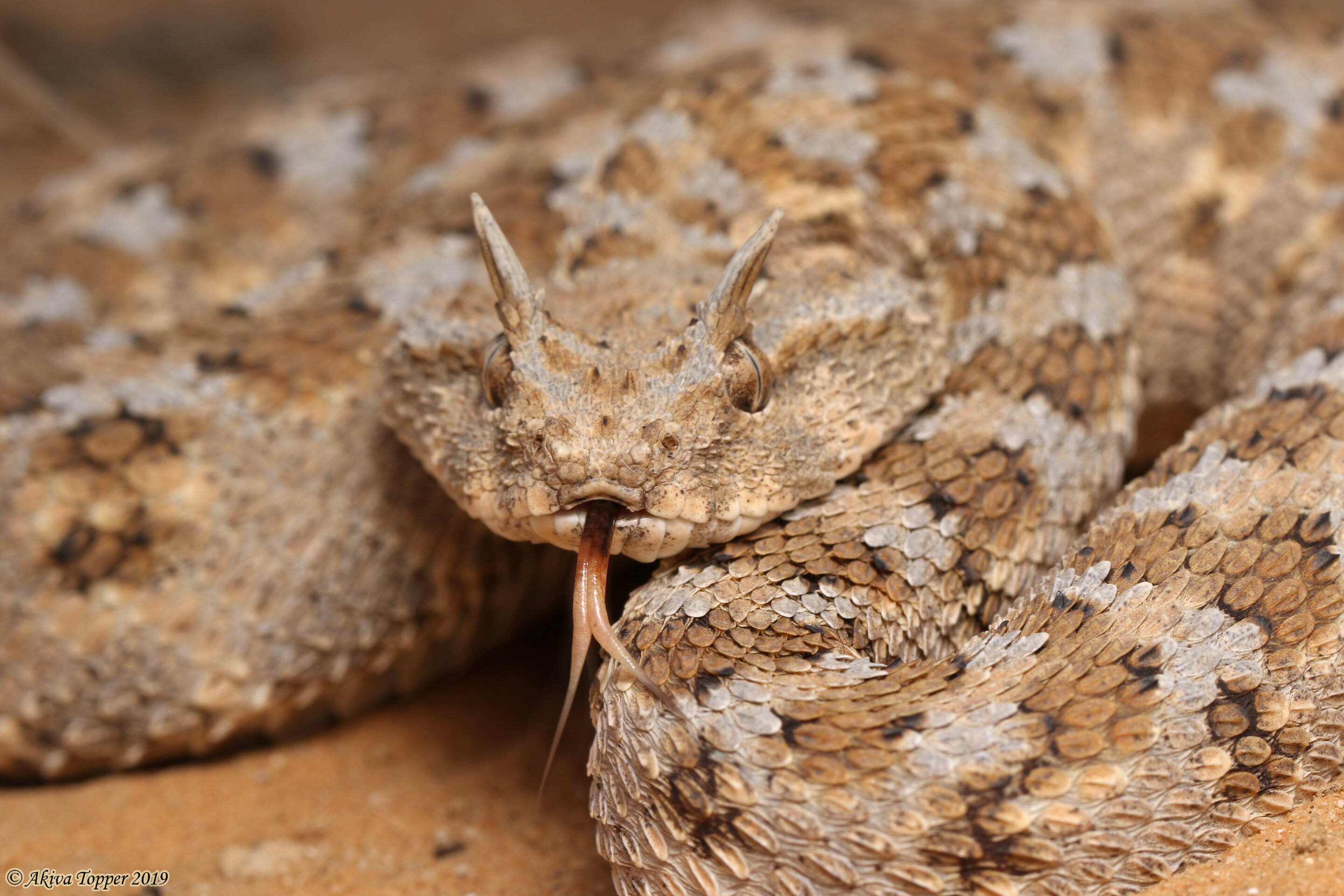
The paper also discusses Batesian mimicry, in which harmless species resemble harmful or defended ones. As a possible real-world example, the researchers point to egg-eating snakes in the genus Dasypeltis, which perform a scale-rubbing warning display similar to Cerastes and Echis vipers, including in areas where those vipers are absent.
That pattern could fit the broader idea that predators moving between regions help maintain or spread avoidance responses, according to the researchers. The study does not claim to prove that particular snake example, but presents it as a system that may warrant further testing.
Beyond snakes
The authors said the same principle may apply outside mimicry. They wrote that migration could connect distant plant-herbivore interactions, host-pathogen relationships and other coevolutionary processes that are often treated as local.
The researchers cited several systems that may show such long-distance evolutionary links, including venomous snakes, migratory birds of prey, monarch butterflies and milkweed plants, and viruses carried by migratory hosts or vectors.
According to the Hebrew University team, migration moves large numbers of animals and their ecological effects between ecosystems. Their study argues that those movements may also influence evolution over continental distances, and the authors said they hope the work prompts field research into evolutionary links that have been missed because the species involved do not overlap.
This story draws on original reporting from Phys.org.