
DNA traces point to a complex origin for modern strawberries
A genome-mapping method using mobile DNA suggests cultivated strawberries formed through three ancient chromosome-merging events.
By Priya Raghavan · Science Reporter
3 min read
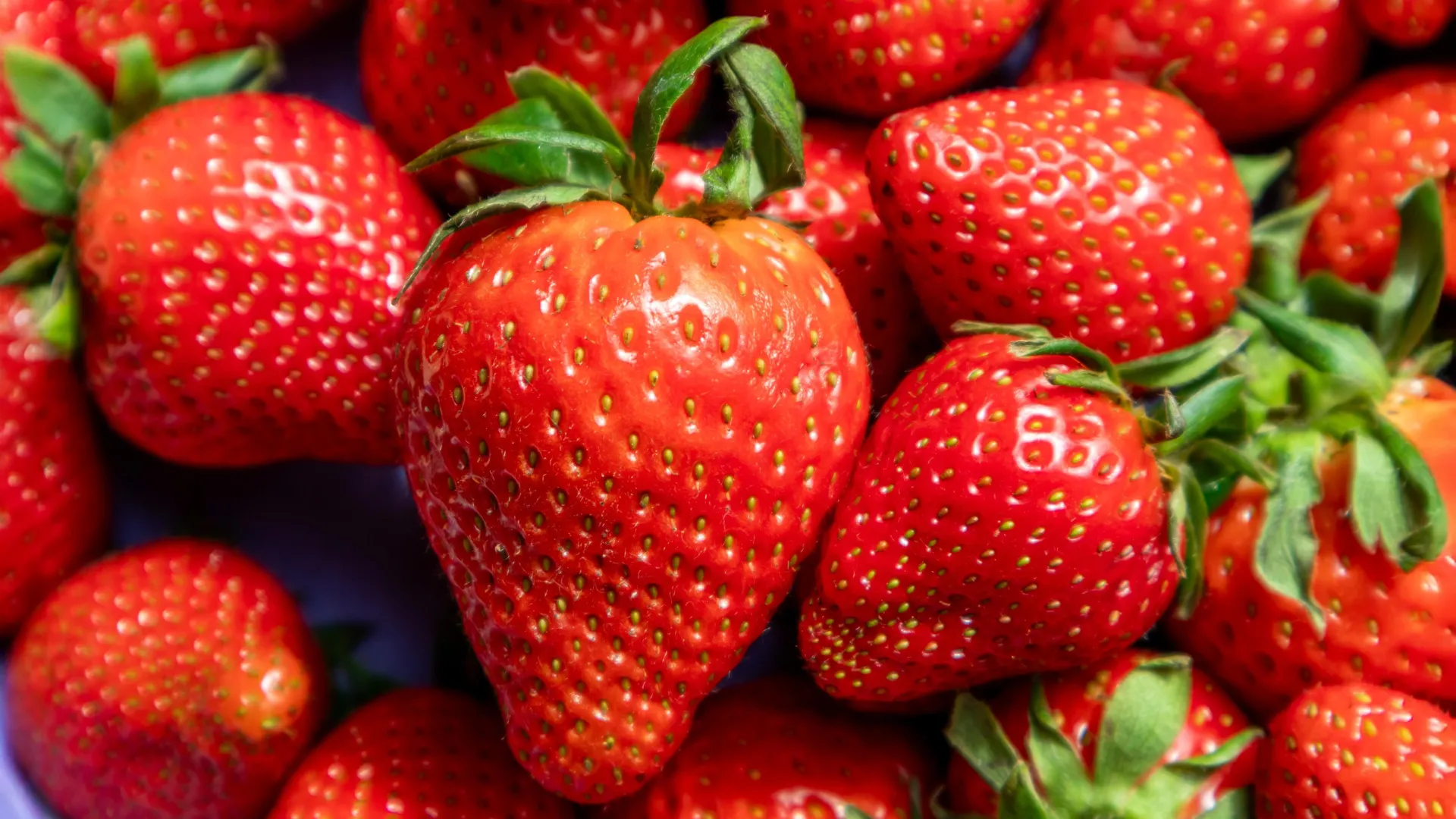
Researchers have used repetitive stretches of DNA to rebuild the tangled evolutionary history of the cultivated strawberry. The work matters for crop science because many major food plants have genomes built from several ancestral species, and those origins can be hard to trace when the ancestors are missing.
The study, described in Horticulture Research by Haomin Lyu, Shujun Ou, Won Cheol Yim and Qingyi Yu, presents a computational method for sorting complex plant genomes into their contributing parts. According to Nanjing Agricultural University The Academy of Science, the approach uses genetic marks left by long terminal repeat retrotransposons, a kind of mobile DNA.
Cultivated strawberry, Fragaria × ananassa, is an octoploid, meaning it carries eight sets of chromosomes. The research team reported that its genome contains four distinct subgenomes and was assembled through three successive allopolyploidization events, in which different ancestral genomes merged.
Mobile DNA as a record of ancestry
Polyploidy is common in plants and has contributed to the evolution of many crops, according to the study summary. In allopolyploid plants, separate chromosome sets come from different ancestral lineages and then continue to change after they combine.
Scientists often identify those subgenomes by comparing a crop with living diploid relatives. The strawberry study addresses a common problem with that strategy: some ancestral species may be extinct, unknown or unsampled.
The researchers focused on long terminal repeat retrotransposons because these DNA elements expand in lineage-specific patterns. According to the team, those patterns can preserve evidence from periods before and after genome-merging events.
The method calculates similarity among these retrotransposons across chromosomes and then examines how they group at different similarity levels. The team calls the resulting framework a serial similarity matrix, which is designed to capture genetic signals from different points in evolutionary time.
Tests in other crops
Before turning to strawberry, the researchers tested the method on allopolyploid crops with better-established histories, including teff and cotton. In those cases, the study reports, the approach separated known subgenomes and distinguished signals from before and after polyploidization.
The team also used artificially constructed polyploid genomes to test the method. Those trials showed, according to the researchers, that the results depend on both the timing of lineage divergence and the amount of transposable-element sequence available.
What the strawberry analysis found
Applied to octoploid strawberry, the method pointed to three ancient genome-merging periods. The study placed them at about 3.1 million to 4.2 million years ago, 1.9 million to 3.1 million years ago, and 0.8 million to 1.9 million years ago.
The analysis also supported close links between two strawberry subgenomes and the species Fragaria vesca and Fragaria iinumae. At the same time, Nanjing Agricultural University The Academy of Science said the findings challenge earlier models that proposed additional diploid progenitor species.
The researchers said some contributors to the modern strawberry genome may no longer exist or may not yet have been sampled. One senior author said transposable elements can act as evolutionary time stamps in plant genomes, allowing researchers to infer genome history even without direct ancestral references.
The authors said the method could help studies of other polyploid crops, including wheat, cotton and sugarcane. More precise subgenome identification could aid gene annotation, trait mapping and comparative genomics, according to the study summary, with possible uses in crop breeding research.
The work was supported by a National Institute of Food and Agriculture Specialty Crop Research Initiative grant to Q.Y. The paper is titled “Deciphering octoploid strawberry evolution with serial LTR similarity matrices for subgenome partition” and is available through Horticulture Research.
This story draws on original reporting from ScienceDaily.