
Deep ocean drilling points to clay layer in Japan’s 2011 tsunami
A Science study says a weak clay seam beneath the Japan Trench helped the 2011 quake rupture near the seafloor, amplifying the tsunami.
By Priya Raghavan · Science Reporter
3 min read
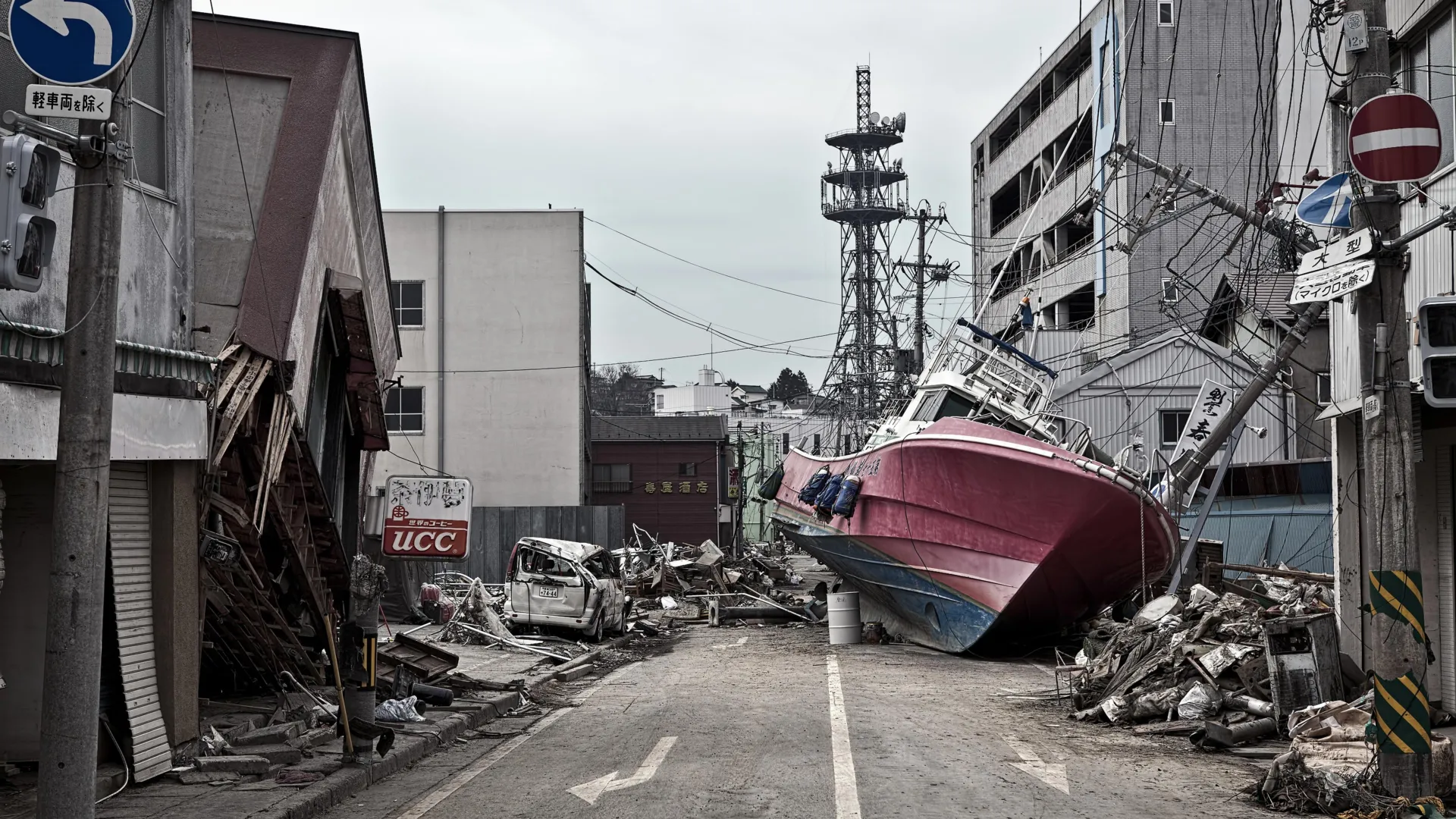
A record-setting ocean drilling project has identified a weak layer of clay beneath the Japan Trench that researchers say helped make Japan’s 2011 earthquake and tsunami so destructive. The finding matters because similar weak zones could affect where future shallow-slip earthquakes and major tsunamis form, according to Northern Arizona University.
The study, published in Science, found that a roughly 100-foot-thick band of soft, clay-rich sediment sits below the seafloor at the plate boundary. Researchers said that layer helped the fault rupture travel toward the trench during the magnitude 9.1 megathrust earthquake.
Northern Arizona University said the shallow rupture allowed the seafloor to move by about 130 to 200 feet. That displacement helped generate the tsunami that killed nearly 20,000 people and caused more than $200 billion in damage, the university said.
What the drilling found
The research team worked from the Japanese scientific drilling vessel Chikyu in the western Pacific, according to Northern Arizona University. The expedition drilled about 26,000 feet into the ocean floor, recovered sediment samples and examined the material from the fault zone.
Guinness World Records recognized the expedition as the deepest scientific ocean drilling project completed, according to the university. The samples showed a layer of pelagic clay, a fine sediment that builds up over long periods as tiny particles settle through the ocean.
The study said the clay was far weaker than the rock layers around it. Patrick Fulton, a Cornell University associate professor and study co-author, said the structure of the layers at the Japan Trench effectively controls where the fault develops, creating a narrow weak surface that can let rupture extend to the seafloor.
Christine Regalla, an associate professor in Northern Arizona University’s School of Earth and Sustainability and a study co-author, said the scale of movement in 2011 was outside what scientists expected from previous observations. She compared it to the area between Los Angeles and San Francisco shifting 130 to 200 feet in about six minutes.
Why it changes tsunami risk thinking
Northern Arizona University said most large earthquakes begin much deeper below Earth’s surface. By contrast, researchers found that the 2011 Japan rupture moved much closer to the ocean bottom, reaching about 15 miles beneath the seafloor.
The Science paper links that shallow slip to the weak clay layer. Because the clay layer extends for hundreds of miles along the Japan Trench, researchers said the region may have greater exposure to shallow-slip earthquakes than previously recognized.
Regalla said better maps of weak layers could help scientists identify areas able to produce the largest earthquakes and tsunamis. She also said tsunamis from Japan can affect distant places across the Pacific, including Hawaii.
The researchers said the findings could help improve earthquake and tsunami forecasts. Northern Arizona University said that knowledge may support stronger building rules, better earthquake-resistant infrastructure and updated evacuation planning in communities exposed to tsunami hazards.
This story draws on original reporting from ScienceDaily.