
Fossil nests show ancient bees used mammal tooth sockets
A study says solitary bees built tiny mud nests in fossil bones left in a Hispaniola cave about 20,000 years ago.
By Lucas Ferreira · Science & Environment Writer
4 min read
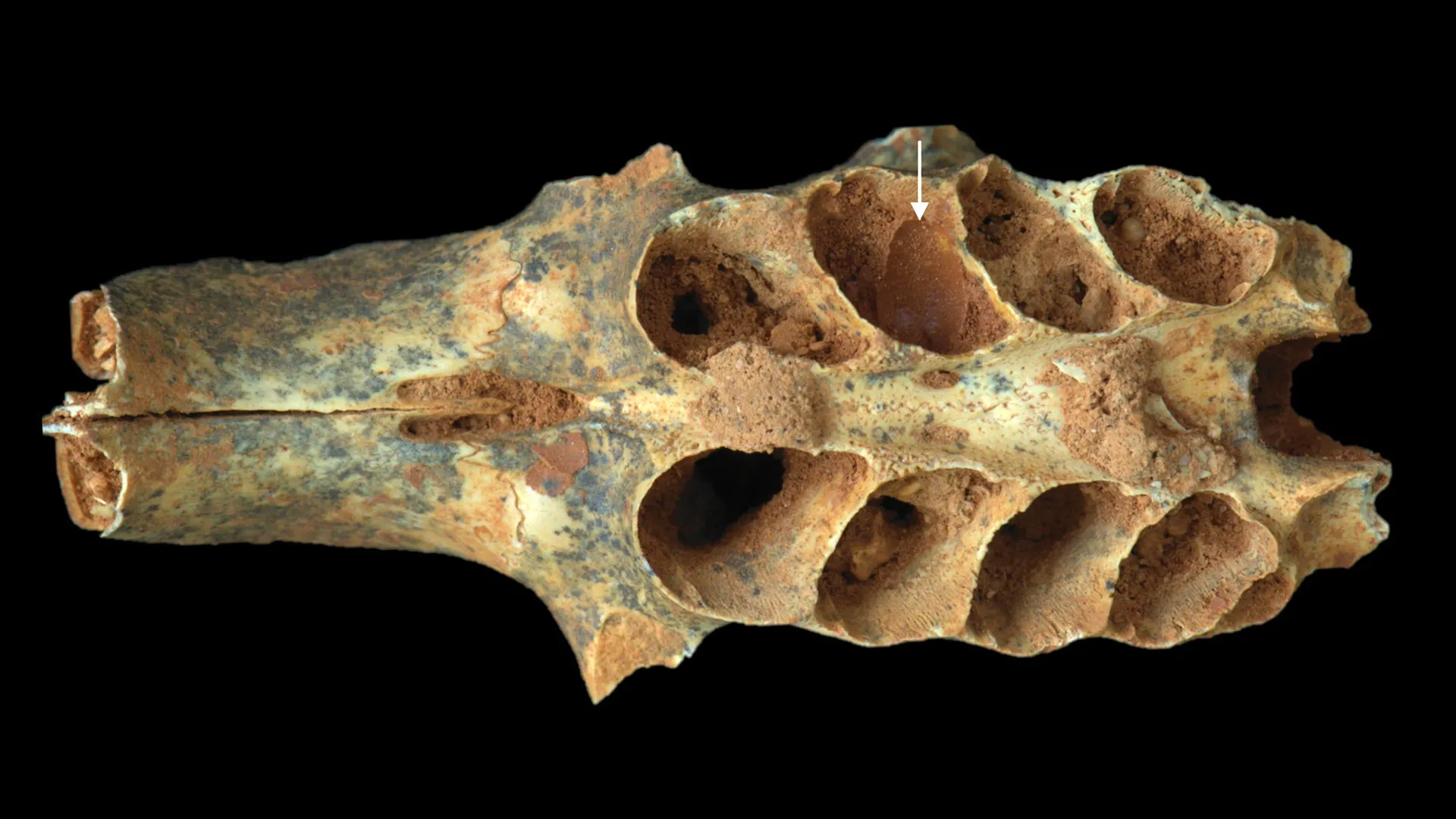
Researchers say they have found the first known evidence of bees nesting inside animal bones, preserved in a cave on Hispaniola about 20,000 years ago. The finding matters because it records an unusual survival strategy by solitary bees and adds insect behavior to a fossil site best known for vertebrate remains.
The Field Museum said the nests were found inside empty tooth sockets in fossilized mammal jaws. According to a study published in Royal Society Open Science, the bones likely accumulated after generations of owls lived in the cave and regurgitated pellets containing prey remains.
Hispaniola, the Caribbean island shared by Haiti and the Dominican Republic, has thousands of limestone caves. Lázaro Viñola López, a Field Museum postdoctoral researcher and lead author of the study, said some areas have sinkholes roughly every 100 meters.
The cave examined by the team had been identified as a rich fossil deposit by Juan Almonte Milan, curator of paleobiology at the Dominican Republic’s Museo Nacional de Historia Natural. Viñola López studied the site while doing doctoral work at the University of Florida and the Florida Museum of Natural History.
According to the researchers, the cave held fossil layers separated by carbonate deposits formed during wet periods in the past. Most remains were from rodents, but the team also found fossils of sloths, birds, reptiles and other animals, with more than 50 species represented.
The researchers said the mix of remains points to long use of the cave by owls, which hunted outside and returned to the cave. Viñola López said the site also preserved owl fossils and remains of animals such as turtles and crocodiles that may have fallen in.
CT scans revealed nests inside jaws
Viñola López noticed the unusual material while cleaning mammal fossils, according to the Field Museum. Several jawbones had smooth, slightly concave deposits inside tooth sockets, unlike the way sediment normally settles in a cavity.
The pattern reminded him of fossilized wasp cocoons he had seen during an earlier excavation in Montana. To test the idea without damaging the fossils, the team used CT scans to examine the material inside the sockets in three dimensions.
The scans showed structures consistent with mud nests made by some modern solitary bees, the researchers reported. Some of the nests also preserved ancient pollen grains, which the scientists interpreted as food left by mother bees for larvae.
Viñola López said most bee species live alone rather than in large colonies. Some solitary bees use small cavities in wood, soil or existing objects, and some species in Europe and Africa nest in empty snail shells, he said.
The Field Museum said the Hispaniola nests were smaller than a pencil eraser and were probably made from dirt mixed with saliva. The researchers said bone cavities may have protected the developing bees from predators such as wasps.
No bee bodies were preserved
The nests did not contain fossilized bees. The researchers said that was expected because warm, humid cave conditions are poor for preserving fragile insect bodies.
Without bee remains, the team could not identify the species that made the nests. The nest structures were distinct enough, however, for the researchers to give them their own taxonomic name: Osnidum almontei, honoring Almonte Milan.
Viñola López said the nest builders could have belonged to a bee species still living today, because the ecology of many island bees is poorly known. He also said they may have belonged to an extinct species, since many animals preserved in the cave are no longer alive.
The researchers said the local limestone environment may help explain the behavior. With little soil available for underground nests and owls repeatedly adding bones to the cave floor, tooth sockets would have offered many ready-made cavities.
Viñola López said the discovery shows why fossil preparers should watch for trace fossils, including signs left by insects, even when studying larger animals. According to the Field Museum, those traces can reveal parts of an ecosystem that body fossils alone may miss.
This story draws on original reporting from ScienceDaily.