
Study finds plant signaling molecules spread through mammal organs
University of Würzburg researchers report that cytokinins occur across mammals, with diet, gut microbes and mammalian genes shaping their levels.
By Priya Raghavan · Science Reporter
3 min read
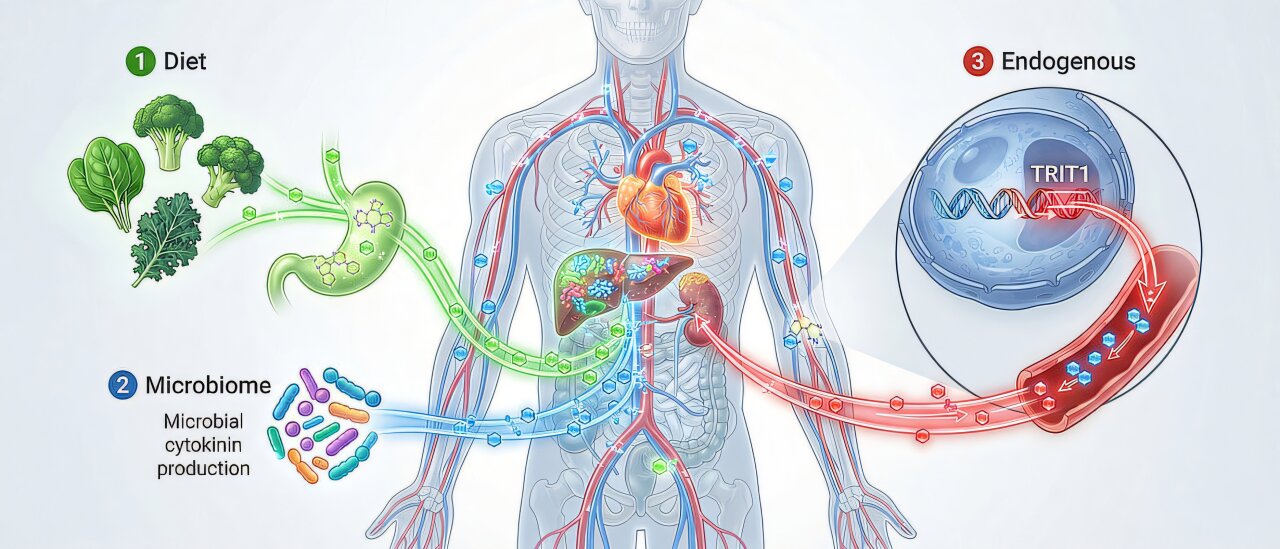
Researchers at Julius Maximilian University of Würzburg report that cytokinins, signaling molecules best known for their role in plants, are present across mammalian bodies, including humans. The finding matters because it challenges the view that these compounds belong mainly to botany and points to possible roles in mammalian health.
The work, published in Gut Microbes, was led by biochemist Eman M. Othman-Sholkamy and bioinformatician Thomas Dandekar at the university’s Bio Center. According to the team, cytokinins were detected across five mammalian species, spanning carnivores and omnivores.
The researchers reported that the molecules circulate through the bloodstream rather than staying in a narrow set of tissues. They also found cytokinins in organs including the kidneys, heart and liver, which the team said supports further study of their biological significance.
Lower levels than plants, but not absent
According to the study, cytokinin concentrations in plants remain higher than in mammals. The researchers reported that plant levels are about four to 10 times higher than those measured in animal or human blood serum.
Even at lower levels, the Würzburg team said the compounds are unlikely to be incidental leftovers. The researchers said their results point to possible functions in muscle growth, cellular aging and protection of nerve cells, though the study does not establish therapeutic use.
Othman-Sholkamy said the broad tissue distribution raises questions about basic biological processes. “If these substances are systemically stored in peripheral tissues, their widespread presence raises the possibility that they may influence fundamental processes such as cellular aging or the immune response,” she said.
Diet and microbes shape cytokinin levels
To examine where the molecules come from, the team ran controlled feeding experiments and analyzed the animals’ microbiome, the collection of microorganisms that live in and on the body. The researchers also searched 2.3 billion gene sequences from the Global Microbial Gene Catalog to look for genetic evidence tied to cytokinin production.
- According to the team, cytokinin levels in mouse blood serum and urine fell significantly after eight hours without food, suggesting daily diet is a major contributor.
- The researchers found lower cytokinin levels in germ-free mice, which lack a natural microbiome, and identified bacterial genes linked to cytokinin production.
- The study also pointed to the mammalian TRIT1 gene as a possible internal source for certain cytokinin types.
- The researchers detected cytokinin O-glucoside, which they described as an inactive storage form that can be converted into an active hormone form when needed.
The team said these findings indicate that mammals may receive cytokinins from food and gut bacteria while also having limited capacity to produce some forms themselves. That mix of external and internal sources could help explain why the compounds appear across multiple tissues.
Possible paths for medical research
Dandekar said the detection of these plant-associated hormones in humans may create new lines of medical research. He said future studies should test whether cytokinins could have therapeutic value in inflammation or neurodegenerative diseases, including Huntington’s disease.
The university said Othman-Sholkamy, Muhammed Naseem and Dandekar were among early researchers studying cytokinins in infection, cross-kingdom communication and redox stress protection. The three scientists have published 20 studies on the topic, according to the university.
Alongside the new study, researchers also published a review in Gut Microbes covering cytokinins and the human microbiome. According to the review, the microbiome affects metabolism, immune function and how medications work.
This story draws on original reporting from Phys.org.