
Philosophers argue consciousness may not require Earth-like biology
A UC Riverside philosopher and a Lisbon researcher say minds could arise in alien bodies or other substrates far unlike human brains.
By Tom Brennan · Health & Medicine Correspondent
3 min read
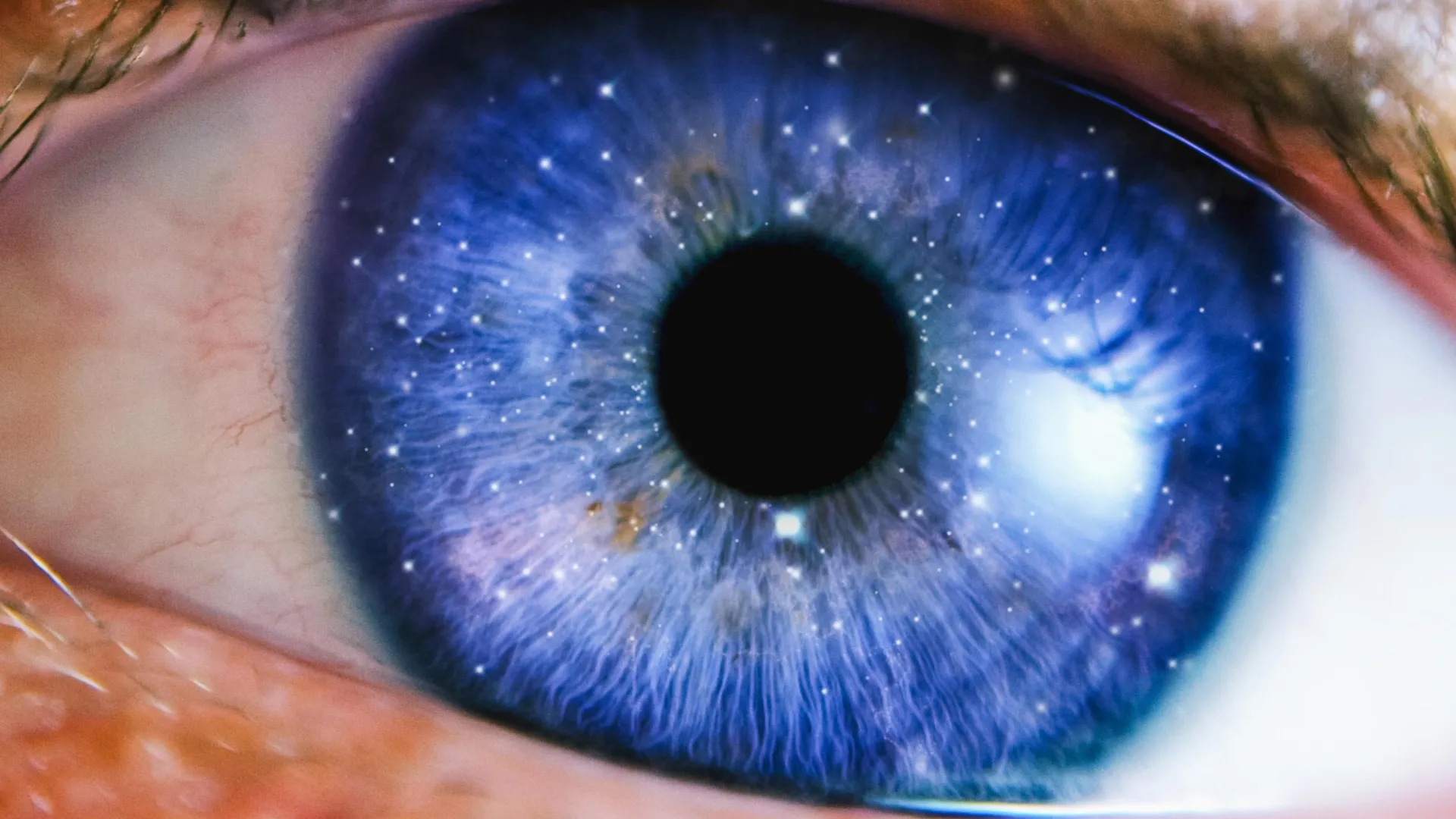
Consciousness may not be limited to organisms built like humans, according to a new working paper from philosophers Eric Schwitzgebel and Jeremy Pober. The argument matters for debates about alien life and artificial intelligence because it challenges the assumption that conscious experience depends on Earth-style biology.
Schwitzgebel, a distinguished professor of philosophy at the University of California, Riverside, and Pober, a former UCR graduate student now working as a postdoctoral researcher at the University of Lisbon, focus on whether consciousness requires a particular physical makeup. They do not try to settle a full definition of consciousness, UCR said, instead treating it as a real phenomenon and asking what kinds of systems might support it.
A broader view of possible minds
The paper centers on what philosophers call substrate flexibility: the idea that some properties can be realized in different materials. UCR described the comparison through familiar examples, such as cups made from glass, plastic or metal, and records stored on different media.
Schwitzgebel and Pober argue that consciousness may work in a similar way. In their view, conscious experience need not be tied to carbon-based bodies, human neurons or the specific chemistry found in life on Earth.
The authors point to the scale of the cosmos as part of their case. Astronomers estimate the observable universe contains about 1 trillion galaxies, and planets appear common, UCR said. Schwitzgebel and Pober estimate that at least 1,000 behaviorally sophisticated extraterrestrial civilizations have existed somewhere in the universe, a figure they describe as conservative.
They also cite scientific work on possible non-Earth-like biochemistry. Astrobiologists have considered life based on different amino acids, solvents or chemical architectures, according to UCR. The philosophers argue that if life can arise through varied chemistry, it would be too Earth-centered to assume conscious beings must share the biological ingredients found here.
Against an Earth-centered assumption
The paper draws on the Copernican tradition, which displaced Earth and humanity from the center of astronomical thinking. Schwitzgebel and Pober apply a similar idea to consciousness, calling the opposite tendency “terrocentrism,” or treating Earth life as uniquely privileged without enough reason.
The authors do not claim that every advanced species would be conscious, UCR said. Their argument is narrower: if consciousness appears among behaviorally sophisticated beings, there is little reason to restrict it to organisms that resemble mammals, humans or other familiar animals.
Earth’s own biology offers a smaller example of variation. UCR said the authors note that octopuses, bees and dogs process information in different ways, showing that evolution has produced multiple nervous-system designs even on one planet.
The paper also uses Andy Weir’s novel “Project Hail Mary” as a fictional illustration of exotic life. The book imagines an alien with a mineral shell, mercury blood, steam-powered muscles and a crystal brain, from a hot ammonia-rich world. Schwitzgebel and Pober do not present that creature as evidence, but as an example of the kind of radically different organism the debate must be able to consider.
AI remains unsettled
The same reasoning touches the debate over artificial intelligence, though the authors do not take a joint position on whether current AI systems are conscious. UCR said Pober argues that accepting many possible substrates does not mean every substrate can produce consciousness, and he sees no reason to think today’s computer hardware has conscious experience.
Schwitzgebel is more open to silicon-based systems as a possibility, UCR said. He argues that once consciousness is no longer assumed to require human-like biology, silicon cannot be ruled out solely because it is silicon.
The paper compares the issue to flight. Reproducing the exact flight of an eagle is different from asking whether flight can exist in other forms, as it does in bats, hummingbirds and insects. In the same way, Schwitzgebel and Pober argue, consciousness elsewhere in the universe may differ sharply from the human version.
This story draws on original reporting from ScienceDaily.