
Chromium beam test targets gaps in cosmic ray chemistry
A UMBC-led team used FRIB to study chromium-52 fragmentation, data expected to sharpen models of cosmic rays and the Milky Way’s chemical history.
By Priya Raghavan · Science Reporter
3 min read
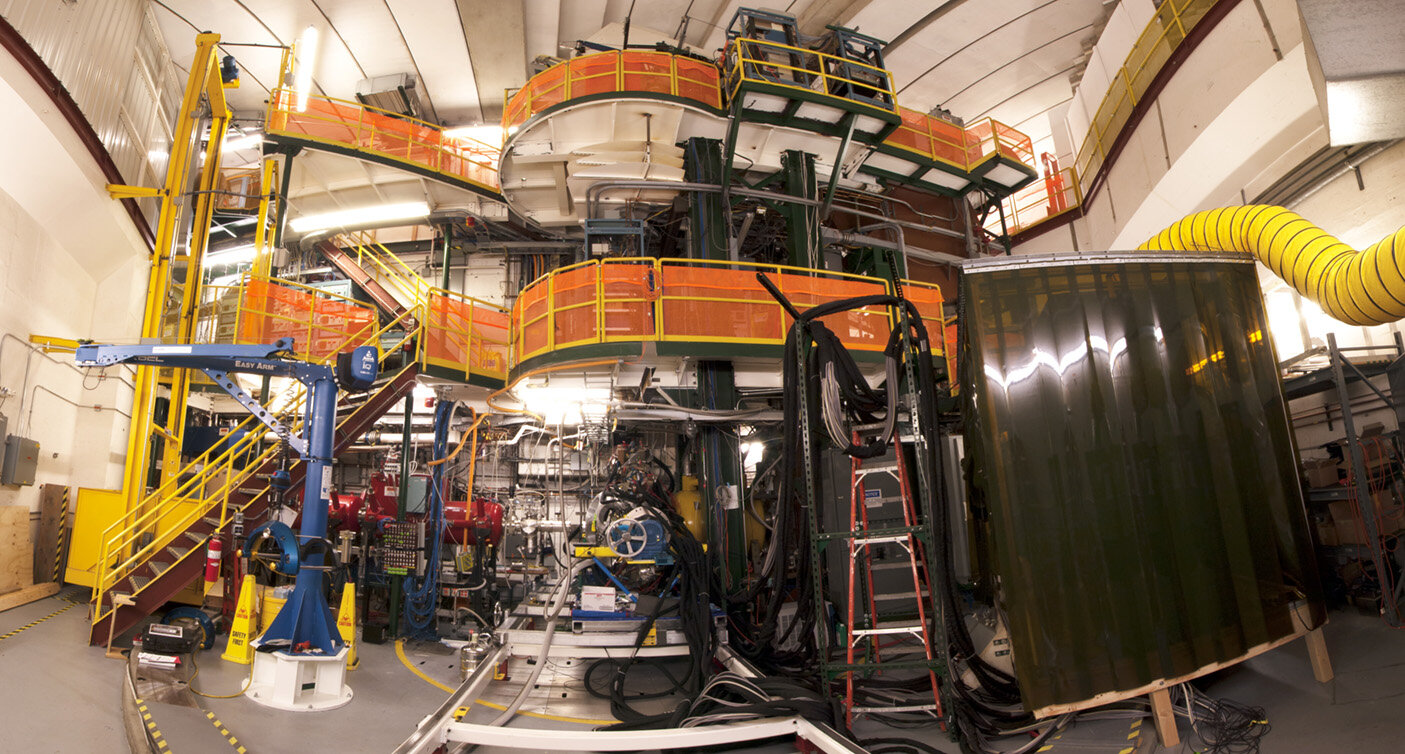
A UMBC-led nuclear physics team has completed a laboratory experiment designed to clarify how cosmic rays change as they cross the galaxy. The work matters because those changes affect how scientists interpret detector readings used to reconstruct the Milky Way’s chemical makeup, according to the University of Maryland Baltimore County.
Priyarshini Ghosh, a UMBC nuclear physicist with the Center for Space Sciences and Technology, led the effort at the Facility for Rare Isotope Beams at Michigan State University, UMBC said. The team produced a beam of chromium-52 nuclei and broke it apart to measure how that isotope fragments in collisions resembling those experienced by cosmic rays in space.
Cosmic rays include atomic nuclei thrown into space by events such as stellar explosions, UMBC said. As those nuclei travel at close to light speed, some collide with hydrogen atoms and split into lighter elements through proton spallation. Scientists use the mix of particles detected by spacecraft and instruments on Earth to infer what happened at the source, but those conclusions depend on knowing how nuclei transform during the trip.
Chromium-52 is a target of interest because it can help distinguish processes in the galaxy, UMBC said. The university said the isotope had not previously been measured in this way, leaving a gap in the nuclear data used by astrophysical models.
Ghosh said the experiment succeeded in producing the needed isotopes and also generated data on the nuclear mechanics of proton spallation. She said such measurements help translate observations from missions including Voyager 1 and Voyager 2 into a clearer account of the galaxy.
How the experiment worked
The team ran the experiment for 43 hours and collected data on 50 to 60 isotopes created by collisions and fragmentation, UMBC said. Analysis is expected to take nearly a year, with the results intended to improve the precision of astrophysical models.
Ghosh said enriched chromium-52 would cost about $150,000 for a sample roughly the size of a chocolate square. To avoid that cost, FRIB created chromium-52 through reactions between a nickel-58 beam and a carbon target, according to UMBC.
Jorge Pereira, who leads FRIB’s magnetic spectrometer operation group, said the facility allowed researchers to reproduce under controlled conditions a specific process that occurs when cosmic rays from dying stars move through the galaxy. He said the test involved three stages: producing a chromium-52 beam with cosmic-ray-like properties, sending it into a liquid hydrogen target, and using the S800 spectrometer to determine what happened after the collision.
What the data could support
UMBC said the project is part of a developing program at NASA Goddard Space Flight Center and UMBC focused on proton-based cross sections, a limited area of study. Cross-section measurements help quantify the likelihood of particular nuclear reactions, allowing researchers to trace detected elements back toward their origins.
The university said the same kind of data may also assist studies of planetary surface composition. The collaboration aims to build a database for turning cosmic-ray observations into models of how elements are formed and distributed across the Milky Way.
UMBC said the results are expected to support missions such as ACE-CRIS and SuperTIGER by improving interpretation of their observations. Ghosh described the work as “a feat of nuclear engineering,” saying the team used detectors to expose specific aspects of the physics needed to answer the question.
This story draws on original reporting from Phys.org.