
One gene helps explain chickens’ many plumage colors
A PNAS study links domestic chickens’ wide range of feather colors to rapid change in the MC1R pigmentation gene.
By Tom Brennan · Health & Medicine Correspondent
3 min read
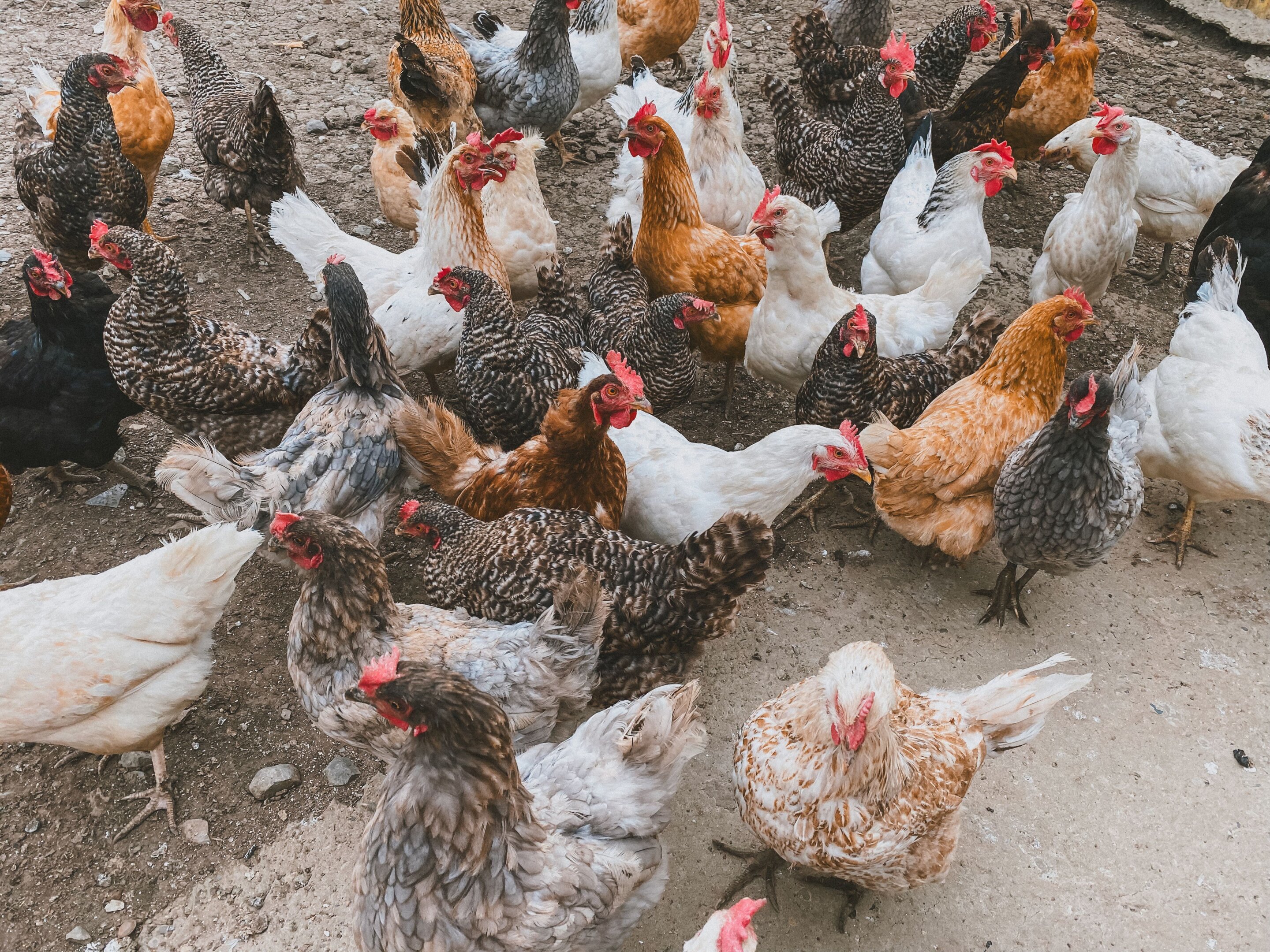
Domestic chickens owe much of their striking range of feather colors to rapid changes in a single pigmentation gene, according to a new international study. The work matters because it shows how visible diversity can arise over a short evolutionary period, with changes in one gene producing effects breeders and scientists can see.
The study, published in the Proceedings of the National Academy of Sciences, involved researchers from Leipzig University, Charité—Universitätsmedizin Berlin and Uppsala University in Sweden. Leipzig University said the team focused on the melanocortin-1 receptor, or MC1R, a protein that helps control pigment production in vertebrate skin cells.
Chickens are unusually varied among livestock, with plumage ranging from white and black to golden brown. The researchers found that the gene encoding MC1R has changed extensively since domestication, producing 18 different variants, according to Leipzig University.
A pigment switch with many settings
MC1R acts as a molecular switch in pigment cells, the researchers reported. Depending on its activity, cells make more dark pigment or more light pigment.
Using cell cultures, the team tested how particular MC1R mutations changed receptor activity. Leipzig University said some mutations increased the switch’s activity, while others reduced it.
The study also found that combinations of mutations can interact. Several changes in the same gene may strengthen one another or offset one another, producing feather colors and patterns that a single mutation would not create by itself, according to the researchers.
Claudia Stäubert of Leipzig University’s Rudolf Schönheimer Institute of Biochemistry said the work shows that mutation buildup and recombination within one gene generated many new variants with visible effects on chicken appearance.
From genome scans to receptor tests
The work grew out of a genome study at Uppsala University that analyzed more than 10,000 chickens, according to Leipzig University. That effort identified MC1R as a notably variable genetic site.
At Leipzig, Stäubert and Aenne-Dorothea Liebing examined how MC1R variants affected receptor function and how those effects related to plumage colors. At Charité in Berlin, a team led by Patrick Scheerer studied the structural consequences of the mutations, according to Leipzig University.
The Leipzig-Berlin collaboration was formed through Collaborative Research Center 1423, Structural Dynamics of GPCR Activation and Signaling, based at Leipzig University. MC1R belongs to the broader class of receptor molecules studied in that research program.
The researchers said domestic chickens offer a clear example of new genetic variants arising and spreading over a few thousand years. Leipzig University said the findings could aid basic research and may help animal breeders better predict or select for color traits.
The team plans to test whether similar evolutionary patterns occur in other vertebrates, according to Leipzig University. The paper is titled “Ultrarapid MC1R protein and associated plumage color evolution in the domestic chicken.”
This story draws on original reporting from Phys.org.