
Breeding wolves show stronger response to unfamiliar urine marks
A Swiss zoo study suggests breeding status shapes how wolves read scent cues, a finding that could guide future wolf deterrents.
By Lucas Ferreira · Science & Environment Writer
3 min read
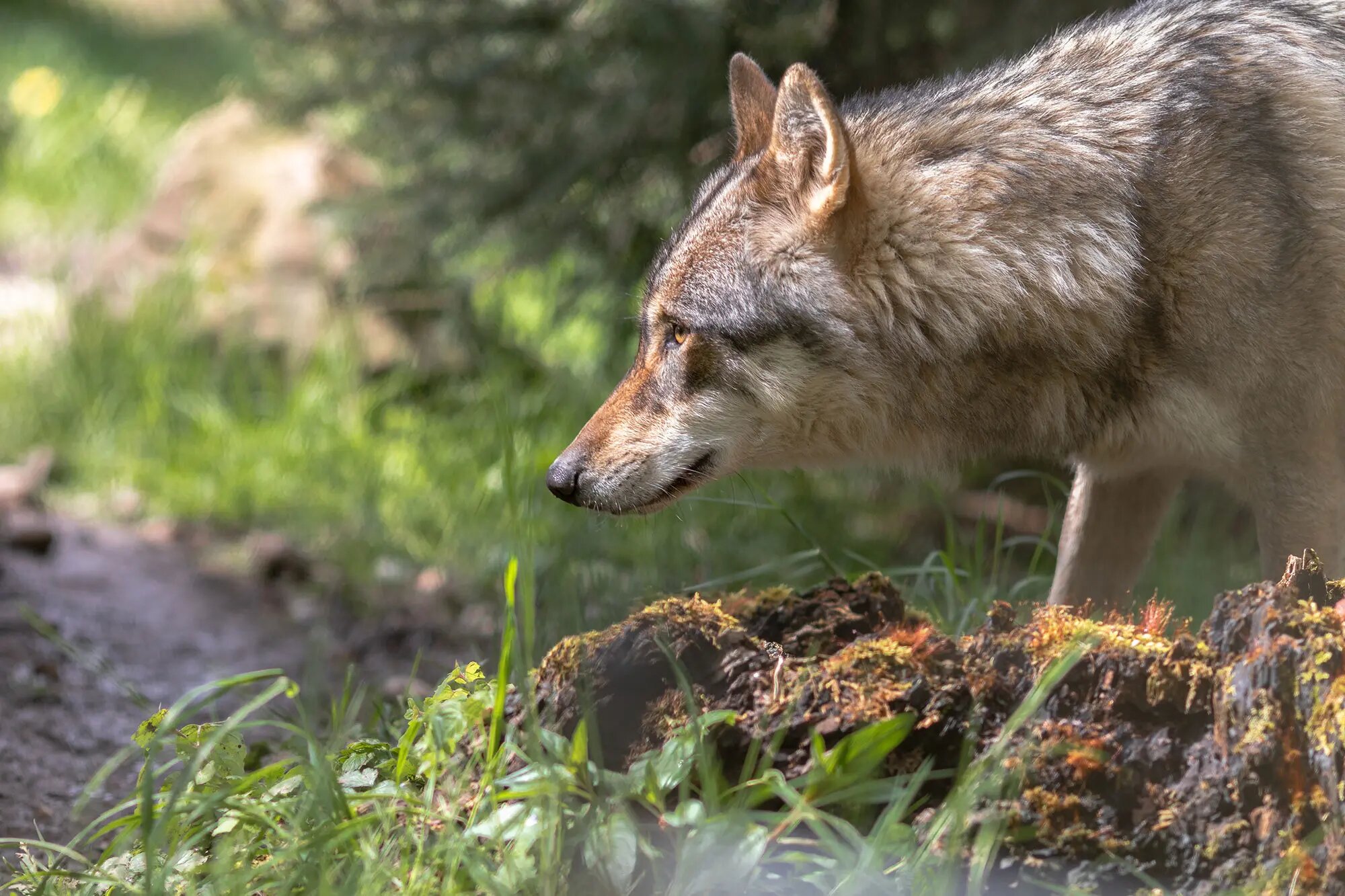
Breeding wolves reacted more strongly than other pack members to unfamiliar wolf urine in a Swiss study, pointing to social status as a factor in how the animals assess possible intruders. The work may help researchers understand whether scent-based barriers could one day deter wolves from livestock areas, according to the Swiss National Science Foundation.
The study, published in Frontiers in Ethology, examined how captive wolf packs responded to scent marks placed along the edges of their enclosures. Giada Studer, Klaus Zuberbühler and Gwendolyn Wirobski of the University of Neuchâtel’s Laboratory of Comparative Cognition carried out the research, the foundation said.
Wolves use scent for hunting, avoiding predators and communicating with other wolves, according to the researchers. Their urine marks can carry information about identity, rank and reproductive condition, but the Swiss National Science Foundation said this form of canid communication has received limited scientific study.
From April to June 2024, the team tested 13 wolves in five packs at four Swiss zoos. The group included six breeding animals and seven nonbreeders, according to the study summary.
The researchers placed scent stations outside the enclosure boundaries. Each station used an aluminum plate set 30 centimeters above the ground, a height intended to imitate raised-leg urination, and the team applied 3 milliliters of wolf urine to simulate an outside animal’s mark. Human urine was also used so the researchers could compare responses to wolf scent with reactions to a new but non-wolf odor.
Camera traps recorded the wolves’ behavior continuously. The researchers tracked actions such as approaching the station, sniffing, marking over the scent with urine or feces, and patrolling near the stations.
Breeding wolves with pups showed the strongest interest in unfamiliar scent cues, according to the researchers. Wirobski, who studies animal behavior and social cognition in canids, said those animals have territory, offspring and partners at stake, which may explain why they attend more closely to social information from a possible intruder.
Among breeding wolves, wolf urine prompted about 13 times more investigatory behavior than human urine, according to the study summary. Breeders also patrolled near scent stations almost twice as often as nonbreeders, regardless of which urine had been applied.
Nonbreeding wolves showed no significant difference between the wolf and human urine samples, according to the researchers. Their reactions were generally limited to brief sniffing.
A pilot observation described by the Swiss National Science Foundation suggested the response can change with status. A subordinate nonbreeding female did not respond to another wolf’s urine in December 2023; after she became a breeder in a different pack in February 2024, she reacted much more strongly, and a follow-up test six months later showed the same pattern.
Wirobski said the finding indicates that wolves do not respond to scent in a fixed way. According to her, the same odor can be read differently depending on the receiver’s social role.
The researchers also noted limits to the experiment. Wirobski said the wolf urine was a commercial product from the United States, and the team did not know the donor animal’s origin or what exact message the sample carried.
The next phase will use samples from identified wolves that have been analyzed in advance, according to the Swiss National Science Foundation. The researchers are working with a biochemist to build odor profiles linked to sex, age and social status, then test how wolves respond in zoos and later in the wild.
Wirobski said hormones such as testosterone, estrogen and cortisol are likely among the factors involved in scent messages. She said several more years of research will be needed before a dependable field tool can be proposed.
This story draws on original reporting from Phys.org.