
Corn root trait points to a possible path for drought-tolerant crops
Penn State-led researchers linked longer water-moving cells in corn to deeper roots, better water use and stronger drought performance.
By Lucas Ferreira · Science & Environment Writer
3 min read
A Penn State-led research team has identified a corn trait that may help breeders develop plants better able to withstand dry conditions. The finding matters because drought remains a major risk for corn production, and many farmers depend on rainfall rather than irrigation.
The study, published in Crop Science, focused on metaxylem vessel element length, a feature of the xylem tissue that carries water from roots to leaves. The researchers reported that some corn plants are genetically inclined to form longer water-conducting cells and deeper root systems.
Jonathan Lynch, distinguished professor of plant nutrition in Penn State’s College of Agricultural Sciences and senior author of the study, said the work links these longer xylem cells with more efficient water movement, deeper access to soil moisture and better yields under drought.
A linked set of traits
The team described the pattern as a “stretch phenotype,” according to Penn State. In plants with that phenotype, longer metaxylem vessel elements appeared alongside faster root elongation, deeper roots, greater water capture and stronger hydraulic conductance, a measure of how readily water moves through plant tissue.
The researchers found natural variation in the trait after studying hundreds of corn plants from different genetic backgrounds and regions. Some plants had longer tube-like xylem cells, while others had shorter ones.
According to the study, longer vessel elements were associated with lower perforation plate height. Perforation plates are porous end walls between neighboring vessel elements; smaller constrictions can reduce resistance as water moves through the plant’s vascular system.
Lynch said the basic effect is comparable to water moving through longer, smoother pipes rather than shorter sections with more barriers, according to Penn State’s account of the research.
Greenhouse, field and genetic evidence
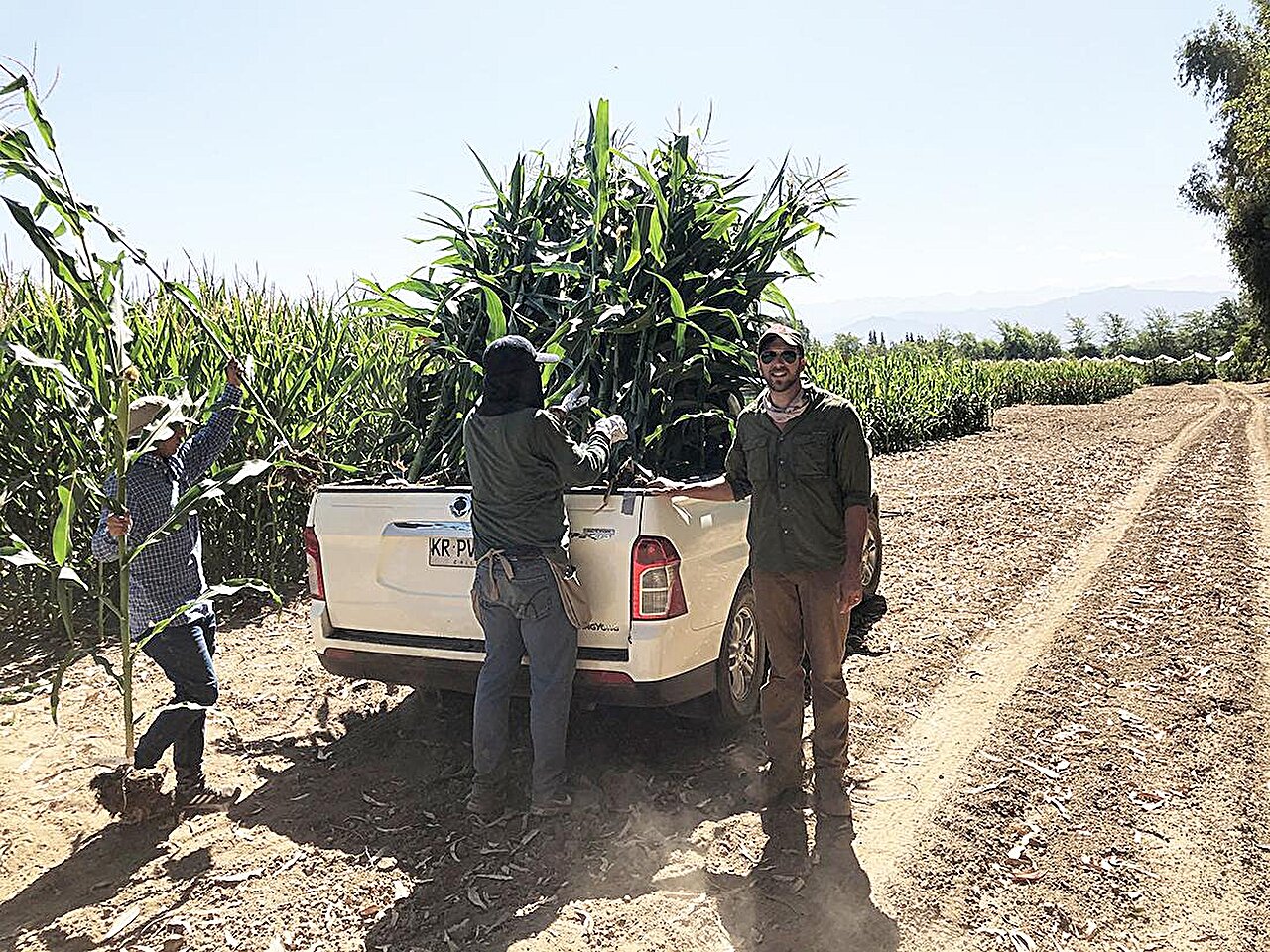
The researchers tested the finding through computer models, greenhouse-grown plants and field trials. Penn State said the team grew corn under drought stress in greenhouse conditions and at two field sites: the Russell E. Larson Agricultural Research Center in central Pennsylvania and the Tuniche Research Farm near Graneros, Chile.
At the Pennsylvania site, the researchers used rain-exclusion structures to create dry conditions. The Chile site has a Mediterranean climate that is dry during summer, according to Penn State.
Across simulations, greenhouse tests and field-grown plants, the team reported the same pattern: corn with the stretch phenotype captured and transported water more effectively and performed better under drought.
The study also used a genome-wide association study to look for DNA markers tied to the xylem traits. Penn State said the analysis found markers linked to longer metaxylem vessel elements and perforation plate height, indicating that the traits are at least partly under genetic control.
The researchers used cryo-scanning electron microscopy at Penn State’s Huck Institutes of the Life Sciences Microscopy Core Facility to examine perforation plates. They also used laser ablation tomography, an imaging method developed by Lynch’s lab, to compare root anatomy among plants with and without the trait combination.
A possible breeding target
Penn State said the stretch phenotype may be pleiotropic, meaning one genetic region affects several traits. Lynch said the syndrome appears to be controlled by one or two major genes, which could make it easier for researchers to isolate and use in breeding.
The study’s authors said the findings point to a potential route for breeding corn with better drought tolerance. Penn State identified first author Christopher Strock, formerly a postdoctoral scholar in Lynch’s lab and now a crop phenotyping scientist with John Deere, as lead researcher. Other Penn State-affiliated contributors included Cody DePew and Jagdeep Sidhu, now an assistant professor of root biology at the University of Missouri.
This story draws on original reporting from Phys.org.