
Tesla faces lawsuit after Model 3 crashes into Texas home, killing woman
The family of Martha Avila says Tesla’s driver-assist systems may have played a role; Elon Musk and a Tesla executive dispute that account.
By Hana Yoshida · Markets Reporter
3 min read
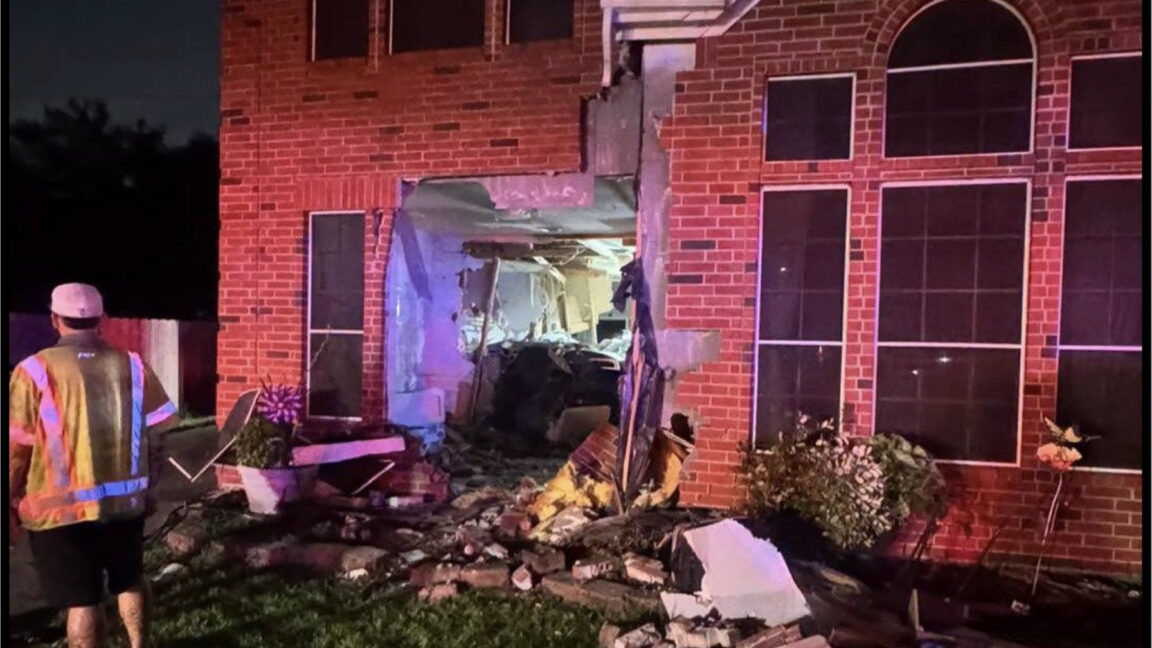
The family of 76-year-old Martha Avila has sued Tesla and the driver of a Model 3 after the car crashed into a Texas home and Avila later died from her injuries. The lawsuit, filed in Harris County District Court by Avila’s daughter Jennifer Barbour and Barbour’s husband Justin, seeks more than $1 million in damages.
Michael Butler, the driver and a defendant in the case, told police after the crash that an automated driver-assist feature was active when he lost control, according to Ars Technica. Police told Ars Technica they are still checking whether the system was in use, and said Butler was not intoxicated and has cooperated with investigators.
Tesla disputes the family’s claims
Tesla has rejected the idea that its Full Self-Driving technology caused the crash. After The New York Times published doorbell camera footage showing the vehicle hitting the house at high speed, Tesla CEO Elon Musk said on X that the speed undercut the claim that FSD was responsible.
“FSD drives slowly through neighborhood streets, and this was a high-speed crash!” Musk wrote.
Ashok Elluswamy, Tesla’s vice president of AI software, also challenged the lawsuit’s account. He said, without presenting evidence in the post, that Butler had manually overridden self-driving by fully pressing the accelerator in the residential area, reached 73 mph during the crash and kept the accelerator pressed after impact.
The Barbours’ complaint lays out two possible defects that they say could have contributed to the crash. One centers on what the lawsuit calls Sudden Unintended Acceleration, which the family says can occur when electrical demand creates voltage spikes that cause the inverter to read an accelerator input that was not made.
The second theory focuses on Tesla’s removal of some obstacle-detection hardware during a global chip shortage. The complaint says Butler’s Model 3 may have failed to identify the house at the end of the street while Autopilot or Full Self-Driving was engaged.
The family is asking a jury to hold Tesla and Butler responsible for damages tied to Avila’s medical care, funeral costs, mental anguish, loss of inheritance and other alleged harms, according to the complaint.
Federal review and evidence fight
The National Highway Traffic Safety Administration told Ars Technica that it is investigating the crash. Click2Houston reported that police have found no evidence so far of a mechanical malfunction.
Chris Adkins, an attorney for the family, told Click2Houston that the Barbours want to determine what happened and prevent a similar death. The lawsuit also points to prior scrutiny of Tesla driver-assist systems, including NHTSA reports involving Teslas striking parked emergency vehicles while Autopilot was active.
The complaint cites a 2023 Washington Post analysis that identified at least 17 fatal incidents linked to Tesla’s Autopilot. It also cites a Post report alleging Tesla has a record of making vehicle data hard to obtain after serious crashes.
The Barbours have demanded that Tesla preserve the Model 3, its parts, event data, Autopilot and FSD logs, telemetry, camera information, sensor data and other electronic records. The complaint says the car should remain in its post-crash condition for inspection during the case.
Family describes aftermath
According to the lawsuit, Avila was trapped in the wreckage after the crash and was taken to a hospital, where she died. Justin Barbour was inside the home and suffered injuries to his neck, back and shoulders, the complaint says.
The family thanked emergency medical workers, Life Flight crews and firefighters for their response. Jennifer Barbour previously told The New York Times that Avila was healthy, took no medications and was expected to have more years with her grandchildren.
Barbour also told the Times the family still does not know whether the driver, the car or another factor caused the crash. “I’ve never seen a car go that fast,” she said.
This story draws on original reporting from Ars Technica.