
Astronomers assemble shared hub for sky survey data
The Multimodal Universe project puts more than 80 terabytes of astronomical observations into common formats for easier cross-survey research.
By Tom Brennan · Health & Medicine Correspondent
3 min read
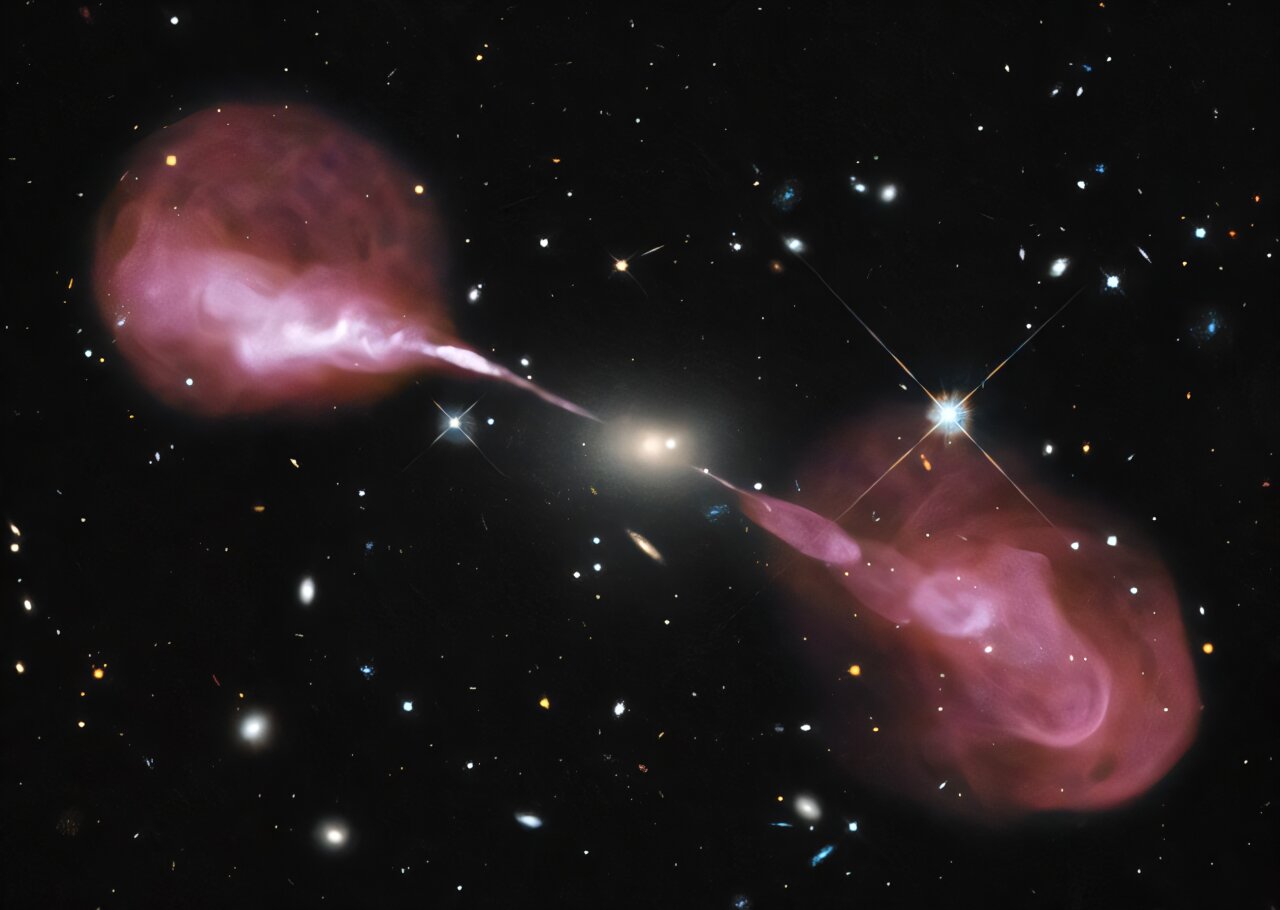
Astronomers led by the Center for Astrophysics | Harvard & Smithsonian have built a shared data system meant to make major sky surveys easier to use together. The Multimodal Universe project addresses a long-running problem in astronomy: observations from different telescopes and programs often sit in separate archives with their own formats, labels and software requirements, according to the center.
The effort, known as MMU, has reorganized more than 80 terabytes of astronomical data into a consistent system, the Center for Astrophysics said. The data include galaxy images collected across wavelengths from radio to X-rays, spectra of stars and galaxies, and time-series measurements of variable stars that brighten and dim.
The project is described in a preprint, “The Multimodal Universe: Enabling Large-Scale Machine Learning with 100TB of Astronomical Scientific Data,” posted to arXiv in 2024. The Center for Astrophysics said its researchers led the work with collaborators across multiple institutes.
A common format for many surveys
Astronomy has become a data-heavy science, and researchers increasingly look for discoveries by combining observations made by different missions, telescopes and surveys, according to the Center for Astrophysics. That task can be slowed when each archive has its own file structures, naming conventions and specialized access tools.
MMU is designed to reduce that friction by putting many data products behind the same tools and formats, the center said. The goal is to let scientists and students load and analyze data from multiple sky surveys without first mastering the details of each individual archive.
Mike Smith, the Center for Astrophysics lead scientist for the project, said the aim is to make survey data usable without requiring specialized knowledge of a particular archive system. The center said the project is meant to support research on ordinary computers, including laptops, rather than requiring supercomputing access for every use.
Built for machine learning
The arXiv preprint frames the work as infrastructure for large-scale machine learning with astronomical data. By bringing together images, spectra and time-based measurements in a single system, MMU is meant to make it easier to train and test tools that can compare different kinds of observations, according to the paper’s title and project description.
The Center for Astrophysics said the hub includes data from missions and instruments such as the Hubble Space Telescope’s Wide Field Camera 3 and the Karl G. Jansky Very Large Array. A NASA image associated with the project shows jets powered by the gravitational energy of a supermassive black hole, using data from Hubble and the VLA, with credit to NASA, ESA and collaborating researchers.
The project’s materials are available through Hugging Face, according to publication details released with the announcement. The arXiv record lists the DOI as 10.48550/arxiv.2412.02527.
For astronomers, the practical change is access. The Center for Astrophysics said MMU gives researchers a single way to work with data that previously required different methods depending on the survey, mission or observing program.
This story draws on original reporting from Phys.org.