
AI startup funding may signal which jobs face automation pressure
A PNAS Nexus study uses funded AI products to estimate which occupations are more likely to see near-term AI adoption.
By Priya Raghavan · Science Reporter
3 min read
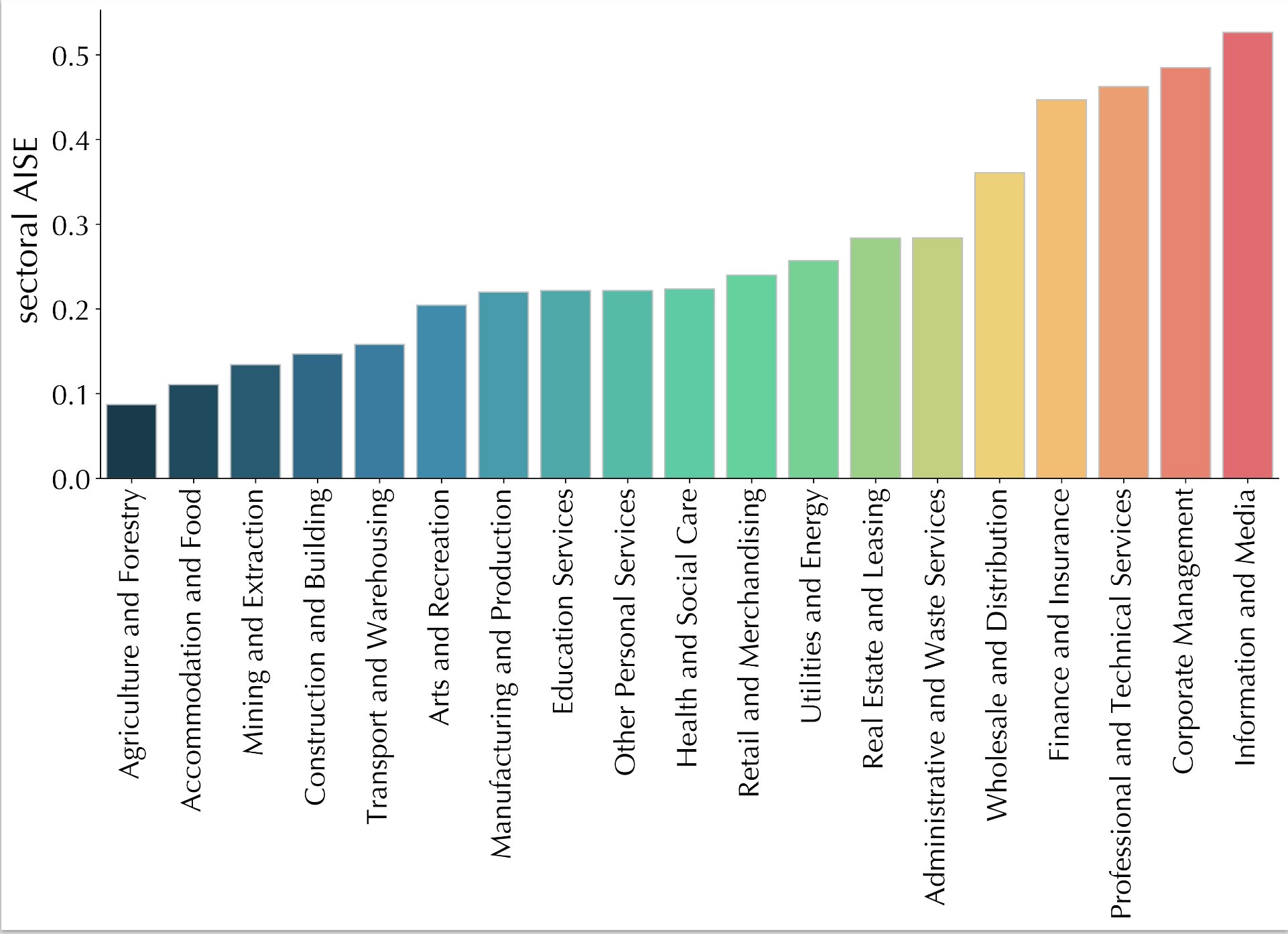
A new study argues that venture-backed AI startups can help show which jobs are most likely to be affected by artificial intelligence soon. The approach matters because it looks beyond what large language models can do in theory and focuses on AI products that investors have treated as commercially plausible.
The research, published in PNAS Nexus, was led by Enrico Maria Fenoaltea and colleagues. The team examined AI startups backed by Y Combinator and compared their products with descriptions of core job tasks in the O*NET occupational database.
To make those comparisons, the researchers validated a version of Meta’s Llama3 large language model, according to PNAS Nexus. They used it to link startup products with the tasks workers perform across occupations, producing a measure called the Occupational AI Startup Exposure index, or AISE.
The index is intended to estimate possible near-term exposure to AI across jobs. In the study, “exposure” does not mean only replacement; it can also mean AI tools assisting workers with parts of their jobs.
Fenoaltea and colleagues argue that funded startups provide a different signal than technical benchmarks alone. Because investors have put money behind these products, the authors treat them as more likely to appear in the market than many possible AI uses that remain theoretical.
Office and data roles rank higher
According to the study, occupations with higher AI startup exposure include office clerks, data scientists, computer and information systems managers, and market research analysts and marketing specialists. Those roles share many tasks that can be matched to products already being built by funded AI companies.
Jobs built mainly around physical work showed lower exposure in the index. PNAS Nexus said examples include athletes, chefs and construction workers.
The findings differ from measures based mainly on the abilities of large language models. Compared with those theoretical indices, AISE assigns lower exposure to jobs that carry heavy responsibility, ethical judgment or advanced professional requirements, according to the authors.
The study also found lower exposure for occupations that typically require a master’s degree or higher and substantial experience. The authors’ interpretation is that technical capability is only one part of whether AI is adopted in a given line of work.
Trust and judgment may slow adoption
The researchers point to high school teachers, judges and marriage counselors as examples of jobs where language models may be able to perform many described tasks in theory. They argue that people may be less willing to trust AI in roles that depend on social skill, judgment or ethically sensitive decisions.
That distinction is central to the study’s conclusion. Fenoaltea and colleagues say AI is unlikely to affect the economy as a single uniform force, and instead is expected to spread gradually through areas where products are viable, acceptable and useful.
The paper, titled “Follow the money: A startup-based measure of AI exposure across occupations, industries, and regions,” was published in PNAS Nexus. Its DOI is 10.1093/pnasnexus/pgag185.
This story draws on original reporting from Phys.org.