
AI model identifies equations that drive chaotic systems
Clarkson University researchers say KANDy can infer governing math from data, offering a more interpretable approach to modeling complex dynamics.
By Tom Brennan · Health & Medicine Correspondent
2 min read
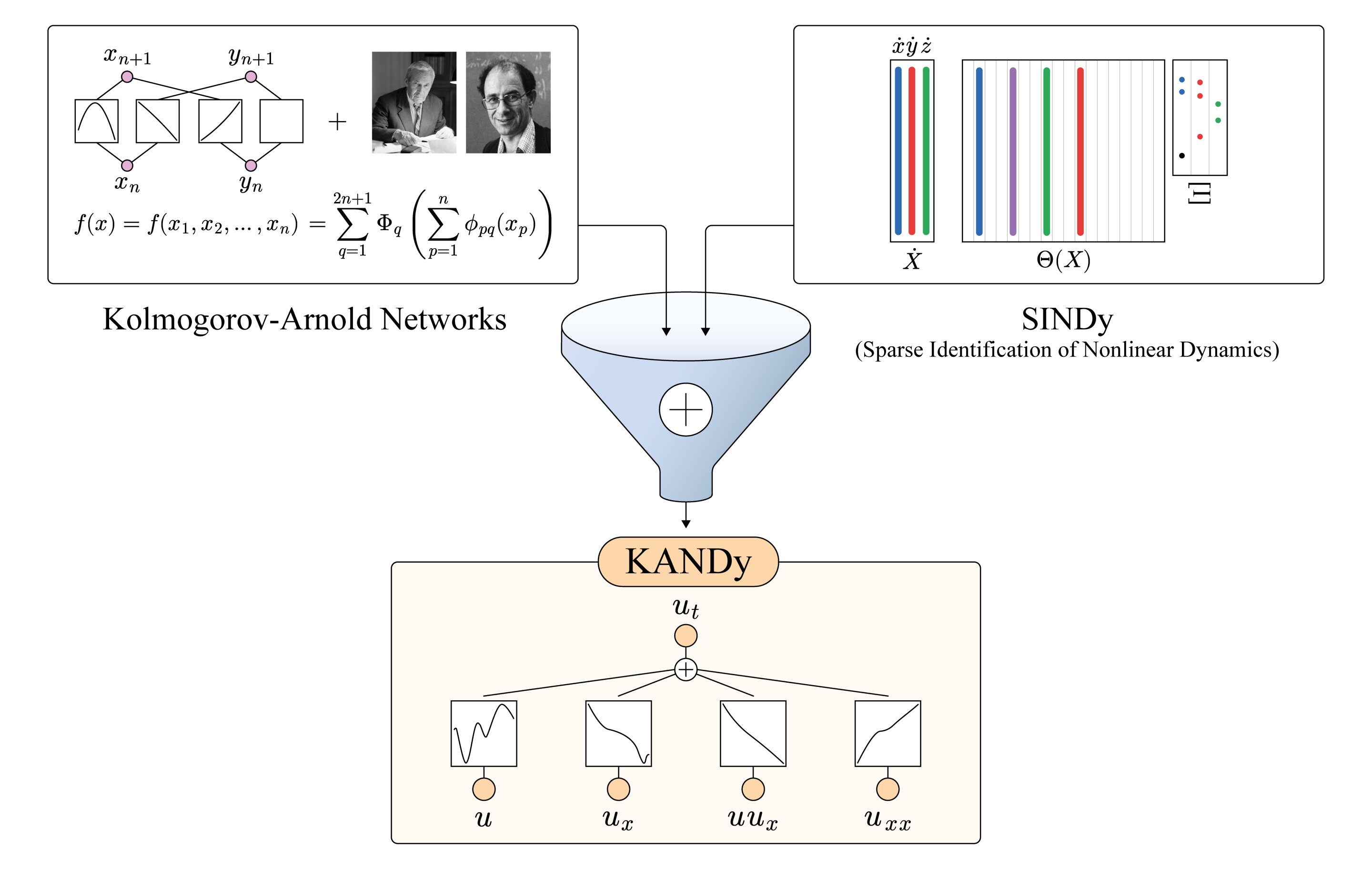
Clarkson University researchers have built an artificial intelligence tool that can infer the equations behind complex and chaotic systems from observed data. The work could give scientists and engineers a way to model physical behavior that is hard to describe when systems are noisy, nonlinear or unpredictable.
The tool is called KANDy, short for Kolmogorov-Arnold Networks for Dynamics. According to Clarkson University, it is designed to do more than forecast what a system may do next; it seeks to identify the mathematical rules that explain the system’s behavior.
Many AI systems can produce useful predictions while giving researchers little visibility into how those outputs are generated. Clarkson said KANDy was developed as an interpretable model, meaning its results are meant to expose the underlying dynamics rather than act only as a black-box predictor.
Built for dynamical systems
KANDy is based on Kolmogorov-Arnold Networks, known as KANs, a class of neural networks. The Clarkson team adapted that approach for dynamical systems, where researchers study how a system changes over time.
Researchers can provide data from a physical or mathematical system, and KANDy attempts to recover the equations governing the system’s motion or evolution, Clarkson said. The university said the framework can discover governing equations in some cases where existing equation-discovery methods do not succeed.
The study is available on the arXiv preprint server. The authors are Kevin Slote, a research associate; Jeremie Fish, an electrical and computer engineering research assistant professor; and Erik Bollt, who led the work, according to Clarkson University.
Tests included chaotic equations
The team tested KANDy on several kinds of difficult problems, Clarkson said. Those included discrete and continuous dynamical systems, as well as chaotic partial differential equations.
Clarkson also said the model recovered significant topological structure in the Hopf fibration, a mathematical object. The university cited that result as evidence that the system can capture deeper features of complex systems, not only surface-level patterns in data.
The preprint is titled “KANDy: Kolmogorov-Arnold Networks and Dynamical System Discovery.” It was posted to arXiv in 2026 with the DOI 10.48550/arxiv.2602.20413.
Clarkson said the research points to possible use in data-driven modeling of nonlinear dynamical systems. Such systems appear across fields where scientists and engineers try to infer rules from measurements rather than rely only on equations derived in advance.
The KANDy software is available through GitHub, according to Clarkson University. The university said installation instructions are provided for researchers who want to try the tool.
This story draws on original reporting from Phys.org.