
Vocal biomarker standards set by international expert group
Researchers created a shared framework for voice-based health measures, aiming to make AI disease tools easier to validate and compare.
By Tom Brennan · Health & Medicine Correspondent
3 min read
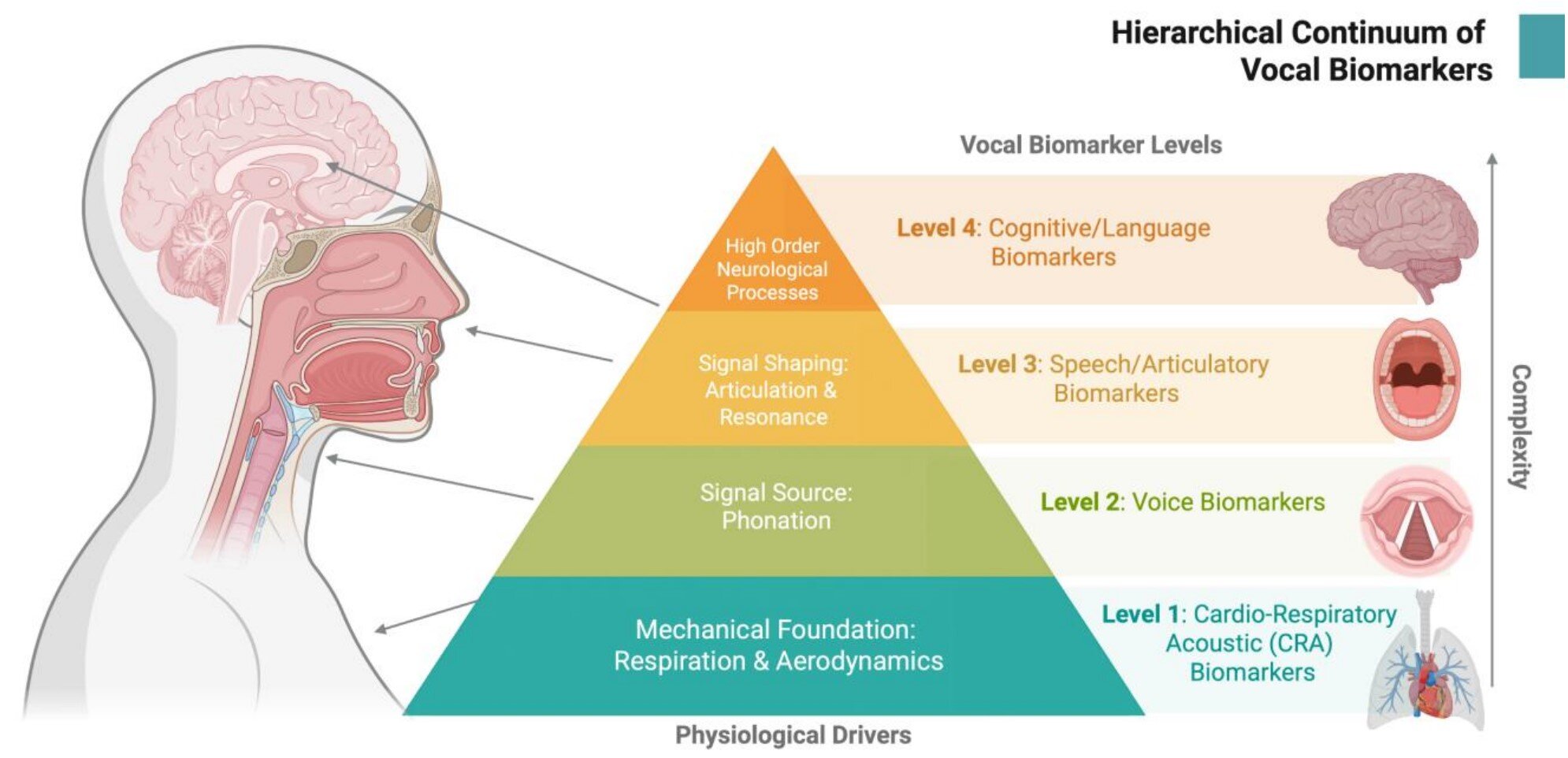
An international group of researchers has proposed new vocal biomarker standards to bring order to a fast-growing area of AI-enabled health research. The work matters because voice recordings are being studied as possible tools for detecting or monitoring conditions ranging from Parkinson’s disease and Alzheimer’s disease to depression, heart failure and type 2 diabetes.
The framework was led by researchers and clinicians from the Luxembourg Institute of Health’s Department of Precision Health and the University of South Florida Morsani College of Medicine, according to the University of South Florida. The consensus work was published in Digital Biomarkers as part of the VOCAL initiative, short for Vocal Biomarker Guidelines for Ontology, Classification, Application and Logistics.
What are vocal biomarkers?
Vocal biomarkers are health-related signals drawn from features of a person’s voice, speech, breathing or vocal quality. Researchers study them because changes in how people speak can reflect activity across physical and cognitive systems.
The University of South Florida said investigators increasingly see these voice-derived measures as a potential aid for disease diagnosis and monitoring. The newly published work does not announce a diagnostic test; it sets definitions and categories meant to help researchers develop and assess such tools more consistently.
Why did experts create vocal biomarker standards?
The field has grown quickly, but researchers have not used terms in the same way, according to the University of South Florida. Labels such as “voice biomarkers,” “speech biomarkers” and “vocal biomarkers” have often been treated as interchangeable even though they can refer to different biological, speech and cognitive processes.
To address that problem, eVoiceNet, a European network coordinated by the Luxembourg Institute of Health, and Bridge2AI-Voice, a North American consortium co-led by USF researchers, ran a multistage consensus process from 2024 to 2025. The effort brought together 24 experts from Europe and North America, according to the university.
The result is a structured vocabulary that separates vocal measures from validated vocal biomarkers. The framework also sets out a hierarchy covering the domains involved in voice and speech production.
Dr. Guy Fagherazzi, head of the Department of Precision Health at the Luxembourg Institute of Health and chair of eVoiceNet, said a shared language is needed for the field to advance efficiently. He said the definitions are intended to support stronger studies, clearer reporting and voice-based technologies that can eventually help patients.
Dr. Yael Bensoussan, associate professor of otolaryngology at the USF Health Morsani College of Medicine and co-head of Bridge2AI-Voice, said vocal biomarkers are promising because they can reflect multiple body and brain systems at once. She also said that same complexity has made the area difficult to define, and that the new framework gives researchers a common scientific structure.
What happens next?
The publication is described by the researchers as the first phase of the broader VOCAL initiative. The project aims to develop international guidance for vocal biomarker research and for putting voice-based health technologies into practice.
The framework is also intended to help clinicians, speech and language specialists, engineers, data scientists, regulators and industry groups work from the same set of terms. According to the University of South Florida, the researchers hope that common definitions will support standards, validation pathways and future regulatory guidance for voice-based health tools.
More information: Mégane Pizzimenti et al., “Consensus-Based Definitions for Vocal Biomarkers: The International VOCAL Initiative,” Digital Biomarkers, 2026. DOI: 10.1159/000553327.
This story draws on original reporting from Medical Xpress.